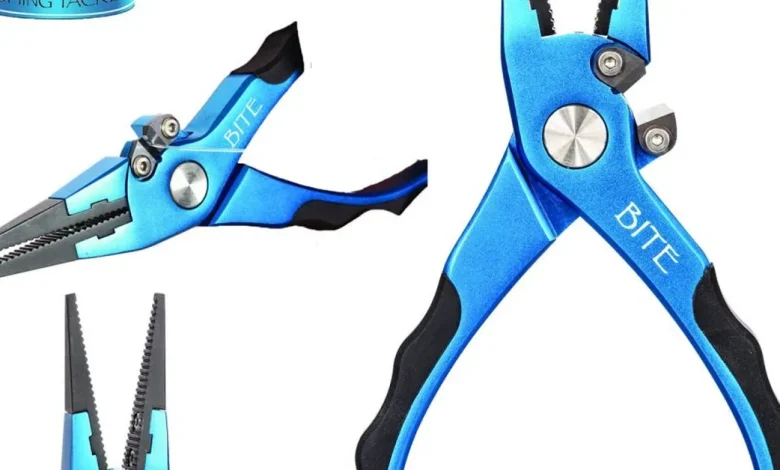
The Tool You Never Think About Until You Need It
There’s a particular kind of frustration that every angler knows the moment when a fish is flopping at your feet, the hook is buried deep, and the one tool that could fix everything in ten seconds is sitting on the workbench at home. Or worse, it’s in the tackle bag you left in the truck. Or it snapped last season and you never replaced it. Fishing pliers occupy this strange blind spot in the angler’s mind: essential enough that their absence is immediately catastrophic, yet somehow never treated with the same reverence as a quality rod or a well-organized fly box.
Most fishermen own exactly one pair. Maybe two if they’ve been at it long enough to lose the first. But the idea of intentionally owning multiple pairs keeping them staged, specialized, and ready rarely crosses anyone’s mind until the day it should have.
That day has a way of arriving without warning.
Not All Pliers Are Built for the Same Water
Walk into any serious tackle shop and you’ll notice that fishing pliers aren’t a monolithic category. There are split ring pliers, needle-nose pliers, crimping pliers, hook removers with extended reach, and heavy-duty bolt cutters disguised in plier form for cutting wire leaders. Each one solves a different problem, and the angler who carries only a single general-purpose pair is constantly asking one tool to do the work of several.
Think about what a day on the water actually demands. In the morning you’re rigging up, which means opening split rings, attaching swivels, and possibly crimping mono or fluorocarbon. By midday you’ve landed a catfish with a treble hook lodged somewhere anatomically inconvenient, and you need reach, grip, and control that a wide-jaw plier simply can’t offer. In the afternoon you’re cutting through a braided line that’s knotted beyond salvation, and then because the day always has one more surprise you’re trying to bend a hook point back into true after it deflected off a rock.
A single pair of pliers handles some of these tasks adequately. None of them handles all of them well. The angler who has accepted this reality and stocked accordingly moves through each situation with a kind of quiet efficiency that looks almost effortless from the outside.
Salt Kills, and It Doesn’t Negotiate
Saltwater fishing introduces a variable that freshwater anglers rarely have to reckon with: corrosion that works fast and works thoroughly. A pair of pliers that performs beautifully in a mountain trout stream will seize up after a single day in the surf if it’s not rinsed and dried immediately. And even with diligent maintenance, salt finds its way into the hinge mechanism, the spring, the cutting edge. Over time, the tool degrades.
This is one of the most practical arguments for owning multiple pairs. Keep a dedicated set for saltwater use ideally titanium or high-grade stainless with sealed components and protect your better freshwater pliers from the abuse they weren’t designed to absorb. It’s the same logic that leads a carpenter to own separate blades for different materials. You don’t run a fine woodworking blade through pressure-treated lumber and wonder why it dulls.
Beyond the material argument, there’s a physical reality about saltwater fishing: the fish are bigger, the hooks are heavier, and the line is thicker. The delicate needle-nose pliers that are perfect for removing a size 16 fly from the lip of a brown trout will bend or break under the pressure required to back a 7/0 circle hook out of a bull red. Saltwater demands its own tools, and trying to make one pair serve both worlds is a compromise that usually ends badly often at the worst possible moment.
The Case for Redundancy Nobody Talks About
There’s a version of this conversation that sounds like gear obsession, like the fishing equivalent of someone who owns fourteen kitchen knives for two people. That’s not what this is. This is about something more fundamental: the reliability of a system under stress.
Pliers fail. Springs break. Jaws slip. The cutting edge that worked fine last week won’t close cleanly today because something shifted in the hinge. These aren’t manufacturing defects, necessarily they’re the natural consequence of using a mechanical tool in wet, gritty, high-pressure conditions repeatedly. And when a tool fails in the middle of a catch-and-release situation, the stakes aren’t just inconvenience. A fish that can’t be unhooked quickly suffers. A hook that can’t be removed properly may require cutting the line and leaving hardware behind. The whole ethic of responsible fishing depends, in small but real ways, on having functional tools at hand.
Keeping a backup pair even a modest, inexpensive one in the bottom of your tackle bag costs almost nothing against the price of a full day’s kit. It’s insurance that weighs four ounces and takes up the space of a granola bar. The angler who has never reached for a second pair during a critical moment simply hasn’t been fishing long enough.
Staging Your Gear Changes How You Fish
Here’s something that doesn’t get discussed enough: where your tools live matters as much as what tools you own. An angler who keeps one pair of pliers in a tackle box that stays in the truck is functionally toolless the moment they wade fifty yards into a river. The same angler who has a pair clipped to a wading belt, a second pair in the boat’s rod holder, and a third in the shore bag is never more than an arm’s length from what they need.
This kind of intentional staging is only possible when you own multiples. And once you start fishing this way, it changes the rhythm of the whole experience. You stop breaking focus to dig through bags. You stop making the awkward choice between holding a fish and searching for a tool. The mechanical parts of the process become automatic, which frees attention for the parts that actually require it reading the water, managing the fight, making the next cast.
Some anglers arrive at this system after years of improvising. Others stumble into it by accident, buying a second pair when the first goes missing and then discovering they prefer having both. Either way, the shift tends to be permanent. Once you’ve fished with a properly staged kit, going back to a single-pair setup feels like trying to cook a serious meal with one knife and no cutting board.
What You’re Really Investing In
The price of a quality pair of fishing pliers ranges from about fifteen dollars to well over a hundred, depending on materials and construction. Owning three pairs across different categories a general freshwater pair, a saltwater-rated heavy-duty set, and a compact backup might run you anywhere from sixty to two hundred and fifty dollars total. Spread across a season of fishing, that’s a rounding error against the cost of fuel, licenses, bait, and lost lures.
What you’re actually buying isn’t the pliers themselves. It’s the elimination of a specific category of failure. It’s the confidence that comes from knowing your system is complete. It’s the ten seconds you don’t spend panicking while a fish waits. And maybe most importantly, it’s the kind of quiet preparedness that separates someone who fishes from someone who has learned to fish well.
The difference between those two things is often nothing more dramatic than the contents of a tackle bag and one overlooked tool that should have had a backup all along.