Is Your Drag Set Correctly? The Technical Mistake Losing You Trophies

The Fish That Got Away Wasn’t Luck It Was Physics
You’ve been there. The rod doubles over, the reel screams, and for one electric second everything feels right. Then the line goes slack. The fish is gone, and you’re left rewinding the whole moment in your head, searching for what went wrong. Most anglers blame the hook. Some blame the knot. A few blame themselves in vague, unproductive ways. Almost nobody looks at the drag.
That’s the problem.
Drag is one of those settings that sits in the background of every serious fishing conversation but rarely gets the focused, honest attention it deserves. It’s treated like a one-time adjustment something you set at the beginning of the season and forget about, like the clock on a microwave. But drag isn’t a set-it-and-forget-it feature. It’s a dynamic system, and when it’s wrong, it costs you fish. More importantly, when it’s consistently wrong, it costs you in competition sometimes the difference between a trophy and a handshake.
What Drag Actually Does (And Why Most People Misunderstand It)
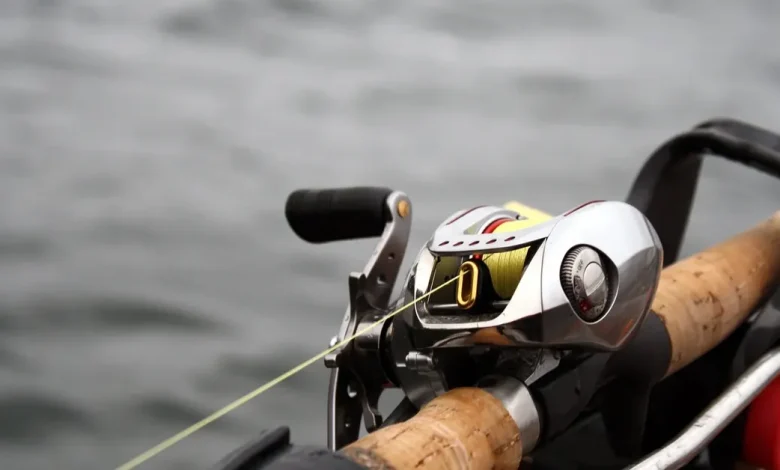
At its most basic, drag is a controlled slipping mechanism inside your reel. When a fish pulls hard enough, the spool releases line rather than holding it rigid. The purpose is to prevent your line from snapping under sudden, violent load. Simple enough. But the nuance lives in the calibration and that’s where most anglers go sideways.
The common misconception is that tighter drag equals more control. Logically, it feels right. You want to hold the fish, not give it room to run. But a drag set too tight doesn’t give you more control it transfers all the stress directly to your line, your knot, and your hook. Something in that chain breaks. Usually the line, right at the knot, because that’s where tension concentrates. You feel it as a sudden pop. The fish reads it as freedom.
On the other side, drag set too loose creates its own disaster. The fish runs, takes too much line, wraps around structure, and you lose it a different way with the added humiliation of watching your spool empty while you do nothing useful.
The correct drag setting lives in a specific window. Not a guess. Not a feel. A measurable, repeatable number.
The 25 Percent Rule And Why Tournament Anglers Live By It
Here’s the standard that serious competitive anglers use: set your drag at approximately 25 to 33 percent of your line’s breaking strength. If you’re fishing 20-pound monofilament, your drag should slip at somewhere between five and seven pounds of steady pull. Not twenty. Not two. That specific, uncomfortable-feeling middle ground.
The reason this range works comes down to how fish fight. A large fish doesn’t pull at a constant force it surges, changes direction, and occasionally does something completely unpredictable. Your drag needs to absorb those surges without releasing so much line that the fish gains a dangerous advantage. At 25 to 33 percent, you have a buffer. The line holds, the hook stays seated, and you maintain enough pressure to tire the fish without snapping anything.
Tournament anglers who ignore this principle often discover the cost at the worst possible moment during a fish large enough to matter. You can fish an entire season on wrong drag and never notice, because smaller fish don’t stress the system enough to expose the flaw. It’s the big one, the one that would actually change your standings, that finds every weakness in your setup.
The Tools You’re Probably Not Using
Here’s where the conversation gets uncomfortable for a lot of anglers: if you’re setting your drag by feel alone, you’re guessing. There’s no polite way to say it. Your hand is not a scale. The “feels about right” method has a margin of error wide enough to drive a boat through.
A drag scale sometimes called a spring scale or a fish scale costs less than a decent lunch and removes the guesswork entirely. Clip it to your line, pull at a steady angle that mimics how a fish would run, and read the number. Adjust the drag knob until the scale reads your target weight. Done. Repeatable. Reliable.
Some anglers resist this because it feels overly technical, like it takes the instinct out of fishing. That’s a romantic objection, and it’s worth examining honestly. The best tournament anglers are deeply technical. They understand their equipment at a mechanical level. The instinct and the artistry live in reading water, presenting lures, and making decisions under pressure not in guessing whether your drag is set to six pounds or twelve.
Dynamic Conditions That Demand Mid-Session Adjustments
Even a perfectly calibrated drag at the start of the day can drift out of range by afternoon. Temperature affects the mechanical components inside your reel drag washers expand and contract with heat. A reel sitting in direct sun on a summer tournament day behaves differently than the same reel at dawn. Saltwater anglers face additional complications because salt intrusion into drag washers changes friction characteristics over time, sometimes within a single session.
Line memory matters too. Monofilament that’s been under tension for hours behaves differently than fresh line. Its effective breaking strength changes as it fatigues. If your drag was calibrated to 25 percent of fresh line strength and your line has been stressed repeatedly, the actual safety margin has narrowed without you touching a single setting.
This is why experienced tournament competitors check drag multiple times throughout a fishing day. Not obsessively, but deliberately after a significant fight, after a long period of inactivity in heat, after switching to a different rod and reel combination. It takes thirty seconds with a scale. The anglers who skip this step are banking on consistency that doesn’t actually exist.
Line Type Changes Everything
Switching from monofilament to fluorocarbon or braided line without recalibrating your drag is one of the most common technical errors in competitive fishing. Each line type has different stretch characteristics, and stretch is directly relevant to how drag functions in practice.
Monofilament has significant stretch sometimes 25 to 30 percent under load. That stretch acts as a secondary shock absorber, supplementing your drag. Fluorocarbon stretches less. Braid, for practical purposes, has almost no stretch at all. When you fish braid, your drag is doing nearly all the work that monofilament’s elasticity used to share. A drag setting that was perfectly adequate with mono becomes dangerously tight with braid. Hook pulls increase. Line failures happen at the knot. Anglers blame the braid when they should be looking at the drag.
The fix is straightforward: when you change line type, recalibrate. Don’t assume the setting carries over. It doesn’t.
Hook Sets, Fighting Style, and the Drag Interaction Nobody Talks About
There’s one more layer here that tournament anglers rarely discuss openly, possibly because it requires admitting that personal technique affects equipment performance. Your hook-set style interacts with your drag setting in ways that can either compound or cancel out your calibration work.
An aggressive, high-speed hook set generates a momentary spike in line tension that can exceed your drag’s slip threshold meaning the drag releases line at exactly the moment you want maximum resistance. With certain fish and certain hooks, this causes missed sets. The solution isn’t to tighten the drag. It’s to adjust hook-set technique for the line and drag combination you’re running, or to use a reel with a strike drag preset a secondary setting that temporarily increases resistance for the hook set before returning to fighting drag.
Some anglers discover this problem after years of fishing and never connect the dots. They know their hook-set percentage is lower than it should be. They’ve tried different hooks, different rods, different presentations. The drag setting never entered the diagnostic conversation.
That’s the thing about technical mistakes they hide behind symptoms that look like something else entirely. You think you’re losing fish because of bad luck, bad hooks, or bad water. Meanwhile, the drag knob sits there, slightly wrong, quietly deciding your results for you.