Sleep Systems for the Backcountry: Recovery is a Performance Multiplier

You wake up at 3 a.m. somewhere above 10,000 feet, shivering so hard your teeth are clicking, and you realize the sleeping bag you grabbed off a clearance rack three years ago was a catastrophic mistake.
That was me, on a five-day traverse in the Wind River Range. My buddy Jake had warned me. I told him his gear obsession was overkill. I was wrong in the most uncomfortable, sleep-deprived, genuinely miserable way possible. By day three, my decision-making was sloppy, my legs felt like wet concrete, and I was snapping at the one person who knew where the trail went. Not my finest hour.
Here’s the thing nobody talks about enough: your sleep system isn’t just about comfort. It’s a performance variable. The same way nutrition and hydration affect your output on the trail, the quality of your recovery at night determines whether you’re sharp, strong, and safe the next day or just surviving.
Why Recovery Matters More Than You Think in the Backcountry
Most people budget obsessively for calories, water filtration, and navigation. Sleep? They grab whatever fits the pack and call it good.
But sleep deprivation compounds fast out there. One bad night is manageable. Two nights of broken, cold, shallow sleep and you’re making the kind of calls that lead to twisted ankles, missed turns, or worse. Your body repairs muscle tissue, consolidates motor patterns, and regulates hormones almost entirely during sleep. Cut that short especially in a cold environment where your body is already burning extra fuel just to stay warm and you’re digging a hole you can’t climb out of with a handful of trail mix.
The backcountry doesn’t care that you’re tired.
The Three Layers of a Real Sleep System
Most people think “sleep system” means sleeping bag. It’s actually three things working together, and if any one of them fails, the whole system fails.
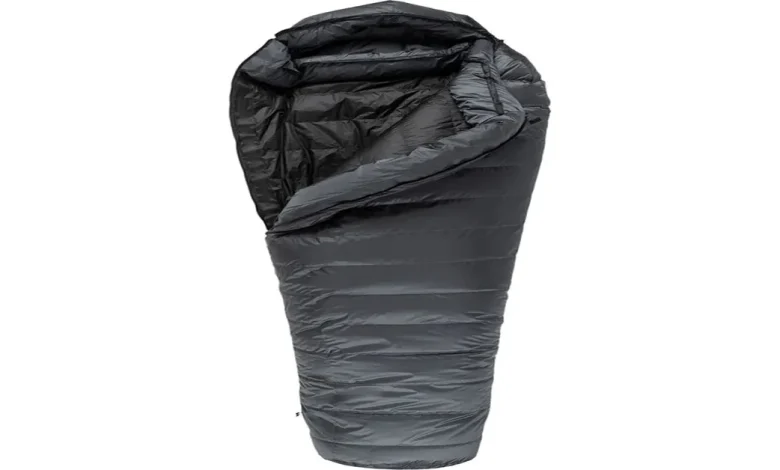
The Sleeping Bag (or Quilt)
Temperature rating is the first thing everyone looks at, and it’s also the most misunderstood number in outdoor gear. A bag rated to 20°F doesn’t mean you’ll be warm at 20°F it means a “standard” sleeper won’t die. That’s a low bar.
Down fill power matters, but so does the cut of the bag. A roomy bag traps dead air space your body can’t heat efficiently. A mummy cut that’s too tight compresses the insulation. You want snug without squeeze. And if you run cold which, honestly, a lot of people do and won’t admit you should be buying a bag rated 10 to 15 degrees colder than your expected low.
Quilts are worth mentioning here. They’ve gotten genuinely popular in ultralight circles, and for good reason. You’re not insulating the ground with a quilt that’s the pad’s job so you lose the dead weight underneath you. But quilts require a little practice. Drafts are real. Cold spots happen. It’s not a beginner-proof system, but once you dial it in, it’s hard to go back.
The Sleeping Pad: The Most Underrated Piece of Gear You Own
Here’s the counterintuitive part and I’ll stand by this even if it sounds backwards: your sleeping pad matters more than your sleeping bag.
You lose heat to the ground at a rate that makes convective heat loss from the air look polite. The R-value of your pad is the actual number you should be memorizing, not the bag’s temperature rating. An R-value of 2 is fine for summer car camping. For three-season backcountry use, you want at least R-4. Cold sleepers or shoulder-season trips? Push toward R-5 or R-6.
Foam pads are indestructible and never fail. Inflatable pads are lighter and more comfortable, but I’ve had two fail on me over the years one slow leak that I didn’t notice until 2 a.m., one that just gave up on a rocky surface in the Cascades. A hybrid approach a thin foam pad under an inflatable is what I use now. Belt and suspenders. Worth the extra few ounces.
The Sleep Environment: Shelter, Positioning, and the Details Nobody Writes About
Your tent, bivy, or tarp is the third layer. It’s not just about keeping rain off. Condensation management, wind protection, and ground moisture all affect how well your other gear performs. A down bag that gets damp from tent condensation loses loft fast and loft is warmth.
Positioning matters more than most people admit. Sleeping with your head uphill on a slight grade improves circulation and reduces that low-grade headache that plagues people at altitude. It sounds small. It isn’t.
One thing I started doing a few years ago eating a small, fat-heavy snack right before bed. Your body generates heat digesting food, and fat burns slow. A handful of nuts or a bit of cheese before you zip up can make a measurable difference on a cold night. I can’t cite a peer-reviewed study on this. But I’ve tested it enough times that I believe it.
Gear Choices That Actually Hold Up in the Field
You don’t need to spend $800 on a sleeping bag. But you do need to spend honestly. Cheap insulation loses loft after a season of hard use. Cheap pads delaminate. The math on replacing budget gear every two years usually ends up worse than buying something solid once.
Down versus synthetic is a real decision, not just a preference. Down is warmer for its weight, compresses better, and lasts longer if you take care of it. Synthetic insulation performs when wet and in the Pacific Northwest, that’s not a hypothetical. Know your environment before you buy.
What Actually Changes When You Sleep Well Out There
Jake and I did another trip two summers after the Wind River disaster. I’d rebuilt my sleep system completely a 15°F down bag, an R-5 inflatable pad, a four-season shelter. Different experience entirely.
I woke up rested. Actually rested. My legs recovered overnight. My mood was stable. I made better route decisions. I ate more intentionally. Everything downstream of sleep improved because everything downstream of sleep always does.
That’s the part that gets lost when people treat sleep gear as an afterthought. Recovery isn’t passive. It’s the thing that makes every other part of your backcountry performance possible.
So before you spend another dollar on a lighter trekking pole or a faster-boiling stove, ask yourself this: when was the last time you woke up in the field feeling genuinely good?
If you have to think about it that’s your answer.