Marcus spent $3,400 on a custom-fit driver last spring. Graphite shaft, adjustable hosel, the whole deal. He showed up to our Saturday morning round practically glowing, like he’d just bought his way into a better game.
He shanked his first tee shot into the trees.
The second one wasn’t much better. By the ninth hole, he was already talking about returning it. But here’s the thing the club was fine. Marcus’s stance was a mess. Feet too close together, weight dumped onto his heels, shoulders already rotating before he’d even started his downswing. No amount of engineering in that clubhead was going to fix what was happening three feet above it.
The Gear Trap Is Real, and It’s Expensive
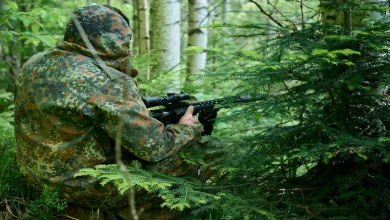
Poor stance is the silent killer of performance in almost every physical discipline you can name. Golf, archery, shooting, weightlifting, even photography your body position before you do anything is already determining the outcome. Gear can optimize a good foundation. It absolutely cannot build one for you.
But the sporting goods industry doesn’t make money selling you that truth. So instead, you get carbon fiber, titanium, smart sensors, and marketing copy that promises transformation. And people buy it because buying something feels like doing something. I know because I’ve done it myself.
A few years back, I dropped serious money on a high-end compound bow setup. New sight, new stabilizer, upgraded rest. I told myself my groupings were suffering because my equipment was inconsistent. Spent three weekends dialing in the bow. My groupings didn’t improve. At all. A coach watched me shoot for about forty-five seconds and said, “Your anchor point moves every single draw.” That was it. That was the whole problem. The gear had nothing to do with it.
What a Poor Stance Actually Does to You
Here’s what people don’t talk about enough: a bad stance doesn’t just make you less accurate. It creates a chain reaction.
When your foundation is off, your body compensates. It has to. And those compensations become habits. Then you buy new gear to accommodate the habits. Then the habits get worse because the gear is now masking the feedback your body needs to self-correct. You end up in this loop where you’re spending more and feeling less in control which, honestly, is a pretty uncomfortable place to be.
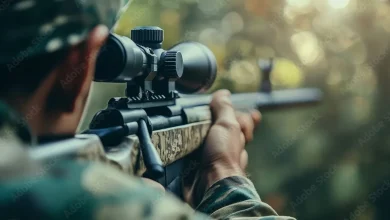
Think about it from a physics standpoint for a second. If you’re a shooter with an inconsistent cheek weld, your eye-to-scope relationship changes slightly with every shot. You can have the most precisely machined rifle on the market, sub-MOA guaranteed from the factory, and none of that precision transfers to the target if your head isn’t in the same position twice. The rifle is doing its job. You’re not doing yours.
The Uncomfortable Truth About Fundamentals
Here’s where I’ll say something that might irritate a few people: most intermediate-level athletes would improve faster by spending thirty days fixing their stance than by spending thirty days training with better equipment.
That’s not a popular take in a culture that loves upgrades.
But stance work is slow. It’s unglamorous. It doesn’t make for a good unboxing video. You can’t post a photo of yourself correcting your foot alignment and get fifty comments telling you you’re crushing it. So people skip it, or they do it halfheartedly, and then they go buy something new to feel the momentum again.
The counterintuitive part and I’ll admit this took me embarrassingly long to accept is that better gear can actually slow your development when your fundamentals are broken. Because good equipment is forgiving in ways that hide your errors. A high-end golf iron with a massive sweet spot will still send the ball somewhere reasonable even on a mediocre strike. Which means you never learn what a mediocre strike feels like. You lose the feedback loop.
When Gear Actually Does Matter
To be fair, I’m not saying equipment is irrelevant. That would be its own kind of nonsense.
Once your stance is solid once your foundation is repeatable and your compensations are gone gear starts to matter in real, measurable ways. A well-fitted club does make a difference for a golfer who’s already swinging consistently. A quality stabilizer does reduce torque for an archer whose grip and anchor are locked in. The gear becomes a multiplier rather than a crutch.
The problem is sequencing. People buy the multiplier before they’ve built anything worth multiplying.
Think of it this way: you wouldn’t install a turbocharger on an engine with a cracked block. The boost doesn’t fix the structural problem it just makes everything worse faster.
How to Actually Fix Your Stance (Without Spending a Dime)
Video yourself. Seriously just set your phone up and record from multiple angles. Most people have never actually seen themselves perform. They’re working from a mental image that’s usually flattering and usually wrong. Watching yourself is humbling, but it’s the fastest diagnostic tool available and it costs nothing.
Find a coach for even one or two sessions. Not to overhaul your entire technique, just to identify the one or two foundational issues that are costing you the most. One honest hour with someone who knows what they’re looking at is worth more than six months of self-directed practice built on a flawed foundation.
Then drill the basics without gear pressure. Use your mid-range equipment, or even deliberately worse equipment, while you rebuild. You want to feel the errors, not have them smoothed over.
And slow down. Like, really slow down. Most stance problems are invisible at full speed. When you drop to half-speed or quarter-speed, the cracks show up immediately.
The Real Question Worth Asking
Before you pull the trigger on that next purchase whether it’s a new set of irons, a different rifle stock, upgraded archery equipment, or whatever your particular discipline demands ask yourself honestly: do I actually know what my stance looks like right now?
Not what you think it looks like. What it actually looks like.
Because if you can’t answer that with confidence, the gear doesn’t matter yet. Fix the foundation first. Then, and only then, does the equipment conversation become worth having.
Marcus, by the way, kept the driver. He spent six weeks working with a coach on his setup position and weight distribution. By August, he was hitting it consistently twenty yards longer than he ever had with his old clubs.
The driver didn’t change. Marcus did.