Drones, Apps, and AI: Is Technology Ruining the Spirit of the Chase?

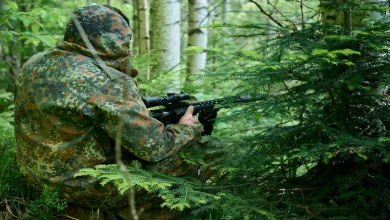
There’s a moment every serious hunter knows the one where the woods go quiet, the wind shifts, and everything you’ve learned over years of failure and patience suddenly converges into a single, electric second. No app predicted that. No drone scouted it. You earned it through cold mornings, wrong guesses, and the slow accumulation of instinct that only comes from being humbled by the land repeatedly.
That moment is what hunters mean when they talk about “the spirit of the chase.” And right now, that spirit is being renegotiated in real time whether the hunting community wants to admit it or not.
The Tech Invasion Nobody Asked For (And Everyone Downloaded)
Walk into any hunting camp today and you’ll find a contradiction. The same guy who waxes poetic about fair chase and traditional woodsmanship will have three different scouting apps open on his phone, a cellular trail camera sending him real-time photos, and a drone charging in the back of his truck. It’s not hypocrisy, exactly. It’s something more complicated the very human tendency to embrace convenience while mourning what convenience costs us.
The tools themselves are impressive, genuinely so. Platforms like OnX Hunt have transformed how hunters read terrain, layering property boundaries, topographic data, and historical migration routes onto satellite imagery with a precision that would have seemed like science fiction twenty years ago. Hunting-specific AI tools can now analyze weather patterns, moon phases, and barometric pressure to suggest optimal stand times. Some platforms are beginning to incorporate machine learning to predict animal movement based on aggregated user data across entire regions.
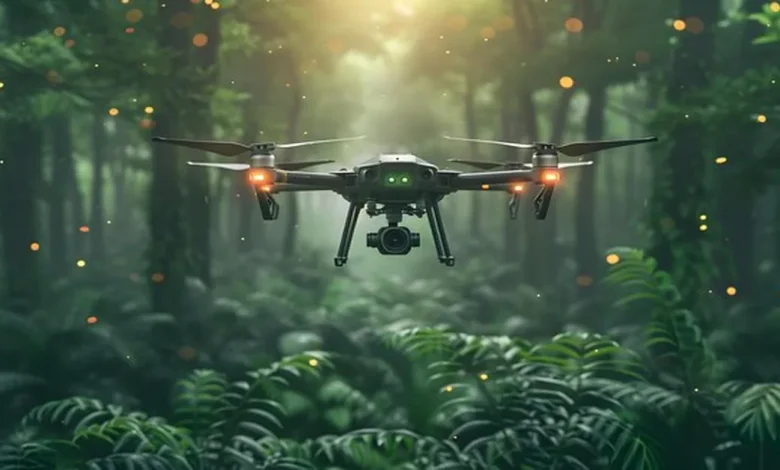
And drones the most contentious piece of this puzzle have moved from novelty to near-standard equipment in certain circles, particularly among western hunters glassing vast public land for elk or mule deer. The ability to cover miles of rugged terrain in an hour, identify animals, and mark GPS coordinates before ever lacing up a boot has fundamentally altered the pre-hunt equation.
The question worth sitting with isn’t whether this technology works. It obviously does. The question is what we lose when it works too well.
Fair Chase Has Always Been a Moving Target
Before dismissing tech-skeptics as romantics clinging to a golden age that never really existed, it’s worth acknowledging that hunting has always absorbed new technology and always generated the same argument in response. When compound bows replaced longbows, traditionalists mourned. When scoped rifles replaced iron sights, the same conversation happened. ATVs, GPS units, synthetic scents each innovation arrived with its own chorus of concern and its own eventual normalization.
So there’s a legitimate counterargument: maybe today’s resistance to drones and AI is just the latest chapter in a very old story, and in twenty years, we’ll look back at cellular cameras the same way we now look at binoculars as an obvious tool that enhanced the experience without destroying it.
The Boone and Crockett Club’s fair chase definition, which has guided ethical hunting standards for over a century, prohibits pursuing game “in a manner that gives the hunter an improper advantage.” The problem is that “improper” has always been culturally negotiated rather than objectively defined. It shifts with each generation’s baseline expectations.
But here’s where this generation’s technological moment feels genuinely different from previous ones: the gap between what technology can do and what human skill can replicate is widening at a rate we haven’t seen before. A hunter with a drone and AI-assisted scouting isn’t just slightly more efficient than one without in certain terrains and conditions, they’re operating in an almost entirely different activity.
What Gets Lost When the Uncertainty Disappears
The deeper issue isn’t ethical, really. It’s existential. Hunting has always derived much of its meaning from uncertainty from the genuine possibility of failure, from the requirement that you adapt in real time to conditions you didn’t fully anticipate. Strip away enough of that uncertainty and you haven’t made hunting better. You’ve made it something else.
Consider what scouting used to demand. Learning an area meant boots on the ground across multiple seasons. It meant reading sign tracks, rubs, scrapes, droppings and building a mental model of how animals moved through a landscape. That knowledge was hard-won, deeply personal, and non-transferable. It lived in your body as much as your mind. A hunter who knew a piece of ground knew it in a way that couldn’t be downloaded.
Now consider what a serious tech-enabled scouting operation looks like: drone footage of a canyon system, overlaid on satellite imagery, cross-referenced with historical harvest data from a crowdsourced platform, filtered through an AI that suggests the three most likely bedding areas based on current conditions. The animal is still out there. The shot still has to be made. But the chase the actual pursuit of understanding has been partially outsourced to an algorithm.
There’s a word for what gets lost in that transaction: intimacy. The kind that only develops when you’re confused, cold, and wrong for the third time in the same draw, and you have to figure out why.
The Social Dimension Nobody’s Talking About
Technology doesn’t just change the individual hunting experience it changes the social fabric of hunting culture in ways that are harder to quantify but just as significant. Knowledge has always been the primary currency of hunting communities. Older hunters passed it down through mentorship, through stories told around fires, through years of earned trust before someone showed you their best spot.
Apps and crowdsourced data platforms are quietly disrupting that economy. When topographic intelligence and harvest data are democratized available to anyone willing to pay a subscription fee the traditional mentorship model loses some of its structural necessity. You don’t need to know someone who knows the country anymore. You just need a credit card and a decent phone signal.
This isn’t entirely bad. Lowering barriers to entry has brought new hunters into the field, including people from non-hunting backgrounds who might never have had access to the kind of generational knowledge that traditionally gatekept the sport. That’s genuinely valuable.
But something is also being quietly eroded: the sense that hunting knowledge is sacred, earned, and relational. When the land’s secrets are commodified into data points, the relationship between hunter and place becomes more transactional. You’re not learning the country. You’re querying it.
The Line Worth Drawing If You Can Find It
Most state wildlife agencies have begun grappling with where regulation should intervene. Several western states have already banned the use of drones for scouting or locating game, recognizing that the technology crosses a threshold that previous innovations didn’t. The debate is ongoing, inconsistent across jurisdictions, and complicated by the fact that drones used for other purposes photography, agriculture, search and rescue are legally protected in most contexts.
AI-assisted hunting platforms exist in an even grayer regulatory space. They don’t directly take an animal. They don’t pull a trigger. They just make the hunter more informed, more efficient, more likely to succeed. At what point does “more informed” become an unfair advantage? The answer probably depends on what you believe hunting is fundamentally for.
If hunting is primarily about harvesting protein or managing wildlife populations, then efficiency is a virtue and technology is a straightforward good. If hunting is also maybe primarily about a particular quality of human experience, about the cultivation of patience and woodsmanship and genuine uncertainty, then efficiency is a more ambiguous value. It can hollow out the very thing it’s meant to serve.
A Question Worth Carrying Into the Field
None of this resolves cleanly, and it probably shouldn’t. The hunters who’ve thought hardest about this aren’t the ones shouting from either extreme neither the tech evangelists who see tradition as mere nostalgia, nor the purists who’d rather lose a generation of hunters than compromise their principles. The most honest voices are the ones sitting with the discomfort, using some tools and refusing others, trying to articulate a personal ethic in a landscape where the cultural consensus hasn’t caught up to the technology.
Maybe that’s the real chase right now not the one that ends with an animal on the ground, but the one that asks what kind of hunter you want to be, and what kind of experience you’re actually after when you walk into the woods.
The deer doesn’t know you used an app to find him. But you do.