You’re three miles from the trailhead, the sky turns the color of a bruise, and you realize your phone has no signal. Not low signal. Zero. That moment right there is when backcountry survival stops being a concept and starts being your actual life.
Most people never get there. But the ones who do are almost never the ones who expected it.
The Gear List Won’t Save You
Here’s the thing nobody wants to say out loud: the survival industry has convinced an entire generation of hikers that preparation is mostly a shopping problem. Buy the right knife. Pack the right fire starter. Download the right app before you leave. And look, I’m not saying gear doesn’t matter it absolutely does. But the gap between owning a piece of equipment and knowing how to use it under stress, with numb fingers, in the dark, is a gap that no product description has ever bridged.
I made this mistake myself. First real backcountry trip in the Wind River Range, Wyoming, I had a beautiful ferro rod clipped to my pack. Practiced with it exactly zero times before the trip. When a pop-up storm rolled in and soaked everything around mile 14, I spent 25 minutes trying to throw sparks at wet tinder while my core temperature dropped. The ferro rod was fine. I was the problem.
The gear is only as good as the person holding it.
What Wilderness Survival Actually Comes Down To
Strip away all the YouTube thumbnails and the “10 items you need” articles, and backcountry survival narrows down to a few things that aren’t glamorous enough to sell.
Decision-Making Under Pressure
The number one killer in backcountry emergencies isn’t exposure or dehydration. It’s bad decisions made by people who panicked, or and this one surprises people people who were too proud to turn around. There’s a term in mountaineering psychology called “summit fever,” but it applies to every trail, every canyon, every ridge. The mountain will always be there. You might not be.
Ask yourself honestly: when was the last time you practiced making a hard call when you were tired, cold, and slightly scared? Because that’s the version of you that will be making the decisions out there, not the well-rested, well-fed version sitting at home planning the route.
Navigation Without a Screen
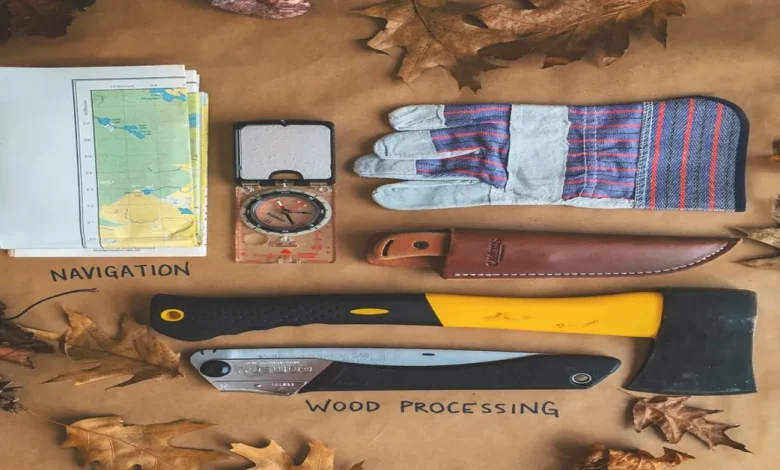
Phones die. Batteries fail in cold weather faster than anyone tells you a fully charged phone can drop to 20% in under an hour at 20°F. GPS devices are better, but they’re not infallible. Map and compass navigation feels like an old-fashioned skill until it’s the only skill that works.
Here’s the counterintuitive part: you don’t need to become an expert orienteer. You need to know just enough to not walk in the wrong direction for four hours. Learning to identify major terrain features ridgelines, drainages, which way water flows and matching them to a topo map is a skill you can build in a weekend. Most people never bother. That’s the gap.
The Shelter Problem Nobody Talks About
Survival instructors will tell you the rule of threes: three minutes without air, three hours without shelter in harsh conditions, three days without water. The shelter number is the one that catches people. Three hours sounds like a lot until you’re wet and the wind picks up and your body is losing heat faster than it can generate it.
But here’s where I’ll push back against the standard advice: most backcountry survival situations don’t require you to build a debris hut or weave a lean-to from branches. What they require is that you stop moving, get out of the wind, and insulate yourself from the ground. A good emergency bivy the cheap crinkly kind that weighs three ounces has saved more lives than any wilderness survival course skill. Carry one. Every single time.
Water and the Overconfidence Trap
There’s a specific kind of overconfidence that hits experienced hikers, and it goes something like this: “I’ve been out here a hundred times, I know this area, I’ll be fine.” That’s exactly the mindset that leads to someone like Marcus a guy I met at a trailhead in Colorado, 15 years of hiking experience ending up in a ranger station after drinking straight from a “clean-looking” stream and spending two days unable to keep anything down. Giardia doesn’t care about your experience level.
Filter everything. Always. Even if it looks crystal clear. Even if you’ve drunk from that same stream before. The one time you don’t is usually the one time it matters.
The Mental Game Is the Whole Game
This is the part that doesn’t show up in any gear review, and honestly, it’s the part that separates people who make it from people who don’t. When things go sideways in the backcountry, the body follows the mind. Panic accelerates heat loss. Panic leads to poor decisions. Panic makes you move when you should stay still, or stay still when you should move.
The single most useful thing I ever learned not from a book, from a search-and-rescue volunteer named Dale who’d seen it all was this: when you feel panic rising, stop moving completely for 60 seconds. Just stop. Breathe. Look around. Name five things you can see. It sounds almost embarrassingly simple, and it works.
Your brain is the survival tool that doesn’t run out of batteries.
What Actually Keeps You Alive in the Backcountry
None of this is meant to scare you off the trail. The backcountry is worth every inconvenience, every early wake-up, every blister. But the version of wilderness survival that actually keeps people alive isn’t built from gear lists and YouTube tutorials. It’s built from honest self-assessment, practiced skills, and the willingness to make the call that feels like failure in the moment turning back, asking for help, admitting you’re lost but is actually the smartest thing you can do.
The wilderness doesn’t grade on effort. It grades on outcomes.
So before your next backcountry trip, don’t just check your pack. Check your decisions. Practice the uncomfortable stuff. And maybe just maybe leave the ego at the trailhead.