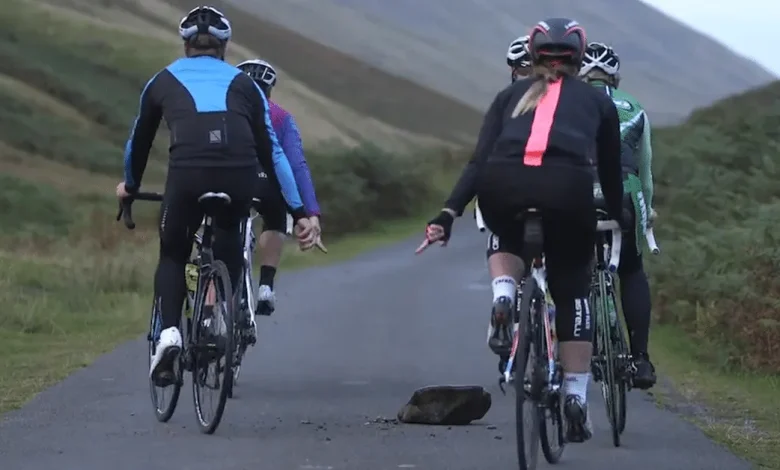
A Gesture That Weighs More Than It Looks
There’s a moment every cyclist knows. You’re grinding up a long climb, lungs burning, thighs screaming, and then another rider comes down the opposite side. For a fraction of a second, your eyes meet. And then or maybe not one of you raises a hand. That tiny motion, barely two inches of travel, somehow carries the weight of an entire subculture behind it.
The wave between cyclists isn’t just a greeting. It’s a recognition, a handshake between strangers who share something that most people driving past in climate-controlled cars will never quite understand. But like everything that matters in human social life, it has rules. Nobody wrote them down. Nobody voted on them. They exist anyway, passed along through experience, through awkward moments, through the quiet shame of waving at someone who didn’t wave back.
Where the Wave Came From
Motorcyclists have their own version the low two-finger point toward the road, a tradition with enough mythology around it that entire Reddit threads debate its origin. Cyclists developed something similar, though the form varies wildly by region, terrain, and the particular tribe of rider you happen to belong to.
Road cyclists tend toward the understated nod or a few fingers lifted off the handlebar drop. Mountain bikers are generally more expressive a full hand, sometimes a shout. Gravel riders, that hybrid breed still figuring out their own identity, seem to have landed somewhere in between: a casual open palm that says “I’m laid-back but I still trained for six hours this week.”
The gesture predates Strava, predates carbon fiber, predates the whole performance apparatus that now surrounds recreational cycling. It comes from something older and more instinctive the human need to acknowledge a fellow traveler. Out on a quiet road at six in the morning, you are both doing something the rest of the world is asleep for. That deserves acknowledgment.
The Unspoken Calculation
Here’s what nobody tells you: there is an entire social calculus running in the background every time two cyclists approach each other.
You factor in speed. If you’re both moving fast in opposite directions, the window is half a second and your hands are probably buried in the drops. A nod is sufficient. A full wave would be performative, almost theatrical.
You factor in effort. Someone who is visibly suffering mouth open, head down, watts clearly in the red is exempt. Waving at a rider in the middle of an interval is like tapping someone on the shoulder during a job interview. You can see they’re occupied. The unspoken rule is to let them be.
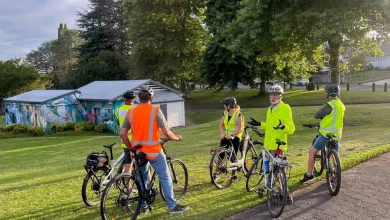
You factor in group dynamics. A solo rider waves. A group of two or three usually waves. A peloton of twenty riders in matching kit moving at 28 miles per hour? They are a different organism entirely. The social contract shifts. You might get a wave from the rider at the back. You might get nothing. Don’t take it personally.
And then there’s the terrain calculation, which is perhaps the most nuanced of all. Coming down a technical descent, hands belong on the brakes, eyes belong on the road. Expecting a wave there is unreasonable. Going up a steep pitch, a rider’s entire physical and psychological resources are committed to not stopping. A nod is generous. Anything more is a miracle.
The Politics of Who Waves First
This is where it gets genuinely complicated, and where the most social anxiety lives.
In theory, either rider can initiate. In practice, there’s a subtle current of expectation that flows based on speed, direction, and a dozen other invisible variables. The rider going downhill is often expected to wave at the rider going up, because they have the easier physical situation. The rider traveling faster generally has less time to react, so the slower rider carries more of the social burden.
But none of this is fixed. And the failure modes are memorable. You wave and they don’t wave back. For a moment, you feel slightly foolish, slightly rejected, in a way that’s entirely disproportionate to what just happened. A stranger on a bike didn’t wave at you. The sun still rose. Your legs still work. And yet.
Some riders have a policy of always waving first, regardless of context. There’s a generosity in this, a willingness to absorb the social risk. Others have been burned enough times that they’ve adopted a wait-and-see approach, a kind of defensive non-initiation. Neither strategy is wrong. Both reveal something true about the person holding the handlebars.
When the Wave Gets Complicated
Not everyone waves, and the reasons are more varied than the cynical interpretation suggests.
New cyclists often don’t know the wave exists. They’re too busy managing gears, traffic, and the general terror of clipless pedals to have absorbed the social layer of the sport yet. Waving at a beginner and getting nothing back isn’t a snub it’s just someone who hasn’t been inducted yet. Give it a season.
Then there are the riders who are simply in a different mental space. Cycling, especially long-distance cycling, induces a particular kind of moving meditation. Some people go deep into that state and genuinely don’t register the social environment around them. They’re not being rude. They’re somewhere else entirely.
And yes, some people just don’t wave. Maybe they had a bad experience. Maybe they came from a racing background where the etiquette is different and interactions between riders are transactional rather than communal. Maybe they’re having a terrible day and the wave feels like one more thing they can’t give right now. You don’t know. The road doesn’t come with context.
What It Means When It Actually Lands
The best waves happen on the worst days. You’re forty miles from home, the wind shifted and it’s now directly in your face, your nutrition was off and your legs feel like wet concrete. And then another rider comes the other direction, sees you, and gives you the nod not perfunctory, but genuine. Eyes meeting for just a beat longer than necessary. A small acknowledgment that says: I see you out here. I know what this costs.
It doesn’t fix anything. But it changes the texture of the next mile in a way that’s hard to explain to someone who hasn’t felt it.
There’s a word in Welsh hiraeth that describes a longing for something you can’t quite name or return to. The wave between cyclists touches something adjacent to that. It’s a reminder that you chose to be out here, that someone else made the same choice, and that the choosing itself is what connects you. No club membership required. No matching kit. Just the road and the shared decision to be on it.
The Etiquette Nobody Will Admit to Enforcing
Cyclists remember. Not maliciously, but the way anyone remembers a social slight that confused them. The rider who blew past you without acknowledgment on a quiet country lane at seven in the morning you’ll recognize them next week. And you’ll watch to see if they’ve changed.
This is the quiet enforcement mechanism behind the unwritten rules. There’s no penalty system, no governing body. But reputation accumulates, especially in local riding communities where the same roads get ridden by the same people week after week. Being known as someone who waves, who acknowledges, who participates in the small social fabric of the sport that matters more than most cyclists would openly admit.
The wave is, in the end, a vote for a certain kind of world. One where strangers acknowledge each other. Where shared effort creates temporary kinship. Where you don’t need an introduction to say, simply: I see you. I’m glad you’re out here too.
Whether or not the person coming the other way waves back is, ultimately, their business. Yours is to keep your hand moving.