The Unspoken Rules of the Hunting Camp You Won’t Find in Any Manual

The Manual Exists. Nobody Reads It.
Every hunting camp has a written set of rules somewhere laminated, tacked to a corkboard, or tucked inside a binder that smells faintly of mildew and old coffee. It covers the obvious stuff. Don’t discharge a firearm inside camp. Sign in and out. Pack out your trash. These rules exist because at some point, someone did something stupid enough that it had to be codified in ink.
But the real rules the ones that actually hold a camp together across decades those never make it onto any laminated sheet. They live in the silences between men who’ve hunted the same ridge for thirty years. They get transmitted through a look, a pause, or the deliberate way an old-timer sets down his mug before he says something. You either absorb them over time or you violate them and spend years earning back what you lost in a single morning.
This is about those rules.
The Firepit Is Not a Stage
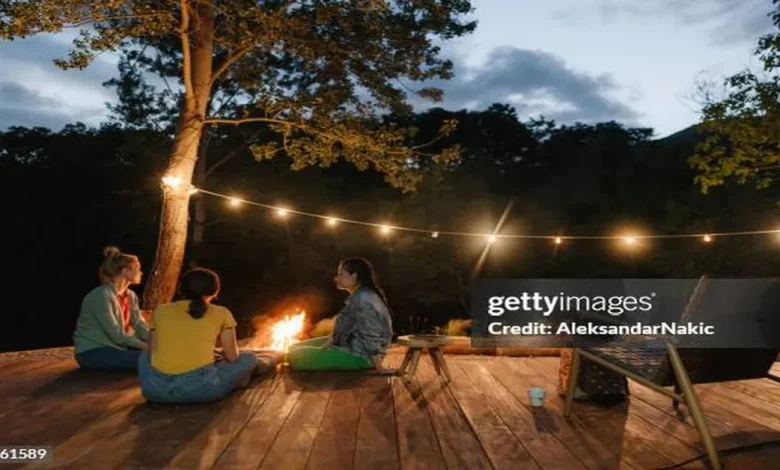
There’s a reason the fire draws people in. It’s warm, it’s central, and it creates the illusion that whatever happens around it is communal and equal. But watch any camp long enough and you’ll notice that the firepit has its own invisible architecture. Certain men talk more. Others listen. And the ones who’ve been coming longest tend to say the least at least until something actually needs to be said.
The unspoken rule here is that the fire is not your platform. New members who arrive with stories already loaded in the chamber, who are visibly waiting for a gap in conversation to fire off their best hunting memory they get noticed. Not in a good way. The firepit rewards patience. It rewards the guy who laughs at someone else’s story before he tells his own. The man who dominates the first night’s conversation often finds himself sitting slightly outside the circle by the third.
This isn’t about being quiet. It’s about reading the room. The fire has a rhythm, and your job is to find it, not set it.
What You Do with Someone Else’s Miss
A hunter misses a shot. This happens. It happens to everyone, including the guy who’s been hunting since before you were born. What happens in the next sixty seconds inside camp how the other hunters respond says everything about the culture of that particular group.
The amateur instinct is to analyze. To ask what happened, to suggest what might have gone wrong, to offer a helpful observation about wind or angle or trigger pull. Resist this entirely. Unless the hunter specifically asks for your read, your job is to say almost nothing. A nod. Maybe “tough shot.” Then you move on.
The deeper rule underneath this one is about ego preservation. Hunting involves failure at a rate that most sports wouldn’t tolerate. A miss isn’t just a mechanical error it often carries hours of early rising, careful positioning, and emotional investment. Picking it apart publicly, even gently, is a form of disrespect that the other person may never directly address but will absolutely remember.
The men who understand this become the ones others want to hunt beside. Not because they’re sycophants, but because they understand that silence can be the most generous thing you offer.
The Unwritten Seniority of Space
Every camp has its spots. The particular chair closest to the heater. The peg by the door where the best gear always hangs. The bunk that gets the most airflow in summer. These aren’t assigned in any formal sense, but they are absolutely assigned. The hierarchy is invisible and completely understood by everyone who’s been there more than one season.
Sitting in someone’s chair isn’t just a social misstep it’s a small act of territorial violation that disrupts something older than the camp itself. Hunters are, at their core, deeply territorial creatures. That’s part of why they’re out there in the first place. Ignoring the spatial seniority of a camp is like ignoring the grain of the wood when you’re trying to split it. You can do it, but you’ll work harder and make a mess.
The practical advice is simple: in your first season, don’t claim anything. Take what’s left. Watch where people naturally migrate. By your second year, you’ll know exactly where you belong without anyone having to tell you.
Meat Care Is Moral Character
How a hunter handles an animal after the kill is watched more carefully than almost anything else they do. It’s not discussed openly no one’s going to sit you down and explain that they’re evaluating you but the evaluation is happening constantly.
Sloppy field dressing, leaving meat to spoil through carelessness, being cavalier about the cooling process these things mark a hunter in ways that no amount of skill in the field can fully undo. Conversely, a hunter who works quickly and carefully, who treats the animal with a kind of quiet seriousness, earns respect that compounds over time.
This connects to something larger than hygiene or waste prevention. The unspoken belief in most serious hunting camps is that the animal deserves a certain dignity in death, and the hunter who provides that is demonstrating something about their fundamental character. It’s not religious exactly, though for some it is. It’s more like a shared ethic that never gets articulated because the people who hold it assume everyone else already understands it.
When someone doesn’t understand it, the gap becomes immediately visible.
The Rule About Asking Where Someone Hunts
Don’t.
This one is so deeply embedded it barely needs explanation in experienced circles, but it catches newcomers off guard every time. A hunter’s specific spots the hollow where the deer bed, the ridge where the elk move at first light, the particular drainage that produces year after year these are not shared information. They represent years of scouting, of early mornings, of reading sign and learning terrain. Asking someone directly where they hunt is essentially asking them to hand over years of private investment.
The polite fiction that most camps maintain is that everyone hunts “the usual spots” or “up the mountain” or some other geographic vagueness that reveals nothing. This is not deception. It is courtesy. And the newcomer who pushes past the vague answer, who follows up with “yeah but which part of the mountain?” that person has just revealed something about themselves that will not be forgotten.
Information in a hunting camp flows on its own schedule. If someone wants you to know where they hunt, they’ll show you. That invitation comes with time and trust, and it cannot be accelerated by asking.
Showing Up Right
There’s a version of this that happens before the season even starts. How a hunter shows up their preparation, their gear, their physical readiness communicates something before they’ve said a word. A man who arrives out of shape for terrain that demands fitness is, in a subtle way, asking others to accommodate him. A hunter whose equipment is poorly maintained is broadcasting that they haven’t taken the work seriously.
None of this gets said aloud. But it gets factored in when decisions are made about who goes where, who gets paired with whom, whose judgment gets trusted in the field.
The camps that last generations aren’t held together by the written rules on the corkboard. They’re held together by a shared standard that everyone maintains because they’ve watched what happens when someone doesn’t. The standard is unspoken because it doesn’t need to be spoken. It only needs to be lived.
And somewhere in that invisible agreement between the silences at the firepit, the careful handling of an animal in the cold morning air, the deliberate vagueness about a favorite ridge is the actual culture of the camp. The part that makes it worth coming back to, year after year, long after the hunting itself has become almost secondary to everything else it means to be there.