It’s Not the Fire Starter. It’s Not the Knife.
Picture this: you’re three miles into a backcountry trail in the Cascades, the temperature drops fifteen degrees in forty minutes, and your buddy Marcus experienced hiker, good gear, solid judgment starts fumbling with his pack. Not looking for his rain jacket. Not grabbing his emergency blanket. He’s digging for his phone to check the weather app. No signal. Blank screen. And suddenly, all that preparation feels like it happened to someone else.
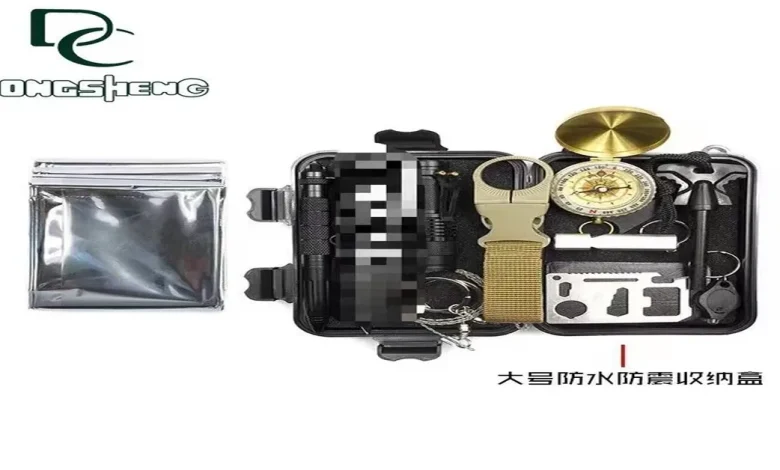
Marcus had a knife. He had a fire starter. He had a first aid kit that cost more than my first car. But what he didn’t have what neither of us had, honestly was the one tool that would’ve changed everything in that moment.
A detailed, waterproof topographic map. And the knowledge to actually use it.
I know. You’re already rolling your eyes. A map? Really? But hear me out, because I’ve been where Marcus was, and I’ve also been on the other side of that moment the side where you know exactly where you are when everything else fails.
Why Survival Gear Lists Keep Getting It Wrong
Every “ultimate survival kit” article on the internet has the same lineup. Fire starter, water filter, emergency whistle, multi-tool, paracord. And look, none of that stuff is wrong. A good fixed-blade knife has saved people. A quality water filter is non-negotiable in certain environments.
But here’s the thing nobody wants to say out loud: most of those tools only matter once you’ve already made a critical navigation error. They’re damage control. A map used correctly, before you’re lost is prevention.
There’s a reason search and rescue teams don’t just bring GPS units. They bring paper maps. Because electronics fail. Batteries die. Screens crack. And when you’re at 9,000 feet in the Rockies with a storm rolling in, “my phone died” is not a survival strategy.
Yet somehow, the topo map keeps getting left off the essential gear conversation. It’s not exciting. You can’t post a photo of it that gets forty thousand likes. It doesn’t have a carbon fiber handle or a 400-lumen beam. It just sits there, folded in a zip-lock bag, quietly being the most important thing in your pack.
The Real Problem Is That Nobody Teaches Map Reading Anymore
Here’s where I have to be honest about my own failure. A few years back, I carried a topo map on every trip and I had absolutely no idea how to read the contour lines properly. I thought I did. I’d glance at it, feel like I understood the general shape of the terrain, and then trust my gut for the rest.
That worked fine until it didn’t.
On a solo trip near Glacier National Park, I misread a ridgeline as a valley approach. Spent two extra hours backtracking in fading light. Not dangerous in the end, but it could’ve been. The map was right there in my hand the whole time. I just didn’t actually know how to interpret what it was telling me.
So I took a course. A real one not a YouTube video, not a Reddit thread. A weekend land navigation course run by a retired Army Ranger named Dale who had zero patience for people who confused a magnetic declination with a true north bearing. It was humbling. It was also the most practically useful thing I’ve ever done for my outdoor safety.
What a Topo Map Actually Tells You (That Your GPS Doesn’t)
A GPS gives you a dot. It says: you are here.
A topo map gives you a story. It says: here’s what the land is doing around you, here’s where the water runs, here’s where the terrain will funnel you if visibility drops to zero, here’s the ridge that’ll block your radio signal, here’s the drainage that looks like a shortcut but will cliff out in half a mile.
That’s a completely different category of information.
Contour lines show elevation change. Close together means steep and I mean genuinely steep, not “this is a little uphill” steep. Widely spaced means gradual. Circles within circles usually mean a summit or a depression. Blue lines are water. Green means vegetation dense enough to matter. Once you can read those symbols fluently, the landscape starts to make sense in a way that no screen can replicate.
And here’s the counterintuitive part that a lot of people resist: learning to navigate by map and compass actually makes you better at using GPS, because you understand what the device is trying to show you instead of just staring at a blinking dot.
The Gear Nobody Argues About Is Probably Not the Gear You Need
There’s a weird social dynamic in the outdoor community and maybe I’m wrong about this, but I’ve seen it enough times to believe it where the gear that generates the most conversation is rarely the gear that matters most in a real emergency.
People will spend forty-five minutes debating titanium versus stainless steel cookware. Nobody debates maps. Nobody posts “map haul” videos. Nobody brags about their compass at the trailhead.
But when things go sideways? The person who knows where they are wins. Every time.
The survival tool you actually need is the one that keeps you from needing the other survival tools.
A quality waterproof topo map for your specific region costs around twelve to fifteen dollars. A baseplate compass a Suunto A-10 or a Silva Ranger runs you twenty-five to forty bucks. The land navigation skills to use them effectively take a weekend to learn at a basic level and a lifetime to refine.
That’s a cheaper investment than most people’s hydration packs. And it might be the most important one you ever make.
What to Actually Do With This Information
Start with your next planned trip. Before you go, pull the topo map for that area the USGS has free downloadable maps at usgs.gov, and you can print or purchase waterproof versions. Study it before you leave. Identify your trailhead, your destination, the major ridgelines and drainages in between. Know what elevation gain looks like on paper before you feel it in your legs.
Bring the map. Bring a compass. And actually look at them while you’re hiking, not just when you’re confused.
Practice taking a bearing from a known landmark. Practice identifying where you are on the map by matching terrain features to what you see around you. Do it when you’re not lost because that’s the only time you’ll develop the muscle memory to do it when you are.
And maybe sign up for a land navigation course. Dale’s retired now, but there are REI courses, orienteering clubs, and wilderness survival schools in most regions that offer exactly this kind of training. It’s not glamorous. But neither is spending a night in the wrong drainage because your battery died.
What’s actually in your pack right now and do you know how to use all of it when the screen goes dark?