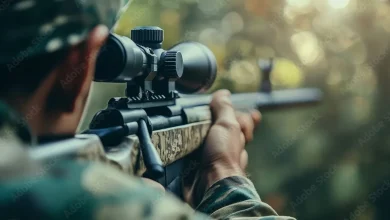
There’s a moment, familiar to anyone who has spent serious time behind a rifle, when the crosshairs settle and the world narrows to a single point of decision. At 200 yards, that moment carries a certain weight manageable, intimate almost. At 800 yards, or 1,200, or beyond, something fundamental shifts. The animal has no awareness of you. The wind has traveled farther than most people walk in a day. And the margin between a clean kill and a catastrophic miss has widened into territory that demands a harder conversation than the hunting community has often been willing to have.
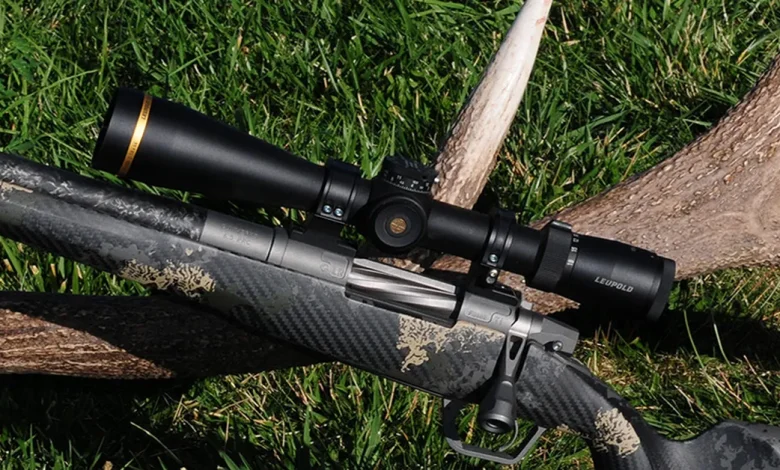
Long-range hunting loosely defined as taking shots beyond 500 yards, though the culture pushes that ceiling higher every season has exploded in popularity over the past decade. Better optics, precision ammunition, and the rise of long-range shooting sports have handed hunters tools that previous generations couldn’t have imagined. A .300 PRC or a 6.5 Creedmoor in the hands of a practiced shooter can deliver lethal energy at distances that once belonged purely to military snipers. The question isn’t whether the technology exists. It clearly does. The question is whether possessing a capability obligates you to use it or whether ethics demand something more complicated than ballistic charts can provide.
The Clean Kill Standard and Why Distance Complicates It
At the center of hunting ethics sits one principle almost universally agreed upon: the obligation to pursue a clean, humane kill. It’s the standard against which every shot decision should be measured. And it’s precisely this standard that long-range hunting strains, sometimes to the breaking point.
A bullet traveling 1,000 yards is no longer the same projectile that left the muzzle. It has shed velocity, energy, and stability. Wind drift at that distance isn’t measured in inches it’s measured in feet. A 10 mph crosswind that a shooter estimates as 8 mph doesn’t produce a minor error at long range; it produces a miss or, worse, a wound. The animal doesn’t move predictably. A mule deer that was standing broadside when the trigger broke may have taken a step by the time the bullet arrives half a second later.
None of this is speculation. Wounding rates in hunting are notoriously underreported, but studies and field surveys consistently suggest that a significant percentage of shot animals are never recovered. Long-range shooting, by compressing margin for error while simultaneously expanding the variables that produce error, almost certainly worsens that ratio. Proponents will argue that skilled practitioners account for all of this and some genuinely do. But the culture surrounding long-range hunting doesn’t always reward restraint. It rewards distance.
When Skill Becomes the Argument and Its Limits
The most compelling defense of long-range hunting is also the most honest one: it depends entirely on the shooter. A world-class precision marksman who has spent thousands of hours behind a rifle, who knows his ballistic data to four decimal places, who trains in wind reading the way musicians train scales, and who exercises genuine judgment about conditions that person may be capable of ethical shots at distances that would be reckless for the average hunter.
This is true. And it’s also where the argument quietly collapses under its own weight.
Shooting culture, like most cultures, doesn’t police itself cleanly at the margins. The same social media ecosystem that showcases genuine masters also celebrates shots taken in marginal conditions by hunters whose preparation was nowhere near adequate. The dopamine hit of a long-range kill filmed and posted is real. The pressure to match what others are doing is real. And the psychological phenomenon known as optimism bias the near-universal tendency to believe you’re more skilled than you are is especially dangerous when the consequence of overconfidence is a wounded animal dying slowly in a canyon you can’t reach before dark.
Skill is a legitimate variable. It is not a blanket justification.
The Fair Chase Question Nobody Wants to Answer
Hunting has long operated under the philosophical framework of fair chase the idea that the animal must have a reasonable chance to detect, evade, and escape the hunter. It’s a concept with genuine ethical teeth, even if its edges are blurry. And long-range hunting applies pressure to fair chase in ways that deserve direct examination rather than defensive deflection.
At 1,000 yards, a deer cannot smell you, hear you, or see you. It has no behavioral cues that danger is present. The encounter is entirely asymmetric in a way that feels categorically different from spot-and-stalk hunting, from still hunting in timber, even from traditional rifle hunting at conventional ranges. The animal has been reduced to a target in the purest sense an object in a scope, not a creature in a landscape.
Some hunters will say this is fine. That the goal is meat and management, not the drama of proximity. That fair chase is a romantic notion that shouldn’t override effective, efficient harvest. These are honest positions, even if they’re uncomfortable ones. What they require, though, is intellectual honesty about what’s being traded away. Long-range hunting, taken to its extreme, begins to resemble something other than hunting in any traditional sense and the community should be willing to name that clearly rather than insisting the two are identical.
The Land and the Shot You Don’t Take
There’s a dimension to this conversation that rarely surfaces in the ballistics forums and YouTube comments: the relationship between hunter and place. Traditional hunting ethics have always included a spatial intimacy the obligation to know the land, to move through it, to earn proximity. This isn’t sentimentalism. It’s the practical foundation of skills like reading sign, understanding animal behavior, and making sound judgments about when and where to shoot.
Long-range hunting, at its worst, can become a way of circumventing that intimacy entirely. Drive to a ridge, glass a basin, shoot across it. The animal is never encountered so much as acquired. And while this may be legal, efficient, and sometimes even ecologically sound from a management perspective, it represents a genuine departure from the experiential and ethical tradition that hunting has used to justify itself to skeptical publics for generations.
The hunters who do this well who combine long-range capability with deep woodsmanship, who use distance as a last resort rather than a first option, who walk away from shots that don’t feel right regardless of what the rangefinder says those hunters exist. They’re just not always the loudest voices in the room.
Drawing a Line in Moving Sand
So how far is too far? The honest answer is that there is no universal number, and anyone who gives you one is probably selling something. The ethical ceiling isn’t set by yards. It’s set by the intersection of shooter competence, environmental conditions, equipment capability, and most critically the willingness to make a decision that prioritizes the animal’s welfare over the shooter’s desire for a story.
What the long-range hunting community could benefit from is less celebration of raw distance and more honest conversation about the shots that weren’t taken. The 900-yard attempt that got passed because the wind was switching. The animal that walked because the shooter wasn’t confident enough in the reading. These decisions don’t make compelling content. They don’t generate views. But they’re the ones that actually define whether long-range hunting is a discipline or a spectacle.
Technology will keep advancing. Rifles will shoot flatter, optics will resolve finer detail, ballistic computers will shrink into wrist-mounted devices. The distance at which a shot is physically possible will keep expanding. Whether that distance is ethical will always depend on something the technology can’t provide judgment, restraint, and the willingness to ask whether you should before you ask whether you can.
That question doesn’t get easier with better gear. If anything, it gets harder.