The One That Got Away Because of a Stuck Zipper
It was opening morning of elk season in Colorado, somewhere outside of Glenwood Springs, and my buddy Derek had a bull standing broadside at 180 yards. Perfect shot. He reached for his rangefinder and the zipper on his pack pocket jammed. By the time he got it open with his bare hands, the bull was gone. Into the trees. Just like that.
Now, Derek’s a smart guy. He had a rifle, calls, good boots, three days of food. But he didn’t have a multi-tool. A $40 piece of kit that would’ve had that zipper open in four seconds. That bull probably ended up on someone else’s wall.
That’s the thing about multi-tools for hunters most guys think about them after the moment they needed one.
Why “I’ll Just Use My Knife” Doesn’t Cut It
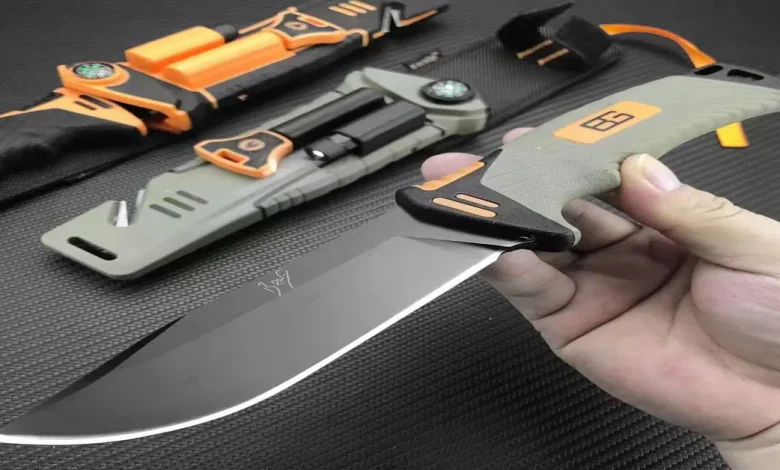
Here’s the honest truth: a hunting knife is irreplaceable for field dressing, skinning, and caping. Nobody’s arguing that. But a knife doesn’t tighten a loose scope mount. It doesn’t strip a wire if your e-collar dies at 6 a.m. It doesn’t pull a broken broadhead tip out of your arrow shaft so you can reuse the rest.
A hunting knife is a specialist. A multi-tool is the generalist that covers everything the specialist can’t touch.
And yet walk into any hunting camp and count how many guys have a multi-tool on their belt or in their pack. I’d bet it’s fewer than you’d expect.
The Multi-Tools Hunters Actually Forget to Carry
A Compact Plier-Based Multi-Tool (And Not the Fancy One)
Most hunters who do carry a multi-tool are carrying something too big, too heavy, or so loaded with features they never use that it becomes dead weight. I made this mistake myself bought a 21-function beast that weighed nearly a pound. Left it in the truck after day one.
The sweet spot for hunting is something in the 4–6 oz range with solid pliers, a serrated blade, a flathead and Phillips driver, and a file. That’s it. You don’t need the scissors that barely cut. You don’t need the fish scaler if you’re chasing whitetail.
Leatherman’s Skeletool and the Gerber Suspension-NXT both hit this range. Neither one will make you feel like you’re hauling hardware. One of them might save your whole hunt.
A Compact Saw Not a Blade, an Actual Saw
This one surprises people. But if you’ve ever had to clear a shooting lane last minute, cut through a pelvis during field dressing, or work through a frozen carcass in late-season cold, you already know a blade isn’t the right tool.
A compact folding saw something like the Bahco Laplander or the Silky Pocketboy packs down to almost nothing and cuts through bone or wood in a fraction of the time. It’s not a multi-tool in the traditional sense, but it fills a gap that nothing else does as well.
Here’s the slightly controversial take: I’d argue a folding saw is more useful on most hunts than a second fixed-blade knife. Most hunters carry two knives. Almost none carry a saw. That math seems backwards to me.
A Fire-Starting Multi-Tool Kit
Not just a lighter. Not just matches. A small kit lighter, waterproof matches, and a ferro rod that covers you when one of them fails. Because one of them always fails eventually.
I was bowhunting in Wyoming, mid-October, temperatures dropped overnight to about 19 degrees. My lighter worked fine until it didn’t, because butane doesn’t love the cold. The ferro rod was the backup that actually mattered that morning. Small thing. Huge difference.
Keep this kit in a waterproof bag. Toss it in your pack and forget about it until you need it. You’ll be glad it’s there.
A Headlamp With a Red Light Mode
Every hunter thinks they have this covered. Most don’t not really. They’ve got a headlamp, sure, but it’s the one from the garage that eats through batteries in two hours and doesn’t have a red light setting.
Red light preserves your night vision and doesn’t spook game the way white light does. This matters enormously if you’re setting up before first light, navigating back to camp after a late recovery, or field dressing in low-light conditions without blowing out your eyes.
The Black Diamond Spot and the Petzl Actik Core both have solid red modes. Neither costs more than $50. And both have rechargeable options which matters more than people realize when you’re three days from a power outlet.
A Compact First Aid Kit That’s Actually Customized
The stock first aid kits from outdoor stores are mostly fine. But they’re built for the average hiker, not a hunter. They’re missing things like a tourniquet, hemostatic gauze, and a SAM splint all of which matter a lot more when you’re carrying sharp broadheads, climbing in rough terrain, and potentially miles from a road.
Build your own. Or buy a base kit and add to it. This isn’t paranoia it’s just acknowledging that hunting involves real physical risk in remote places, and a Band-Aid isn’t going to handle everything.
The One You’re Probably Skipping Over
A quality zip-tie and duct tape combo. Laugh if you want.
I’ve used zip ties to reattach a broken treestand platform bracket 20 feet up. I’ve used duct tape to patch a boot sole that separated on day two of a five-day pack-out. I’ve seen guys use it to temporarily fix a cracked rifle stock, seal a tent seam, and strap a broken trekking pole back together.
You can carry about a dozen zip ties and six feet of duct tape wrapped around a lighter and the whole thing weighs almost nothing. It’s the most boring, unglamorous piece of kit in your pack.
It’s also the one that earns its keep more than almost anything else.
What Actually Makes a Multi-Tool Worth Carrying
The best multi-tool for hunting isn’t the one with the most features. It’s the one you actually have on your body when something goes wrong.
That’s it. That’s the whole answer.
Redundancy matters. Weight matters. Accessibility matters which is why a multi-tool buried at the bottom of your pack is only slightly better than one sitting in your truck. Put it on your belt. Make it part of your kit the same way your knife is.
Because Derek’s elk didn’t care that the right tool was in the wrong pocket. And neither will yours.
What’s the one piece of kit you’ve reached for in the field and realized too late you left behind?