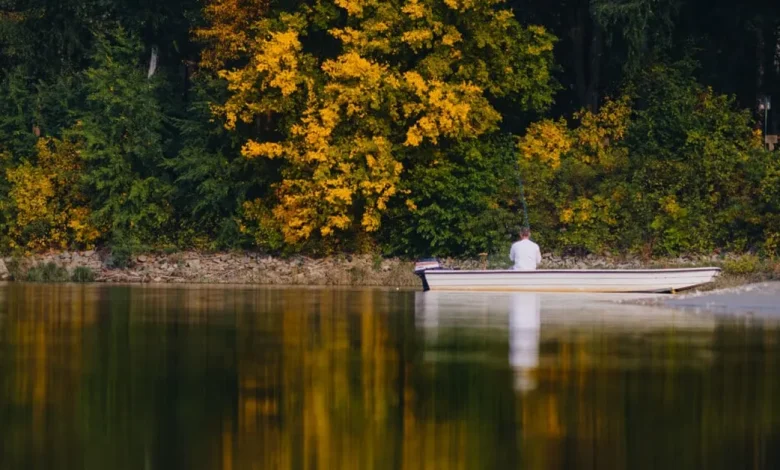
The Art of the Fisherman’s Nap: Finding the Perfect Shade Tree
There’s a particular kind of man and it’s almost always a man, though the women who fish know this secret too who doesn’t actually come to the water to catch fish. He comes to sleep. The rod goes in the holder, the bobber hits the surface, and within twenty minutes he’s gone, hat tipped over his face, chest rising and falling in the slow rhythm of someone who has genuinely, completely let go. Ask him later how the fishing was, and he’ll say fine, just fine, maybe scratch the back of his neck and mention the water was a little murky. He won’t mention the nap. He doesn’t need to. The nap is the whole point.
This is the fisherman’s nap one of the last truly defensible forms of daytime sleep left in the modern world. It has a cover story. It has props. It has the moral authority of a man who woke up before dawn, drove forty minutes in the dark, and is now, technically, working. Nobody bothers a sleeping fisherman. That’s practically a social contract.
But here’s what separates a good fisherman’s nap from a great one: the tree.
Why the Tree Matters More Than You Think
Shade is not a luxury in this context. It’s the entire architecture of the experience. Sleep outdoors in full sun and you’ll wake up twenty minutes later with a pounding head, a sunburned forearm, and the vague sense that you’ve been punished for something. Sleep in the wrong shade the thin, nervous shade of a young tree that lets the wind move it constantly and you’ll spend the whole nap half-awake, chasing comfort that keeps shifting two feet to the left.
The right tree does something almost impossible to articulate but immediately recognizable when you find it. It creates a microclimate. The air underneath a mature oak or a wide-spreading pecan is measurably cooler than the air five feet away. The canopy intercepts direct radiation, sure, but it also traps a layer of still air beneath it, and that stillness is what lets a body temperature drop just enough to cross the threshold into real sleep. Not a doze. Not a drift. Actual sleep, with the depth and the dreams.
There’s also the question of sound. A good shade tree filters noise differently than open air. Wind through leaves creates what sleep researchers would call pink noise not the flat white hiss of a machine, but something with texture and variation, close enough to random that the brain stops trying to parse it and finally gives up its vigilance. The water helps too, obviously. But the tree completes it.
Reading a Riverbank Like a Napper
Most fishermen scan a bank for structure submerged logs, drop-offs, the seam where fast water meets slow. A connoisseur of the fisherman’s nap scans for something else entirely. He’s looking for the angle of the sun relative to the canopy, the slope of the ground beneath the tree, and the distance to the water’s edge.
The angle of the sun matters because shade moves. A tree that offers perfect cover at nine in the morning may leave you fully exposed by eleven. You have to think ahead, which is its own small pleasure a kind of lazy geometry. You’re not just finding shade; you’re finding shade that will last. This means, in practical terms, that you want a tree on the east bank of a north-south running water in the morning, because the sun will be moving west and the canopy will hold. In the afternoon, you flip it. Old-timers know this without thinking about it. They just walk to the right spot.
The slope of the ground is underrated. A slight incline just a few degrees, enough to let your head rest a touch higher than your feet changes everything. Flat ground sounds comfortable but often isn’t. Your lower back gets involved, starts registering complaints around the fifteen-minute mark. A gentle slope lets the body find its natural resting angle, the one it’s been looking for since you got out of bed at five.
Distance to water is more psychological than physical. You want to hear it. You don’t want to be so close that every ripple demands your attention, that part of your brain keeps monitoring whether the bobber moved. Somewhere between twenty and forty feet is the sweet spot for most people. Close enough to feel connected to the whole enterprise. Far enough to let it go.
The Trees That Earn the Title
Not every tree qualifies. This is not a democracy.
Willows, despite their romantic association with water, are often disappointing. The canopy is too diffuse, too theatrical all that weeping and trailing, and in the end not enough solid shade. They’re beautiful. They’re just not serious napping trees.
Cottonwoods are complicated. In the right season, a big cottonwood on a riverbank is magnificent, throwing shade like a small building, the leaves making that distinctive clatter that sounds like applause or rain. But cottonwoods drop things constantly seeds, small branches, the occasional larger limb without much warning. There’s a low-grade anxiety to sleeping under one that experienced nappers have learned to respect.
The oak family, broadly speaking, is the gold standard. White oaks especially. The canopy is dense without being oppressive, the branching structure is wide and horizontal, and a mature white oak has a quality of permanence that is itself relaxing. You feel, lying beneath one, that it has been there longer than your problems and will be there after them. That’s not nothing. That’s actually quite a lot.
Sycamores deserve more credit than they get. They grow large and fast near water, their shade is reliable, and the mottled white and gray of the bark has a cooling visual effect that may be entirely psychosomatic but seems real. Pecan trees in the South are similarly underappreciated dense, fragrant in the right season, and structurally generous in a way that feels almost intentional.
What the Nap Actually Does
There’s a growing body of research on the restorative effects of nature exposure combined with short-duration sleep what some researchers are calling the “green nap” effect. The combination of natural light (filtered, not direct), ambient natural sound, and mild temperature reduction produces sleep that is disproportionately restorative relative to its length. Twenty minutes under a good tree, by some measures, does more than forty minutes in a bedroom with the curtains drawn.
But the fisherman knew this already. He didn’t need a study. He knew it the way you know things that are true in your body before they’re true anywhere else the way you know that the coffee is better when you drink it outside, that food tastes different when you’re genuinely hungry, that a nap beside moving water leaves you feeling like you’ve been away for a week.
There’s also something about the permission structure of it. The fisherman’s nap is guilt-free in a way that most adult sleep is not. You’re outside. You’re doing something. The rod is in the water. If something happens, you’ll be awake in seconds or at least that’s the story, and it’s a good enough story. The guilt that normally attaches itself to daytime sleep, that Protestant whisper about productivity and wasted hours, simply cannot find purchase here. It slides right off.
Finding Your Tree
The search itself is worth something. You walk the bank slowly, which you should be doing anyway, looking up instead of down for once. You’re assessing canopy density, ground conditions, sight lines to the water. You’re making a small decision with genuine stakes. The wrong choice and you spend an hour half-miserable. The right choice and you wake up, an hour later, genuinely unsure for a moment where you are that particular disorientation that only comes from sleep so deep it briefly erases context.
When you find the right tree, you’ll know it the way you know a good chair in a used bookstore. Something settles. You put your back against the bark, or you spread your jacket on the ground, or you just sit down in the roots and lean, and the tree does the rest.
The fish can wait. They’re not going anywhere. And honestly, you weren’t really here for the fish.