Picture this: you’re three miles into a trail, your pack already feels like a small car on your back, and somewhere up on that ridge there’s something moving could be an elk, could be a person, could be a rock doing absolutely nothing. You squint. Useless. And right then you think, I really should have brought something optical.
But here’s where it gets interesting. What you should have brought depends entirely on who you are and what you’re doing out there.
I’ve gotten this wrong before. Badly. I once lugged a full-size pair of 10×42 binoculars on a solo ultralight backpacking trip through the Cascades because I convinced myself I needed “serious glass.” By day two, those binoculars were sitting at the bottom of my pack, untouched, while my shoulders staged a quiet protest. That was the trip that made me actually think through this decision instead of just defaulting to “binoculars are better.”
They’re not always better. That’s the thing nobody really says out loud.
The Core Difference Nobody Explains Clearly
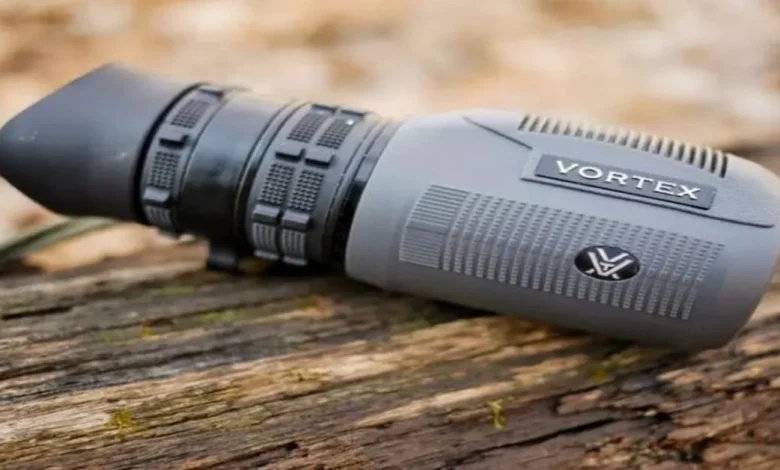
A monocular is essentially one half of a binocular. One eyepiece, one objective lens, compact enough to slip into a jacket pocket. A binocular uses both eyes simultaneously, which gives you depth perception, a wider field of view, and this part matters significantly less eye strain over long viewing sessions.
That last point is where most comparisons stop. But the real question isn’t which one is optically superior in a lab. It’s which one you’ll actually use, consistently, in the field.
And that answer is different for a birder, a hunter, a hiker, and someone who just wants to watch boats from a beach in Maine.
Where Monoculars Actually Win
Weight and Pack Space
A quality monocular can weigh as little as 3 to 4 ounces. A comparable binocular same magnification, similar optical quality might run 20 to 30 ounces. That’s not a small gap. For anyone counting grams on a multi-day trip, that difference is a meal’s worth of food weight.
My friend Dara she does solo thru-hikes and keeps a brutally tight gear list swapped to a monocular two years ago and never looked back. “I use it more now,” she told me, “because I don’t resent carrying it.” That’s the real metric. Gear you resent carrying becomes gear you leave at home.
One-Handed Operation
If you’re on a bike, on horseback, or scrambling across loose rock, pulling out a monocular and using it with one hand is genuinely practical. Binoculars require two hands and a moment of stability. Not always a dealbreaker but sometimes it is.
Casual, Quick Glances
For quick ID checks is that a red-tailed hawk or a turkey vulture? a monocular is fast enough. You’re not doing sustained observation. You’re just confirming something. A monocular handles that job without complaint.
Where Binoculars Are Simply Better
Extended Viewing Sessions
Here’s something that sounds minor until you experience it: using a monocular for more than a few minutes at a stretch is genuinely fatiguing. Your brain wants two eyes to work together. Force it to suppress one eye for long periods and you’ll feel it a low-grade headache, some dizziness, a kind of visual tension that builds up quietly.
Binoculars eliminate that entirely. Both eyes engaged, image fused naturally, and you can glass a hillside for an hour without feeling like you’ve been staring at a screen all day.
Depth Perception and Image Stability
The stereoscopic effect of binoculars isn’t just about seeing in 3D it also makes it easier to track moving subjects and judge distances. Hunters glassing for game across a canyon understand this intuitively. A moving deer at 400 yards is much easier to follow with two eyes than one.
And because your brain is doing less compensatory work, the image feels more stable, even if your hands aren’t perfectly still.
Comfort for Glasses Wearers
This is a detail that gets overlooked constantly. If you wear glasses, binoculars with adequate eye relief are dramatically more comfortable than monoculars. Most monoculars are designed with the assumption that you’ll hold them right up to your eye which doesn’t work well with glasses frames in the way.
The Magnification Question
Both come in a range of magnifications, but the comparison gets a little weird here. A 10x monocular and a 10x binocular have the same magnification, yes. But the binocular will almost always feel more stable at higher magnification because of that two-eye advantage.
Practically speaking: anything above 8x in a monocular becomes hard to use handheld without significant image shake. Binoculars at 8x or 10x are manageable for most people. If you’re pushing into 12x or higher, you’re looking at a tripod either way which somewhat levels the field.
Here’s a slightly controversial take I’d rather carry a 6x monocular I can actually use effectively than a 10x monocular that turns every heartbeat into a blur. Higher numbers on the spec sheet don’t help you if the image is dancing around.
What Kind of Outdoor Person Are You, Really?
This is the question that actually decides it.
If you’re a dedicated birder who spends hours scanning marshes or forest canopy, binoculars aren’t optional they’re the tool. Full stop. The eye strain from a monocular over a four-hour session would ruin the experience.
If you’re a fastpacking or ultralight hiking enthusiast who occasionally wants to check out a distant peak or confirm a trail junction, a monocular is probably all you need and a lot easier to justify carrying.
If you’re a hunter glassing for game across open country, binoculars win on almost every count stability, comfort, depth perception. The weight difference is less relevant when you’re set up in a blind or glassing from a ridge for an extended period.
And if you’re someone who just wants something in the car for random wildlife moments a monocular in the door pocket is the kind of thing you’ll actually reach for.
But wait what if you do multiple things? What if you’re a birder on some trips and a fastpacker on others?
Then you probably need both, and the real question is which one becomes your default. I know, not the clean answer anyone wants. But it’s the honest one.
A Note on Optical Quality
One thing that cuts across both categories: a mediocre binocular is worse than a good monocular, and vice versa. Lens quality, coatings, prism type these matter more than the monocular vs. binocular distinction at the lower end of the price range.
A $40 binocular with poor glass will disappoint you every time. A $150 monocular from a reputable brand will consistently impress. Don’t let the format decision distract you from the glass quality decision they’re both important, and people routinely get the priorities backwards.
So Which One Goes in Your Pack?
If I had to give a single recommendation and I know this is the part everyone skips to I’d say: start with a quality monocular if you’re not sure, and upgrade to binoculars when you know exactly what you’re missing.
Most people who buy binoculars first end up leaving them home. Most people who start with a monocular either stick with it happily or graduate to binoculars with a very clear understanding of why.
The gear that earns its spot in your pack isn’t always the gear that performs best in a side-by-side test. It’s the gear that’s actually there when you need it light enough, small enough, good enough sitting right at the top of your pack instead of gathering dust in the car.
So what are you actually going to use it for? That answer is already in your head. Trust it.