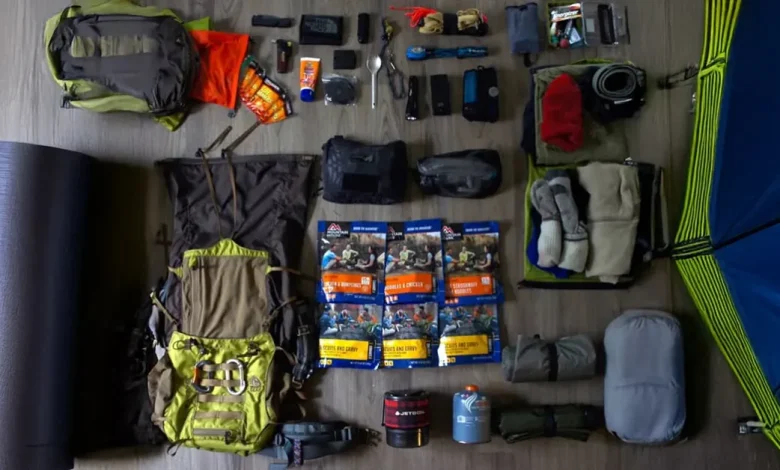
There’s a particular kind of clarity that comes from riding out of town on a Friday afternoon with everything you need strapped to your frame. No car. No trunk full of backup gear. Just the bike, the road, and whatever you decided was worth carrying. That decision what makes the cut and what stays home is where most people either get it right or spend the next two days cursing themselves on a climb.
Weekend bikepacking is deceptively simple in concept. You’re not crossing a continent. You’re not gone for three weeks. It’s 48, maybe 60 hours. And yet the temptation to overpack is almost gravitational, especially if you’re coming from a car camping background where weight is irrelevant and comfort is king. The mental shift required isn’t just logistical. It’s almost philosophical.
Why Weight Is a Different Problem on a Bike
On a backpacking trip, extra weight punishes your knees and your pace. On a bike, it does something more insidious it changes how the whole machine handles. A poorly balanced load shifts your center of gravity, makes the front wheel squirrely on descents, and turns a fully loaded frame bag into a pendulum on technical singletrack. You feel every extra pound not just in your legs but in your hands, your confidence, your line choices.
This is why experienced bikepackers talk about grams the way road cyclists do. It’s not vanity. It’s physics.
The target for a well-packed weekend trip usually lands somewhere between 10 and 15 pounds of gear, not counting water and food. That number sounds aggressive until you start auditing what you actually use versus what you bring “just in case.” The just-in-case items are where trips go heavy. A full-size rain jacket when a packable wind shell would cover 90% of conditions. A sleeping bag rated to 20°F for a July trip where lows hit 55°F. Three pairs of socks for two nights.
The Bag System Is the Foundation
Before you think about what to pack, you need to understand where it’s going. Bikepacking bags aren’t just smaller versions of panniers they’re a different philosophy entirely. The goal is to keep weight low and centered, distributed across the bike in a way that doesn’t compromise handling.
Most setups revolve around three core bags: a frame bag that fills the main triangle, a handlebar roll or harness up front, and a seat bag behind the saddle. Some riders add a top tube bag for snacks and a small feed bag on the fork legs for water bottles. Each location has its logic.
The frame bag is prime real estate. It sits closest to the bike’s center of mass, so it’s where your densest items belong tools, a small repair kit, a battery pack, food. The handlebar bag handles bulky but light items: your sleeping bag or quilt, a puffy jacket, maybe a lightweight tarp. The seat bag carries your shelter and clothing. The general rule is heavy and dense goes low and central, light and bulky goes to the extremes.
Getting this wrong doesn’t just feel bad. It can make a bike genuinely unsafe on steep terrain.
Shelter Without the Weight Tax
The shelter question is where a lot of first-time bikepackers make their most expensive mistake not in money, but in grams. A traditional three-season tent is a comfort item. It’s also often a pound or two heavier than alternatives that work just as well for a weekend.
Ultralight bivy sacks paired with a trekking pole shelter, or a simple silnylon tarp rigged with a couple of guylines, can cut your shelter weight by half while still keeping you dry in a surprise rainstorm. If you know the forecast is clear, a bivy alone something like a waterproof-breathable sack that weighs under 10 ounces is genuinely sufficient. The sky doesn’t care how much your shelter cost.
That said, there’s a real argument for a single-wall ultralight tent if you’re riding in buggy environments or expect condensation to be a problem. A well-chosen tent in the 1.5 to 2 pound range is a reasonable compromise between protection and packability. The key word is chosen not defaulted to because it was already in the garage.
Clothing: The One-Layer Rule and Its Exceptions
The clothing audit is where honest self-assessment matters most. For a two-night trip in mild conditions, one riding kit worn on day one, one for day two, and a set of camp clothes that double as sleep clothes covers almost everything. That’s it. Resisting the urge to pack a third jersey “just in case” is a skill that takes a few trips to develop.
Layering is your real strategy. A lightweight merino base layer, a wind shell, and a packable insulated jacket cover a surprisingly wide temperature range. Merino in particular earns its reputation here it manages odor well enough that you can wear the same base layer two days running without offending anyone, including yourself.
Rain is the variable that complicates everything. A truly waterproof jacket adds weight but provides genuine insurance. A lot of experienced riders compromise with a water-resistant wind shell that handles light rain and packs to the size of a fist, then accept that in a serious downpour they’re going to get wet. For a weekend trip, that’s often the right call. You can dry out at camp. You cannot get lighter while riding.
Footwear is an area where people consistently over-think it. One pair of riding shoes, one pair of camp sandals or lightweight shoes that’s the ceiling. The sandals pull double duty as shower shoes if you end up at a campground with facilities.
The Kitchen That Isn’t
Weekend bikepacking has a beautiful escape hatch that multi-week touring doesn’t: you probably don’t need a full kitchen. Depending on your route, you can resupply at a gas station, a small-town diner, or a trailhead store. Planning two nights around calorie-dense packaged food bars, jerky, instant oatmeal, peanut butter packets eliminates the need for a stove, a pot, fuel, and dishes entirely.
If you want hot coffee in the morning (and there’s no judgment if you do), a small titanium pot and a canister stove adds maybe 8 ounces to your load. That’s a reasonable trade. A full camp kitchen setup with a pan, a cutting board, and a spice kit is not.
The math on food weight is straightforward: aim for roughly 100 calories per ounce for calorie-dense trail food. A 3,000-calorie day requires about 30 ounces of food at that ratio. For two days, you’re looking at 4 to 5 pounds of food, which is unavoidable but it’s weight that disappears as you ride, which is a very different kind of burden than gear you carry the whole way.
Tools and the Repair Calculus
Nobody wants to think about mechanicals. Everyone should. The question isn’t whether to carry tools but which ones actually solve the problems you’re likely to encounter versus the problems you’re afraid of encountering.
For a weekend trip, a multi-tool with a chain breaker, two or three tire levers, a patch kit, a spare tube or two, a CO2 inflator with a backup hand pump, and a small amount of tubeless sealant covers the vast majority of roadside scenarios. A derailleur hanger specific to your bike is a small, light item that can save a trip. Spare brake pads are worth their weight if you’re descending anything significant.
What you don’t need: a full spoke wrench set, a bottom bracket tool, a headset press. If your bike needs those things mid-ride, the trip is over regardless.
The Weight That Isn’t on the Scale
There’s a dimension to lightweight packing that doesn’t show up in any gear list. It’s the mental weight of knowing your setup is dialed that you’ve thought through each item, made a deliberate choice, and aren’t carrying anything you resent. That confidence changes how you ride. You climb differently when you know the bag behind your saddle isn’t stuffed with things you’ll never touch.
The first time you roll back into town on a Sunday with everything you needed and nothing you didn’t, something shifts. The bike feels like an extension of a decision well made. And the next trip, you’ll probably leave behind something you thought was essential this time.
That’s the process. It doesn’t really end.