Is Cycling the New Golf? How the Boardroom Moved to the Bike Path

The Morning Ritual
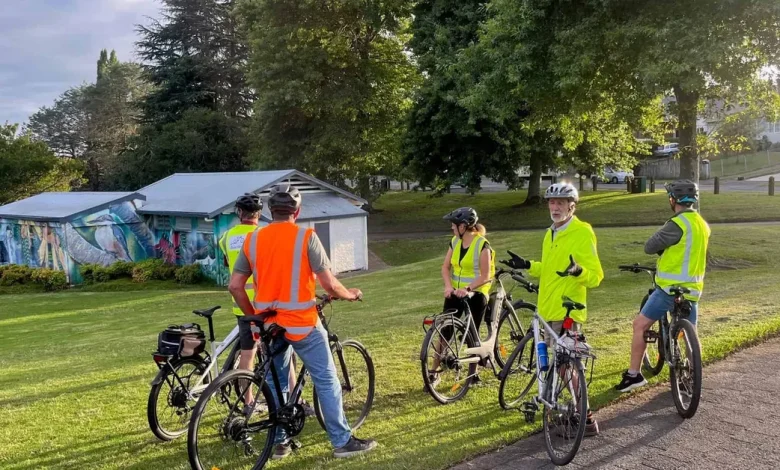
It’s 6:30 a.m. on a crisp spring morning. The sun is just beginning to stretch its rays over the horizon, and a quiet suburban street is slowly stirring to life. But one group is already in motion. Dressed in sleek Lycra kits, their helmets perfectly aligned, and their carbon-fiber bikes glinting in the early light, a small peloton of professionals is ready to roll. They clip into their pedals with a synchronized click, and within moments, they’re gliding down the road in unison, a kinetic portrait of camaraderie and purpose.
This scene is becoming increasingly familiar in cities around the world. Cycling, long associated with weekend warriors, endurance athletes, and eco-conscious commuters, is undergoing an image transformation. Once relegated to the sidelines of corporate culture, it is now emerging as the new social glue for executives, entrepreneurs, and decision-makers. The age-old question, “Can I take you out for a round of golf?” is being replaced with a more modern proposition: “How about a ride on Saturday morning?”
The Decline of the Greens
For decades, golf reigned supreme as the unofficial sport of business networking. Deals were struck on fairways, partnerships forged over 18 holes, and promotions hinted at while lining up putts. The sport offered a blend of skill, strategy, and leisure, making it a perfect canvas for cultivating professional relationships. Yet, in recent years, the game’s grip on the corporate world has loosened.
One reason is time. Golf is a notoriously time-consuming activity, requiring an entire day or at least half of one for a full round. In an era where executives are increasingly stretched thin, the prospect of dedicating five or more consecutive hours to a single activity feels indulgent, even impractical. Add to that the financial barriers the club memberships, green fees, and specialized equipment and the game starts to feel less inclusive, particularly to younger professionals climbing the ladder.
Golf’s demographic tilt has also played a role. As the sport struggles to attract a more diverse and younger audience, it risks becoming a relic of a bygone era, more associated with the Baby Boomer generation than the dynamic, fast-paced ethos of today’s corporate culture.
Why Cycling Fits the Bill
Enter the bicycle. On the surface, cycling might seem like an unlikely candidate to replace golf in the hearts and minds of the business elite. It lacks the stately ambiance of a golf course, the traditions built over centuries, and the built-in pauses for conversation that golf provides. But dig a little deeper, and the reasons for its meteoric rise become clear.
First and foremost, cycling is efficient. A typical ride might last two to three hours long enough to bond, but short enough to fit into a busy schedule. Many professionals opt for early-morning rides, which allow them to network, exercise, and still make it to the office by 9 a.m. This efficiency appeals to a generation that values productivity and balance in equal measure.
Cycling is also inclusive in ways that golf struggles to be. While high-end bikes can cost as much as a small car, the barrier to entry is significantly lower than that of private golf clubs. A decent bicycle, a helmet, and a pair of cycling shoes are all it takes to join the growing ranks of the peloton. Moreover, the sport has a relatively low skill floor; as long as you can ride a bike and keep a steady pace, you’re welcome in the group.
Then there’s the health factor. In a culture increasingly obsessed with wellness, cycling offers a double win: a cardiovascular workout wrapped in a social outing. Executives who once bonded over cigars and scotch are now more likely to compare heart rate stats and Strava segments. The physical exertion also adds a layer of authenticity to the interactions. There’s something disarming about sweating alongside someone, pushing through a steep climb together, and sharing the exhilaration of a fast descent. It creates a sense of camaraderie that’s hard to replicate in other settings.
The Power of the Group Ride
Unlike golf, which often revolves around one-on-one or small group interactions, cycling thrives on the collective experience. The group ride is a cornerstone of the sport, and its dynamics naturally foster collaboration. Riders take turns at the front, shouldering the burden of wind resistance while others draft behind them. The unspoken etiquette pointing out road hazards, signaling turns, offering a quick push to a struggling rider mirrors the give-and-take of a well-functioning team.
In this sense, cycling is a metaphor for the modern workplace. It’s not about solo performance but about how individuals function within a group. The shared experience of a ride creates bonds that can carry over into the boardroom, turning colleagues into allies and competitors into collaborators.
From Lycra to Leadership
The rise of cycling as a corporate bonding tool has not gone unnoticed by businesses. Companies are sponsoring team kits, organizing charity rides, and even incorporating cycling into leadership retreats. The sport’s emphasis on endurance, strategy, and adaptability makes it a natural fit for executive training.
Take, for example, the annual “CEO Challenge,” a series of cycling events designed specifically for business leaders. Participants tackle grueling routes in iconic destinations like the French Alps or California’s Napa Valley, combining physical challenge with networking opportunities. The shared struggle of conquering a mountain pass or completing a century ride fosters a level of connection that’s hard to achieve in a conference room.
A Road Ahead
Of course, cycling isn’t without its challenges. Safety is a significant concern, particularly in urban areas where traffic can be unpredictable. The sport’s association with expensive gear and boutique coffee stops can also alienate those who prefer a simpler, more egalitarian approach. And while it’s growing in popularity, cycling still has a long way to go before it matches golf’s institutional presence in the business world.
Yet, for all its imperfections, cycling offers something that feels increasingly rare in today’s hyper-connected, digitally mediated world: real, face-to-face interaction. There’s no Zoom lag on a bike ride, no email notifications interrupting the flow of conversation. Just the rhythm of the pedals, the hum of the tires, and the shared pursuit of a common goal.
So, is cycling the new golf? Perhaps the better question is: does it need to be? Golf may never fade entirely from the corporate playbook, but cycling doesn’t have to replace it to thrive. It’s carving out its own niche on the bike paths and country roads where the next generation of leaders is learning to trust, collaborate, and dream big.
When the ride ends, and the group gathers at a local café for a round of espresso, the conversations flow as freely as the miles just ridden. Deals may not be signed on the spot, but relationships are built, ideas exchanged, and futures imagined. And in the end, isn’t that what networking is all about?