There’s a particular kind of satisfaction that comes from catching a fish with a setup you’ve engineered yourself. Not bought off a shelf, not assembled from a kit built from something you already owned, something most people would have tossed in a drawer or traded in for thirty dollars at a phone recycling kiosk. That old Android sitting in your junk drawer, the one with the cracked corner and a battery that used to drain by noon, might be the most underutilized piece of fishing gear you own.
This isn’t a gimmick. Anglers who’ve made the shift describe it less like adopting new technology and more like finally using the tools that were always available. The smartphone especially a dedicated, off-network device becomes something different when it’s no longer your primary phone. It stops being a distraction and starts being an instrument.
Why a Dedicated Old Phone Changes Everything
The problem with using your everyday phone on the water isn’t capability it’s context. You’re out there trying to read a depth map, and a notification from your email pulls you sideways. You’re mid-cast and your phone buzzes. The device that’s supposed to help you fish keeps reminding you that you’re also a person with obligations.
An old phone stripped of its SIM card, wiped of most apps, and loaded specifically for fishing doesn’t carry that weight. It becomes a single-purpose tool, which is exactly what good gear is supposed to be. Factory reset it, skip the Google account setup if you prefer, and connect it only to your hotspot or marina Wi-Fi when you need updates. What you’re left with is a surprisingly capable computer that costs you nothing extra to run.
Battery life, often the first concern people raise, is actually better on a dedicated device. When you’re not running background sync, push notifications, social media refresh cycles, and location pinging from a dozen apps, a phone that used to die at noon can last a full day on the water. Throw a small waterproof power bank in your tackle bag and the concern evaporates entirely.
Sonar and Depth Mapping Without a Fishfinder
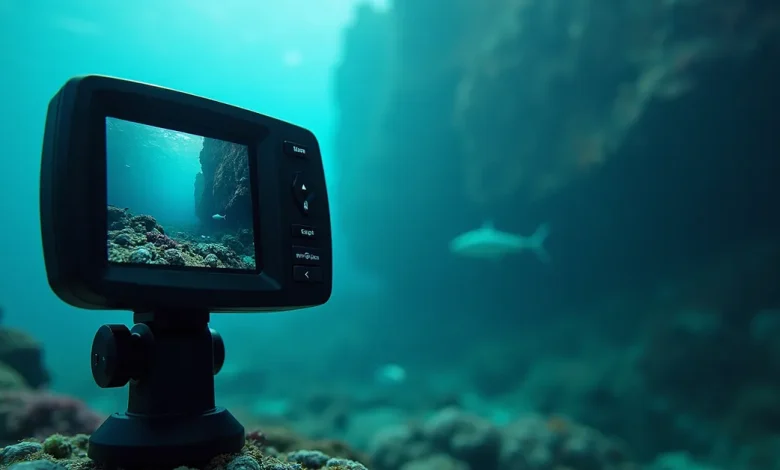
This is where things get genuinely interesting. Portable sonar devices units like the Deeper PRO+ or the Garmin Striker Cast connect directly to your phone via Bluetooth or Wi-Fi and use your screen as the display. What you get is a real-time sonar readout showing depth, bottom contour, water temperature, and fish arches, all rendered on a screen you’re already familiar with navigating.
The older phone handles this beautifully because these apps aren’t demanding. They’re not running 3D graphics or processing video. They’re receiving sonar data and drawing it on screen, which even a five-year-old mid-range phone can manage without breaking a sweat. Cast the sonar puck out ahead of you, reel it back slowly, and watch the bottom structure reveal itself. You’ll see the drop-offs, the submerged timber, the hard-bottom patches where bass like to hold.
For kayak and shore anglers especially, this setup punches well above its weight. A traditional fishfinder requires mounting, wiring, and a transducer permanently attached to your hull. The phone-based sonar packs into a jacket pocket. You’re not sacrificing much in terms of data quality, and you’re gaining everything in portability.
Navigation and Offline Maps That Actually Work
Navionics, one of the most trusted names in marine charting, has a mobile app that works on Android and iOS. Load it onto your old phone, download the charts for your region while you’re still on Wi-Fi, and you have detailed lake maps, river charts, and coastal navigation data available completely offline. No cell signal needed once the download is done.
The depth contours on Navionics are detailed enough to show you where the structure changes the kind of information that used to require either expensive dedicated GPS units or years of personal experience on a specific body of water. First time fishing an unfamiliar reservoir? Pull up the chart before you launch and identify the creek channels, the old roadbeds, the points that extend out into deeper water. Those are the places fish use as highways and ambush points.
Pair that with OnX Maps or BaseMap if you’re fishing rivers and need to understand land access, public water boundaries, or where private property ends and public fishing begins. These aren’t fishing apps exactly, but they solve real problems that anglers face, and they all run fine on hardware that’s several generations old.
Weather and Water Conditions in Real Time
The difference between a good fishing day and a wasted one often comes down to timing, and timing comes down to understanding conditions. Windy Ty, Windfinder, and Willy Weather give you wind speed, direction, and barometric pressure forecasts at a granularity that general weather apps don’t bother with. Barometric pressure alone whether it’s rising, falling, or stable tells you a lot about how active fish are likely to be.
Tides, for saltwater anglers, are non-negotiable. Apps like Tide Alert or MyTide give you precise tide charts for specific locations, not just general coastal estimates. Load these before you leave, and you’ve got the day’s movement patterns mapped out before you ever put the boat in the water.
There’s also something to be said for the USGS Streamflow data available through apps like Waterflow or directly through the USGS website. Real-time stream gauge readings tell you whether a river is running high and muddy or dropping and clearing information that completely changes where you should fish and what presentation makes sense. Guides who charge several hundred dollars a day for their expertise are reading the same data. It’s publicly available and runs fine on a six-year-old phone.
Logging Catches and Building Your Own Intelligence
Here’s the part that most casual anglers overlook: the long game. Apps like Fishbrain, Anglr, or even a well-organized note in Google Keep let you log every catch with location, time, weather conditions, water temp, lure used, and depth. Do this consistently for a season and you start to see patterns that no article or YouTube video could have told you, because they’re specific to your water.
You’ll notice that the north cove produces in the morning when the wind is from the southwest. You’ll see that a particular stretch of river fishes well in the two days after a rain, not during it. This kind of localized intelligence accumulates slowly, but once you have it, it’s worth more than any single piece of gear.
The old phone becomes the keeper of that knowledge. It’s always with you, it doesn’t require a subscription to a cloud service if you’re careful about local backups, and it builds a record that actually improves your fishing over time rather than just entertaining you in the moment.
Protecting the Device on the Water
None of this matters if the phone dies in a rainstorm or takes a swim. A waterproof case not water-resistant, waterproof is the one piece of hardware you should actually spend money on. Brands like Pelican, Lifeproof, and Catalyst make cases rated to genuine submersion depths. For a phone that cost you nothing to repurpose, a forty-dollar case is a reasonable investment.
Mount it somewhere accessible. A RAM mount on a kayak rail, a simple suction cup mount on a boat console, or a lanyard clipped to a life vest pocket all work depending on your setup. The goal is having the information available without having to dig for it mid-drift.
Keep the screen brightness turned down and use airplane mode when you’re not actively pulling data. A fully charged old phone running offline apps in airplane mode can last eight to ten hours without any supplemental power. That covers most fishing days without a second thought.
The Gear You Already Have
There’s a certain irony in the fishing industry’s relationship with technology. Manufacturers spend enormous energy convincing anglers that the next piece of equipment will be the thing that finally unlocks consistent catches. And yet the most powerful tool most anglers own a pocket-sized computer with GPS, a high-resolution display, wireless connectivity, and access to decades of accumulated data is sitting uncharged in a kitchen drawer.
The fish don’t care what your setup cost. They care about where you’re fishing, when you’re fishing, and whether your presentation makes sense for the conditions. A repurposed phone, loaded thoughtfully and used with intention, addresses all three of those factors in ways that a two-hundred-dollar rod upgrade simply cannot.
The water is still the water. The fish are still the fish. But the angler who shows up with better information, better timing, and a record of what’s actually worked before that angler catches more fish. The tool that makes that possible might already be in your house, waiting.