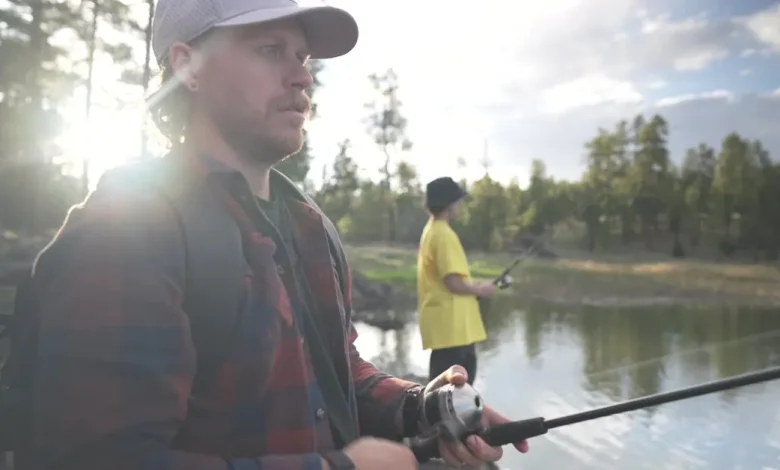
The Fish Already Know You’re There
There’s a particular kind of dread that sets in around mile three of a dirt road, windows down, cooler rattling in the truck bed, when you realize truly realize that your fishing companion has not stopped talking since you left the driveway. Not paused. Not trailed off. Just kept going, one story bleeding into the next like a river with no banks. You nod. You say “huh” at what feel like appropriate intervals. You watch the tree line pass and quietly mourn the silence you had imagined for this trip.
Most fishing advice talks about gear, technique, tide charts, moon phases. Nobody talks about this. Nobody warns you that the hardest part of some fishing trips isn’t the fish at all.
Why They Talk And Why It’s Not Actually About You
Here’s the thing about compulsive talkers: they’re usually not oblivious. They know, on some level, that they’re filling space. But silence makes them anxious in a way that’s almost physical, like an itch they can’t locate. Being out in nature away from the ambient noise of offices and traffic and screens can actually make this worse. The quiet amplifies everything, including whatever’s running laps inside their head.
Your companion isn’t talking to annoy you. They’re talking because stillness feels like exposure. Because the moment the conversation stops, they’re alone with themselves, and for some people, that’s the most uncomfortable place to be.
Understanding this doesn’t make the chatter less loud. But it does shift something in how you hold it. You stop hearing it as an attack on your peace and start hearing it as someone’s nervous system doing its best.
That’s a more generous frame. It’s also a more survivable one.
Choosing Your Water Wisely
If you have any say in the destination, use it strategically. Moving water is your friend. A river with decent current creates its own white noise not enough to drown out a determined talker, but enough to soften the edges. The rhythm of the water gives you something to tune into, a frequency you can drop beneath the conversation without fully disappearing from it.
A glassy lake on a dead-calm morning offers no such mercy. Every word lands clean and clear, and the silence between sentences feels like it’s waiting to be filled. Lakes are beautiful, but they are acoustically unforgiving when you’re trying to find some interior quiet.
Wade fishing is another useful variable. When you’re both in the water, moving, casting, repositioning there’s a natural, built-in interruption to conversation. You drift apart. The current requires attention. Nobody can really hold a story together when they’re trying not to slip on a mossy rock.
The Art of the Strategic Cast
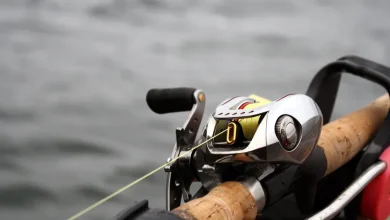
Experienced anglers know that casting is partly meditative. The loading of the rod, the pause at the top of the backcast, the follow-through it demands just enough focus to crowd out other noise. When your companion is mid-sentence about something that happened to their cousin’s neighbor in 2011, you can make a long cast toward a promising eddy and let the act itself be your response.
This isn’t rudeness. It’s choreography.
The cast says: I’m engaged with this place. It models something. And occasionally not always, but occasionally it’s contagious. You cast, and they watch the line unfurl, and for just a moment they stop, because something in the motion is worth watching. That moment of shared attention is worth more than any attempt to directly request quiet.
You’re not shushing them. You’re offering them something better to do with their eyes.
Learning to Half-Listen Without Guilt
There’s a skill that takes practice but pays dividends far beyond fishing trips: the ability to maintain a surface-level conversational presence while your actual attention is somewhere else entirely. It’s not deception. It’s bandwidth management.
You keep ten percent of your awareness on the conversation enough to catch a direct question, enough to laugh when laughter is appropriate, enough to say “that’s wild” when the story clearly calls for it. The other ninety percent is on the water. On the light. On the way a particular seam in the current might be holding a trout. On the temperature of the air against your forearms.
Children are actually excellent at this. They can be nominally present in an adult conversation while mentally constructing elaborate worlds. Somewhere along the way, most of us lose that capacity and replace it with a binary: either fully engaged or visibly checked out. Getting back to something in between is genuinely useful.
The guilt piece matters too. You’re allowed to be partially elsewhere. You’re allowed to let their words wash over you without processing every one. That’s not a failure of friendship. That’s how you make it to dinner without losing your mind.
When You Actually Need Them to Stop
There are moments when the talking crosses from ambient to actively disruptive when you’ve spotted a rise thirty feet out and you need thirty seconds of stillness to make the approach, or when the fish are in a shallow flat and any vibration, any sudden movement, any sound above a murmur will scatter them.
In these moments, directness is kinder than resentment. Not a lecture, not a sigh just a low, calm, urgent: “Hold on. Right there. Watch.” Point. Let the moment do the work. Most people, even the most relentless talkers, will go quiet for a fish. The fish is a shared object of interest. It’s the one thing that can reliably redirect the energy.
If they miss the cue and keep talking and the fish spooks, let it go. Truly. The alternative stewing in irritation for the next two hours costs you far more than the fish did.
What You Might Actually Hear, If You Let Yourself
Here’s something that doesn’t get said enough: sometimes the talking is worth listening to.
Not always. Not every anecdote about their fantasy football league or their ongoing dispute with a neighbor about a property line. But somewhere in the stream of words, if you let yourself actually tune in rather than just endure, there’s usually something real. A fear they’re circling without naming. A memory they keep returning to because it still means something. A version of themselves they’re trying to explain.
People often say the most important things sideways, buried inside a story about something else entirely. The fishing trip, the long drive, the hours with nothing to do but talk these are actually ideal conditions for that kind of accidental honesty. You just have to be listening at the right moment, which means not being so armored against the noise that you miss the signal.
Some of the best conversations I’ve had happened on the water, with someone I’d spent the first hour silently wishing would just stop talking. The river wore them down eventually. Or maybe they just ran out of the easier material and got to the real stuff.
The Quiet That Comes Anyway
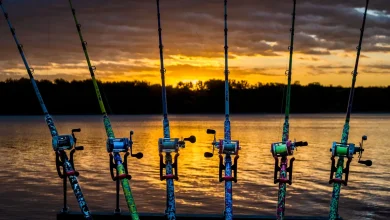
Toward the end of most trips late afternoon, the light going golden and long, everyone a little tired, the cooler lighter something usually shifts. The talking slows. Not because anyone asked it to. Just because the day has done its work, and even the most restless person eventually finds a way to be still when the light is doing that.
You’ll both be watching the water by then. Maybe not saying anything. Maybe saying something small, the kind of thing that doesn’t need a response. And you’ll realize that you survived it not by finding perfect silence, but by making your peace with the version of quiet that was actually available.
That’s usually how it goes. The trip you imagined and the trip you got are almost never the same. The one you got tends to be more interesting.