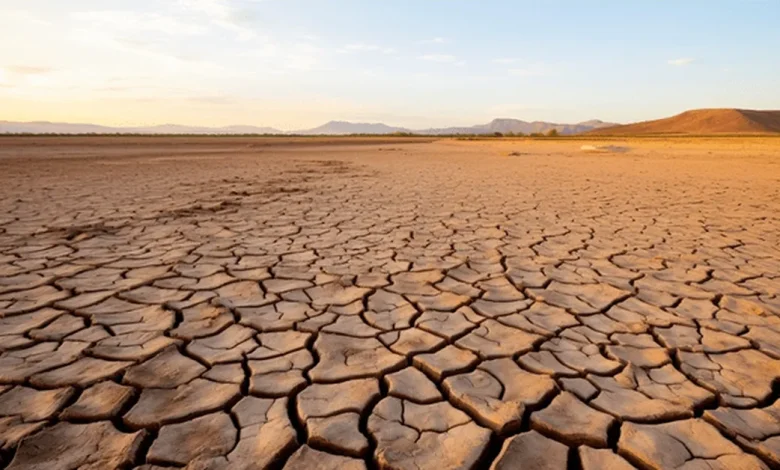
There’s a particular kind of silence in the high desert that newcomers often mistake for emptiness. No birdsong, no rustling leaves, no distant traffic. Just heat pressing down like a physical weight, and the faint creak of your own boots on cracked earth. It’s in that silence and that pressure that the desert begins to teach you things no classroom ever could. Chief among them: water is never where you expect it, and survival belongs to those who learn to read what the land is actually saying, not what they wish it were saying.
Most people who get into trouble in places like the Mojave, the Sonoran, or the Great Basin do so not because they’re reckless. They get into trouble because they’re overconfident in systems that work everywhere else. A half-liter of water feels like plenty when you’re standing in your kitchen. In 105-degree heat with a ten-mile trail ahead and no shade for four of those miles, it’s a countdown clock.
The Desert Doesn’t Lie But It Does Speak a Different Language
Understanding the high desert as a water landscape requires a complete mental reset. In temperate climates, water is visible: streams, puddles, dew on grass. In the desert, water hides. It buries itself. It evaporates before it ever reaches the surface. And yet it’s almost always there just encoded in signals that take time and humility to decode.
Cottonwood trees are one of the most reliable translators. Where cottonwoods grow, water is almost certainly present within ten to twenty feet of the surface. Their root systems are aggressive and thirsty, and they don’t waste energy growing where there’s nothing to drink. The same logic applies to willows, and to a lesser extent, the bright green patches of cattails that sometimes appear at the base of canyon walls. These plants are not decorating the landscape. They’re marking it.
Dry riverbeds called arroyos are another misread signal. A traveler might look at a bone-dry wash and conclude there’s nothing there. But dig into the outer bend of that arroyo, where water once cut deepest into the sediment, and you may find damp sand just eighteen inches down. It won’t pour into a cup. But packed into a cloth and wrung out, it can keep you alive long enough to find something better.
The angle of canyon walls matters too. North-facing slopes in the Northern Hemisphere receive dramatically less direct sunlight. In a landscape where evaporation is the dominant force, that shade differential creates micro-environments where moisture lingers. Moss on rock faces, small ferns tucked into crevices, even the darker coloring of certain stones these are the desert’s way of leaving breadcrumbs.
What Thirst Actually Does to Judgment
There’s a cruel irony built into dehydration: the worse it gets, the less capable you become of solving it. By the time you’re experiencing significant cognitive impairment from fluid loss which can begin at just two percent body weight lost in water you’re already making worse decisions than you were an hour ago. You might convince yourself that you remember seeing a water source on the map that wasn’t actually there. You might underestimate how far you’ve walked, or overestimate how far you can still go.
This is why experienced desert travelers build their water strategy before they need it, not during the crisis. The protocol isn’t complicated, but it requires a kind of disciplined pessimism that feels unnatural when you’re feeling fine. Assume the next water source is dry. Assume you’ll move slower than planned. Assume the afternoon will be hotter than the morning suggested. None of these assumptions are pessimism for its own sake they’re calibrations against the desert’s tendency to punish optimism.
Hydration timing matters more than most people realize. Drinking a liter of water thirty minutes before a strenuous section of trail is far more effective than drinking the same liter mid-crisis. Your body can only absorb fluid so quickly, and trying to rehydrate while already depleted is like trying to refill a bathtub with the drain open. The math never quite works in your favor.
Ancient Solutions the Desert Already Figured Out
The Ancestral Puebloans didn’t survive in canyon country for centuries by accident. They engineered their relationship with water with a sophistication that modern visitors routinely walk past without recognizing. Terraced hillsides weren’t just agricultural aesthetics they were water-harvesting systems, slowing runoff and directing it toward cultivated areas. Check dams built across small drainages created pools that recharged groundwater. Ceramic vessels sealed with pitch stored water through the dry months with minimal evaporation loss.
The lesson isn’t that we should all become archaeologists. It’s that the desert has already been figured out, repeatedly, by people who had no margin for error. Their solutions were elegant precisely because they had to be. There was no room for waste, no tolerance for systems that only worked under ideal conditions. When you look at a ruin site in the Four Corners region and see those carved stone channels leading to a central cistern, you’re looking at the result of generations of hard-won knowledge about where water comes from and how to keep it.
Modern desert travelers have access to tools those communities didn’t water filtration, GPS, emergency locator beacons but the underlying logic hasn’t changed. Know your sources. Protect what you have. Don’t assume tomorrow looks like today.
The Psychological Weight of Scarcity
There’s something the survival manuals rarely address honestly: the mental experience of not knowing if you’ll find water. It’s different from ordinary discomfort. It sits in the chest differently. A kind of low-grade static that makes it hard to think about anything else, even when you know intellectually that panic is counterproductive.
People who do well in these situations tend to share a particular quality that’s hard to name precisely. It’s not fearlessness most of them will tell you they were scared. It’s more like the ability to compartmentalize the fear and keep moving through a checklist anyway. Check the map. Assess the terrain. Identify the next decision point. Drink a small amount now, save the rest. The fear doesn’t go away; it just doesn’t get a vote.
There’s a case study that stays with me from a wilderness medicine training I attended years ago. A solo hiker in the Escalante canyon system ran out of water on day two of a four-day route. Rather than backtracking immediately which would have been the emotionally satisfying choice she stopped, assessed her actual options, and spent two hours following a side canyon she’d almost dismissed. At the bottom, she found a pothole a natural stone basin holding about three gallons of rainwater. It was green with algae and tasted like the inside of a rubber boot after filtration. She finished her route.
What she did wasn’t heroic. It was methodical. The desert rewarded patience and observation, not bravado.
Learning to See Before You’re Desperate
The real survival lesson from the high desert isn’t about emergency technique. It’s about developing a different quality of attention one that most of us have to consciously rebuild after years of living in environments where scarcity is theoretical.
When you walk in the desert with that kind of attention, the landscape becomes a conversation rather than an obstacle. The slight green tinge in a distant rock face. The way ravens circle a particular canyon at dusk. The smell of damp earth that arrives sometimes, inexplicably, on a dry afternoon wind. These aren’t mystical signals. They’re data, offered freely by an environment that has no interest in hiding its logic only in being read carefully enough.
The desert doesn’t reward the strongest or the fastest. It rewards the most observant. And maybe that’s the lesson that travels best: that the resource you’re looking for is rarely where you first look, and that finding it requires slowing down enough to notice what was always there.