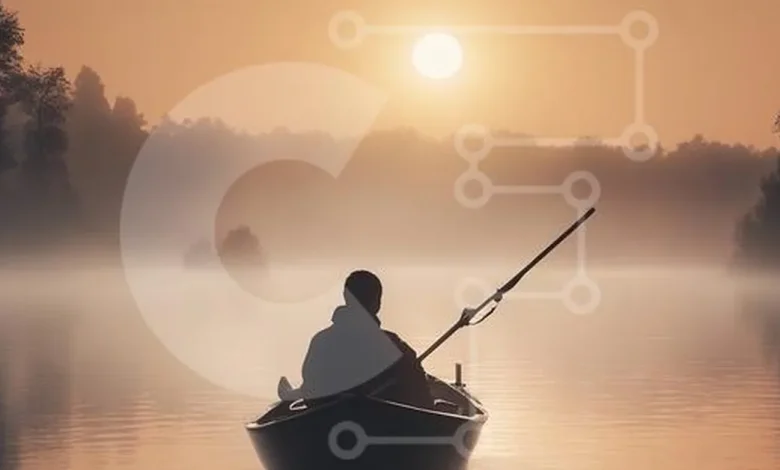
There’s a version of this question that gets asked at boat ramps and bait shops, half-joking, half-sincere the kind of thing someone says while threading a hook in the early dark before the rest of the world has woken up. And there’s a deeper version, the one worth sitting with: does the act of fishing the waiting, the failure, the occasional grace of a strike actually shape who you are?
I’ve been thinking about this for a long time. Not because fishing is my religion, but because I’ve watched it do something to people that’s hard to name and harder to dismiss.
The Waiting Is the Point
Modern life is architecturally opposed to patience. Everything is designed to reduce friction, accelerate delivery, collapse the distance between want and have. Fishing is the opposite. It is, at its core, a sustained exercise in tolerating uncertainty with your hands in your lap.
You cast. You wait. Nothing happens. You cast again.
There’s no algorithm optimizing your experience. The fish don’t care about your schedule. The water doesn’t owe you anything. And somewhere in that powerlessness if you stay with it long enough something shifts. The anxiety of waiting begins to feel less like deprivation and more like presence. You start noticing things: the way light breaks across the surface at 6 a.m., the sound a heron makes when it decides you’re not worth worrying about, the particular quality of silence that exists only near water.
Psychologists have a term for this kind of attentional shift they call it soft fascination, a state where the environment holds your attention gently, without demanding cognitive effort. It’s what restorative environments do. Fishing manufactures this state almost by design. The question is whether it carries over. Whether the man who spent four hours learning to wait on a Saturday is any more patient with his kids on a Tuesday.
I think, sometimes, he is.
What Failure Teaches You When You Can’t Blame Anyone
Fishing is one of the last activities in contemporary life where failure is genuinely nobody’s fault. You can’t review the algorithm. You can’t leave a complaint. The fish simply didn’t bite, and you have to find a way to be okay with that.
This matters more than it sounds. We’ve built elaborate social and professional systems for distributing blame for finding the external variable that explains why things didn’t go our way. Fishing strips that away. You made your choices: the lure, the depth, the time of day, the spot. Maybe they were right choices and it still didn’t work. Maybe they were wrong choices and you’ll never know for certain which part failed you.
A friend of mine a litigation attorney, someone whose entire professional identity is built on winning arguments told me once that fly fishing was the first thing in twenty years that had genuinely humbled him. Not because he was bad at it (he was, initially), but because the river didn’t respond to his competence. It just kept moving. He couldn’t out-argue a current.
He said it made him a better lawyer. Not because he became less sharp, but because he got more comfortable with the cases that were genuinely uncertain. He stopped performing confidence he didn’t feel. Something in the river had taught him that.
That’s not a small thing.
The Ethics of the Hook
Here’s where it gets complicated, and where any honest reflection on fishing has to slow down.
Fishing involves causing harm to a living creature. That’s not a metaphor or an exaggeration a hook pierces flesh, a fish is lifted from its element, and even catch-and-release carries real physiological stress. If we’re asking whether fishing makes you a better person, we have to reckon with this dimension, not paper over it.
What I’ve observed is that fishing tends to do one of two things to people’s ethical sensibility. It either deepens it or it calcifies it.
For some anglers, the intimacy with a living animal holding it, feeling its weight, watching it recover before it swims away creates a genuine sense of responsibility toward the natural world. These are the people who become obsessive about water quality, who advocate for habitat protection, who get genuinely angry about pollution in ways that people who’ve never held a wild fish rarely do. The experience creates a stake. It makes the ecosystem personal.
For others, fishing becomes a way to rationalize a kind of dominion the fish is just a fish, nature is just a resource, and the point is the catch. That version doesn’t make you better. It might, over time, make you slightly worse.
The difference, I think, lies in whether you stay curious about the creature at the end of your line. Whether you think about what it is, where it came from, what it needs to survive. That curiosity is the ethical hinge. Without it, fishing is just extraction. With it, it becomes something closer to a relationship unequal, yes, but not without obligation.
Solitude Without Loneliness
There’s a particular kind of solitude that fishing offers which is distinct from being alone in a room. You are alone, but you are embedded in something. The water, the weather, the biology of the place all of it is happening around you and without reference to you, and that turns out to be oddly comforting.
We spend enormous amounts of energy trying to be relevant to our employers, our social feeds, our families, our own internal narratives of progress. The river doesn’t know your name. The lake doesn’t care about your quarterly review. There’s a freedom in that erasure that’s genuinely hard to find elsewhere.
Writers have always understood this. Hemingway built entire emotional architectures around trout streams. Maclean wrote that he was haunted by waters, and you feel the truth of that that the river becomes a place where the unresolved things in a life can at least be held, even if they can’t be fixed. Thoreau saw in fishing a kind of philosophical permission to slow down and look closely at the world.
None of these men were romanticizing boredom. They were pointing at something real: that the quality of your inner life changes when you’re in sustained contact with something that operates on its own time, its own logic, its own complete indifference to your ambitions.
That kind of contact is increasingly rare. Fishing is one of the few remaining ways to seek it out without it feeling performative.
So Does It?
Not automatically. Not for everyone. Not without a certain quality of attention that you have to bring to it.
Fishing can be a genuine school for patience, humility, and ecological conscience. It can teach you to fail without collapsing, to wait without scrolling, to hold something fragile and let it go. It can put you in the kind of solitude that restores rather than isolates, and it can give you a stake in the natural world that no documentary ever quite manages to manufacture.
But it can also be just a way to drink beer on a boat and feel vaguely superior about being outdoors. The activity doesn’t do the work for you.
What I keep coming back to is this: the people I know who fish with real attention who are genuinely curious about the water, the fish, the weather, the season tend to carry something into the rest of their lives. A certain groundedness. A tolerance for not knowing. A willingness to show up to something that might not reward them.
Whether that makes them better people in any measurable sense, I honestly can’t say. But it makes them easier to be around. And in a world that keeps accelerating past its own attention span, that might be close enough to wisdom to count.