My buddy Jake drove four hours to pick up a German Shorthaired Pointer last spring. Beautiful dog. Athletic, sharp-eyed, built like a sports car. He was so excited he didn’t sleep the night before. By October, he was calling me from a field in Kansas, genuinely frustrated, saying the dog kept ranging so far out he couldn’t see it anymore. “I thought bird dogs were supposed to help you hunt,” he said. They are, Jake. Just not always the way you picture it.
Choosing your first bird dog is one of those decisions that feels simple until you’re standing in it. And the honest truth? Most first-time buyers get it backwards they pick the dog they think looks coolest, or the breed they’ve seen in a magazine, and then try to figure out how to make their hunting style fit the dog. That’s exactly the wrong order.
The Three Families, and What They’re Actually Built For
Let’s get one thing straight before we go any further. “Bird dog” is a catch-all term that covers three very different kinds of working animals. They don’t just look different they hunt differently, think differently, and they’ll suit your life differently depending on where you hunt and what you’re after.
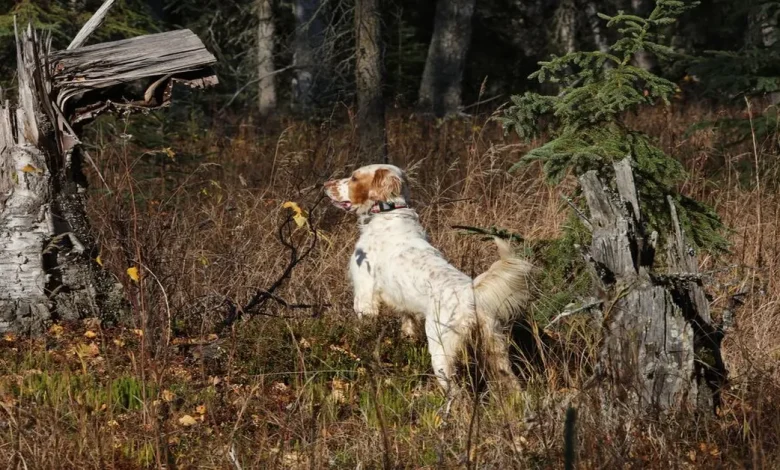
Pointers which include breeds like the German Shorthaired Pointer, English Pointer, and Vizsla are built to range wide, lock up on scent, and hold that point so you can walk in and flush the bird yourself. They’re built for open country. Big skies. Quail in the Texas brush, pheasant in the Dakotas, grouse on the edge of a Montana ridge. They cover ground fast, and when they’re working well, watching one is genuinely something else.
Flushers your Spaniels, mostly, with the English Springer and Cocker at the top of the list work close to the gun. They dive into heavy cover, push birds up, and stay within shotgun range. They’re not pointing; they’re flushing. Loud, crashing, enthusiastic. Perfect for thick timber, creek bottoms, dense brush where a pointer would just disappear.
Retrievers Labs, Goldens, Chesapeake Bay Retrievers are the workhorses of waterfowl hunting. They’re bred to sit still in a blind, mark a falling bird, and bring it back through icy water without complaining. Some retriever folks also use them upland, and a trained Lab can flush and retrieve just fine. But their hearts are in the marsh.
The Question Nobody Asks Themselves Honestly
Here’s where most people go wrong: they ask “which breed is best?” when the real question is “what does my hunting actually look like?”
Not your fantasy hunting. Your real hunting the land you have access to, the game you’ll mostly chase, the amount of time you’ll actually spend training. Be honest with yourself here, because the dog can’t be.
If you’re hunting public land in the Midwest with a lot of walking through cattails and creek brush, a Springer Spaniel might be the most practical dog you ever owned. If you’ve got access to open prairie and you’re chasing quail or pheasant in wide-open fields, a pointer will feel like you unlocked something. And if you’re a duck hunter first and an upland hunter second or you hunt both and need one dog to do it all a Lab is probably your most forgiving starting point.
I’ll tell you where I got this wrong myself. My first bird dog was a Brittany technically a pointer, though they work closer than most. I lived in Ohio at the time. Mostly woodcock and grouse in thick cover. The Brittany was a great dog, but I spent two frustrating seasons trying to handle her in conditions she wasn’t quite built for. I should have had a flusher. I picked the dog I’d always romanticized, not the dog that matched my situation. Learned that lesson the hard way.
What People Get Wrong About Retrievers as First Dogs
Here’s a slightly controversial take and I’m ready for the pushback retrievers are often recommended as the “safe” first bird dog because they’re easy to live with, eager to please, and forgiving of training mistakes. All of that is true. But they’re also the most over-recommended option for people who don’t actually do a lot of waterfowl hunting.
If your main hunting is upland birds, a retriever is a compromise. A capable one, sure. But you’re not playing to the dog’s deepest instincts, and there’s something slightly sad about a Chesapeake Bay Retriever spending its whole life flushing pheasants when it was built to crash through ice-covered water at dawn. The dog doesn’t know what it’s missing, but you might.
That said and this is the part people skip over if you’re a first-time dog owner who hunts casually, a Lab or Golden is probably the smartest choice you can make. Not because they’re the best hunting dogs. Because they’re the most forgiving of the learning curve that comes with owning and training your first working dog.
Temperament, Training, and the Reality of the First Year
Whatever type you choose, the first year will humble you. Every single one of these breeds needs consistent, structured training. The pointer that ranges too wide like Jake’s GSP isn’t a bad dog. It’s an under-trained dog in the wrong environment. The flusher that blows past birds is usually a dog that hasn’t had enough repetition on steadiness. The retriever that drops the bird ten yards short? Training gap.
Here’s something worth sitting with: the breed matters less than the time you put in. A well-trained Springer will outperform a neglected English Pointer every single time, in every single field. The dog you choose is really a commitment you’re making to a training relationship that lasts years.
Find a local hunting dog club. Work with a trainer at least for the first season if you can swing it. And please don’t wait until October to start. These dogs need work in the off-season.
So Which One Is Actually Right for You?
If you hunt quail, pheasant, or grouse in open country: look hard at a pointer. English Pointer, GSP, or Vizsla if you want something that doubles as a house dog.
If you hunt thick cover woodcock, pheasant in heavy brush, grouse in timber a Springer Spaniel will make you look like a better hunter than you are.
If you’re a waterfowl hunter who also hunts upland, or you’re a first-time dog owner who wants a versatile, trainable companion: get a Lab. You won’t regret it.
But here’s the thing nobody tells you when you’re standing in that kennel, looking at a litter of puppies the right dog is the one you’ll actually train. The one you’ll spend time with in the off-season. The one that fits your real life, not your highlight reel.
What does your actual hunting season look like? Start there. The breed decision gets a lot easier once you answer that question honestly.