You spent $800 on a rifle. Another $600 on a quality optic. You’ve got premium ammo, a solid rest, and you’ve been shooting long enough to know what you’re doing. Then you get to the range and you can’t hold a group to save your life.
I’ve been there. More than once, honestly.
Here’s the thing nobody talks about enough: your scope mount is doing more work than you think, and when it fails or when it’s just quietly mediocre it poisons everything downstream. Every dollar you put into glass, every hour you spend at the range, every careful handload you worked up over a winter. Gone.
The Part Nobody Brags About at the Range
Walk into any gun shop and people will talk your ear off about barrels, triggers, and optics. They’ll debate reticle subtensions and glass clarity like it’s a religion. But ask someone what rings they’re running and you’ll usually get a shrug, a brand name they half-remember, or my personal favorite “I don’t know, they came with the scope.”
That’s the problem right there.
A scope mount’s job sounds simple: hold the optic in place. But what “in place” actually means under real conditions is where things get complicated fast. We’re talking about a piece of hardware that has to survive recoil impulse after recoil impulse, maintain precise alignment with your bore, resist the kind of vibration that loosens fasteners over time, and do all of this without creeping, shifting, or worst case letting your optic rotate in the rings.
And most people treat it like an afterthought.
The Failure Nobody Sees Coming
A few years back, a buddy of mine call him Marcus spent the better part of a hunting season chasing a zero that kept drifting on him. He was shooting a .308 bolt gun with a mid-tier scope he’d owned for years. Good rifle. Proven optic. He’d zeroed it the previous fall without a problem.
But that year, every time he’d go out to confirm zero before a hunt, the point of impact had moved. Sometimes a little. Sometimes enough to matter. He swapped the scope. Still drifted. He checked his barrel. Fine. He had a gunsmith look at the action. Nothing obvious.
It was the rings. Cheap aluminum rings the kind that look perfectly fine until you actually torque them down properly and realize they’re not gripping evenly. The optic was micro-rotating under recoil, just barely, just enough to walk the zero over several sessions. Nobody would’ve caught it just by looking.
That’s the insidious thing about a bad scope mount. It doesn’t usually fail dramatically. It just quietly undermines you.
What Actually Goes Wrong With Scope Mounts
There are a few ways a mount fails, and they’re worth understanding because they don’t all look the same.
The most common is inconsistent clamping pressure. Cheap rings and even some mid-range ones don’t have machined surfaces precise enough to grip the scope tube evenly. You end up with pressure concentrated at two or three points instead of distributed across the whole contact surface. That’s how you get scope tube damage and, more importantly, that’s how you get movement.
Then there’s the base itself. A wobbly Picatinny or Weaver base, or a set of two-piece rings that aren’t perfectly co-aligned, means your optic is already canted or off-axis before you fire a single shot. You can compensate for a little of this at the range, but you’re building on a crooked foundation.
And here’s the one that surprises people: lapping. Even quality rings benefit from lapping the process of using an abrasive compound to true up the interior surfaces so they contact the scope tube uniformly. Most shooters never do this. Most scope mount manufacturers won’t tell you that their product works better with it.
But honestly? If you’re running a quality one-piece mount from a reputable manufacturer, lapping is probably overkill. The issue is that most people aren’t running that.
The Counterintuitive Truth About “Budget” Mounts
Here’s where I’ll say something a little uncomfortable: the math on scope mounts is backwards compared to almost everything else in shooting.
On most gear, there’s a point of diminishing returns where spending more money gets you less and less improvement. A $1,200 scope isn’t twice as good as a $600 scope. A $3,000 rifle isn’t three times as accurate as a $1,000 rifle.
But scope mounts are different. The gap between a $30 set of rings and a $150 one-piece mount is not a matter of taste or marginal improvement. It’s the difference between a system that holds zero and one that doesn’t. You can put a $2,000 optic in garbage rings and get garbage results. You can put a solid $400 scope in quality rings and rings that actually fit your rifle and shoot lights out.
Spend less on glass if you have to. Don’t cheap out on the mount.
That’s the part I got wrong for longer than I’d like to admit.
How to Actually Evaluate a Scope Mount
So what should you actually look for? A few things matter more than brand name or price tag alone.
Material and machining quality come first. Aircraft-grade aluminum 6061 or 7075 is the standard. Steel is heavier but extremely durable, especially for hard-recoiling rifles. What you want to avoid is anything that feels light in a way that makes you nervous, or rings where the split line isn’t clean and even.
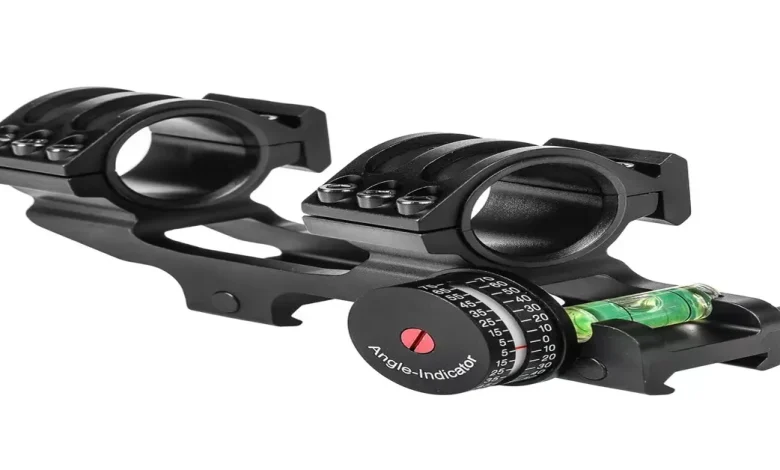
One-piece mounts generally outperform two-piece rings for consistency, because they eliminate the variable of two separate bases being perfectly aligned on your receiver. Not always necessary, but worth considering if you’re building a precision system.
Proper torque matters more than most people think. You need a torque wrench a real one, not just “pretty snug.” Scope ring caps typically want somewhere around 15-18 inch-pounds. Base screws vary by manufacturer. Under-torquing leaves things loose. Over-torquing can crush a scope tube or strip threads. Neither is a good outcome.
And check for return-to-zero capability if you’re running a quick-detach mount. Not all QD mounts are created equal. Some will get you back to zero within a half-MOA. Others will send you to the bench every time you reinstall. Know which one you have before you trust it in the field.
Your Scope Mount Deserves a Second Look
Here’s a question worth sitting with: when did you last actually inspect your rings and base with the same attention you give your optic?
If the answer is “never” or “I’m not sure,” that’s your next range session right there. Pull the scope. Look at the ring surfaces. Check every screw for proper torque. Look at your base for any sign of movement or wear. It takes twenty minutes and it might explain a lot.
The scope mount is the one piece of hardware in your system that’s easy to overlook because it doesn’t do anything flashy no reticle to admire, no crisp trigger break, no satisfying bolt throw. It just sits there, holding everything together.
Until it doesn’t.