What to Do When You’re Actually Lost: The S.T.O.P. Rule Explained
The Moment Everything Looks the Same
There’s a specific kind of fear that doesn’t announce itself loudly. It creeps in quietly the moment you look up from a trail and realize the trees all look identical, the path you were following has dissolved into pine needles, and the sun has shifted to a position that no longer makes sense to you. Your chest tightens. Your brain starts running calculations it isn’t equipped to handle. And almost universally, the first instinct is to move to walk faster, to pick a direction, any direction, and commit to it hard.
That instinct will get you killed.
Not metaphorically. Search and rescue teams have documented this pattern for decades: lost hikers who panic and move erratically cover more ground, yes but they cover it in circles, in the wrong direction, deeper into terrain that makes them harder to find. The body wants to do something. The wilderness does not care what your body wants.
This is exactly the problem that the S.T.O.P. rule was designed to solve.
What S.T.O.P. Actually Stands For
The acronym has been taught in wilderness survival courses, military field training, and backcountry preparedness programs for generations. It breaks down into four words: Stop, Think, Observe, Plan. Simple enough to fit on a laminated card. Difficult enough, when your adrenaline is spiking and daylight is fading, that most people skip straight past it.
Each letter carries more weight than it appears to.
Stop doesn’t just mean halt your feet. It means halt your entire decision-making process. Sit down if you can. Take your pack off. Physically anchoring yourself to a spot creates a psychological break from the momentum of panic. There’s research in cognitive psychology suggesting that physical stillness directly influences the nervous system’s ability to shift out of fight-or-flight mode. You cannot think clearly while you are running not from a bear, and not from your own fear.
Think comes next, and it’s where most people make their second mistake. They think about the future: how dark it will get, how cold, whether anyone knows where they are. That kind of thinking is catastrophizing, and it burns mental energy you need for something more immediate. The thinking in S.T.O.P. is retrospective. When did you last know exactly where you were? What landmarks do you remember? How long have you been walking since then? You are reconstructing a timeline, not projecting a disaster.
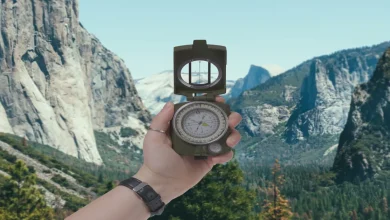
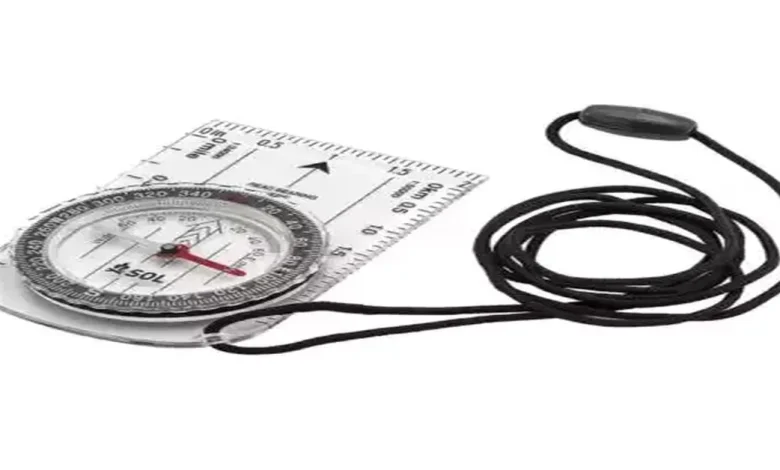
Observe is the step that transforms you from a panicked person into something closer to a navigator. Look at the sky. Note the sun’s position even an approximate sense of west is more than nothing. Listen for water, for roads, for human sounds. Check your phone for signal, for GPS coordinates, for the last cached map you downloaded. Look at the vegetation, the slope of the ground, the way shadows fall. The wilderness is not a blank wall; it is full of information. Observation is the act of learning to read it.
Plan is last because a plan built without the first three steps is just a guess wearing a costume. Once you have stopped, reconstructed your recent movements, and taken stock of your actual environment, you can make a decision that has some logic behind it stay put and signal, backtrack to a known point, move toward a specific sound or landmark. A plan, even a modest one, changes your psychological state. It gives you agency. And agency, in a survival situation, is not a luxury. It is a tool.
Why Staying Put Feels Wrong But Often Is Right
One of the hardest sells in wilderness survival education is the instruction to stay put. Everything in modern life conditions us to equate movement with progress, stillness with failure. We are not built, culturally or neurologically, to sit down in the middle of a forest and wait.
But consider the math. Search and rescue teams operate on probability zones they calculate where a lost person is most likely to be based on their last known point. Every mile a lost person wanders from that last known point exponentially increases the search area. A person who stays within a half-mile of where they were last seen is found, statistically, at a dramatically higher rate than one who has been moving for six hours.
There’s a case that gets cited often in survival literature a child, around eight years old, who became separated from a hiking group in a national forest. While adult searchers were deployed and a grid search was organized, the child did something that survival instructors now use as a near-perfect example: she found a clearing, stayed in it, and used a whistle she had been given before the hike. She was found in under four hours. Adults in similar situations, without the same training or perhaps with more confidence in their own navigation abilities, have been found days later or not at all.
The child had not read a survival manual. But she had been told one thing: if you get lost, stop moving and make noise. That single instruction, retained and acted upon, was the whole game.
The Gear That Means Nothing If You Panic
Here’s something the outdoor industry doesn’t advertise heavily: the most expensive gear in your pack is useless if you can’t access your own cognition. A satellite communicator does nothing if you’re too panicked to remember it’s in the front pocket. A signal mirror is worthless if you’re moving through dense tree cover instead of finding an open ridge. A fire starter fails if your hands are shaking and you haven’t stopped long enough to gather dry material.
The S.T.O.P. rule is, at its core, a cognitive tool. It is a framework designed to interrupt the panic loop and restore the capacity for rational thought. Every piece of gear you carry becomes more effective the moment you apply it. The acronym is the unlock code.
This is also why survival instructors emphasize practicing the rule before you need it walking through the steps deliberately on a calm afternoon hike, so that the sequence is encoded in muscle memory rather than recalled under stress. The brain under acute fear does not learn new things well. It falls back on what it already knows. Give it something good to fall back on.
When the Rule Applies Beyond the Forest
It would be reductive to keep S.T.O.P. confined to wilderness survival, because the cognitive architecture it addresses is not terrain-specific. The panic response the impulse to act before thinking, to move before observing, to decide before understanding shows up in boardrooms, in emergency rooms, in arguments that escalate past the point of repair.
There’s something quietly profound about a rule developed for people lost in the woods being equally applicable to anyone who has ever made a catastrophic decision under pressure. Stop what you’re doing. Think about what you actually know. Observe the real situation in front of you, not the catastrophic version your fear is projecting. Plan from that honest place.
The forest just makes the stakes legible in a way that everyday life usually obscures. Out there, the cost of panic is immediate and measurable. In here in whatever situation you’re reading this from the costs are slower, less visible, but not necessarily smaller.
Maybe that’s what makes getting genuinely lost in the wilderness such a clarifying experience for those who survive it well. The rules for staying alive out there turn out to be the same rules for staying clear-headed anywhere. You just had to get lost first to understand why they mattered.