Nobody Hands You a Rulebook at the Gate
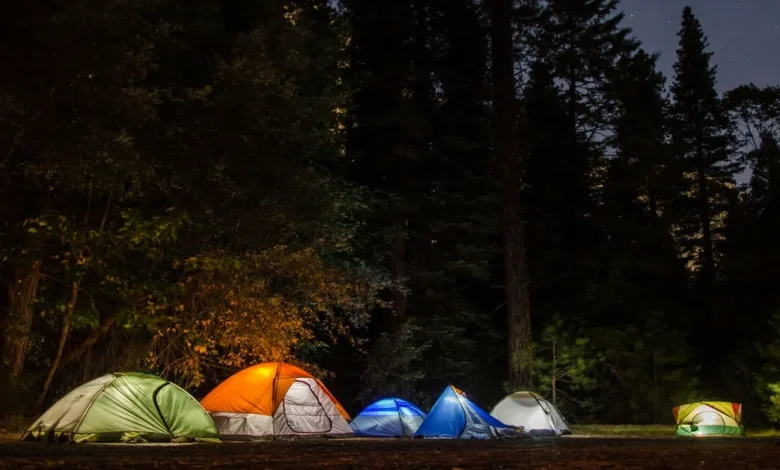
You pull into the campground at dusk, find your site, and start setting up. Everything feels fine. Then, sometime around 10 p.m., your neighbor’s generator kicks on loud, rattling, relentless and you realize pretty fast that “shared campground” means something different to everyone who shows up here.
There’s no orientation. No quiz. No laminated card tucked under your windshield wiper that says, “Hey, here’s how we all agreed to coexist in the woods.” You’re just supposed to know. And most people don’t. Not really.
I’ve camped at enough shared campgrounds from packed state park loops in Georgia to dispersed sites in the Rockies where you could still hear your neighbor’s playlist to have formed some opinions. Some of them might rub you the wrong way. Good.
The Quiet Hours Rule Is the Floor, Not the Ceiling
Most campgrounds post quiet hours somewhere: 10 p.m. to 6 a.m., give or take. People treat this like a finish line. Like the moment 10:00 hits, you’ve earned your silence, and before that, anything goes.
But here’s the thing nobody says out loud: the family in the site next to yours might have kids who’ve been asleep since 8. The solo hiker two spots down has a 5 a.m. summit attempt. Quiet hours are the legal minimum. They’re not the community standard.
I learned this the hard way and I’m not proud of it. Years ago, my group camped at a site in Shenandoah, and we kept our music going until exactly 9:59. Technically legal. Practically obnoxious. An older man walked over, didn’t yell, just said quietly, “We’ve got a little one who’s been trying to sleep for two hours.” I still think about that.
The unspoken rule is simpler than the posted one: read the room. If the campground has gone quiet around you, that’s your cue not the clock.
Your Campsite Boundaries Are Real, Even Without a Fence
The Six-Foot Drift Nobody Talks About
Campsite boundaries are imaginary lines. Everyone knows this. And yet, somehow, most experienced campers respect them with a kind of silent precision that first-timers completely miss.
Walking through someone’s campsite to get to the bathroom even if it’s technically shorter is a violation. Letting your dog wander over to sniff their cooler? Violation. Parking your second car so that the bumper sits just inside their marked space? You already know what that is.
The rule isn’t about territory for its own sake. It’s about the fact that people come to campgrounds to feel like they have a little piece of something to themselves. Even in a loop with thirty other families, your site is supposed to feel like yours. When someone drifts into it without asking, that feeling evaporates.
And honestly? Most people won’t say anything. They’ll just be quietly annoyed for the rest of the trip, and you’ll never know why the vibe felt off.
Campfire Etiquette Is Where Things Get Genuinely Controversial
Here’s my unpopular take: campfire smoke is not a neutral thing, and the “wind was blowing that way” excuse wears thin fast.
Everyone loves a campfire. I get it. But when your fire is sending a steady column of smoke directly into the tent next to yours for three hours, and you’re sitting upwind having a great time, you are affecting someone else’s trip in a real way. Smoke inhalation isn’t just annoying for people with asthma or allergies, it can be genuinely miserable.
The unspoken rule here and this one actually surprises people is that you have some responsibility to manage where your smoke goes. Keep your fire smaller. Let it burn down to coals faster. If someone politely mentions the smoke, don’t get defensive about it.
I know that sounds like I’m asking you to control the wind. I’m not. But I’ve seen people actively add green wood to a fire because they like the drama of a big flame, and then act confused when their neighbors look miserable. That’s not bad luck. That’s a choice.
The Stuff Nobody Wants to Say to Your Face
Your Dog Is Not the Exception
Almost every shared campground has a leash rule. Almost every campground also has at least one person who has decided their dog is too well-trained, too friendly, or too special to need one.
Here’s a question worth sitting with: how would you actually know if your dog makes other people uncomfortable? You wouldn’t. Because most people won’t tell you. They’ll just tense up, pull their own dog away, or quietly keep their kids inside the tent until yours is secured.
Leash rules exist because dogs even good ones are unpredictable in unfamiliar environments with unfamiliar smells and unfamiliar animals. The rule isn’t a judgment of your dog. It’s an acknowledgment that nobody else at the campground has opted into your dog’s personality.
Trash Left Out Is a Community Problem
This one seems obvious, but the version people miss is the subtle one. Most campers know not to leave trash bags on the ground overnight in bear country. What they miss is the half-eaten hot dog bun sitting on the picnic table. The orange peel tossed into the fire ring. The drips of cooking grease on the grate.
These things attract animals sometimes small ones, sometimes not. And when an animal gets conditioned to human food at a campground, it doesn’t just become your problem. It becomes a problem for every person who camps there after you. Rangers sometimes have to euthanize animals that have lost their fear of humans because of repeated food exposure. That’s a heavy consequence for a forgotten hot dog bun.
The unspoken rule is this: your cleanup affects the next person’s experience in ways you’ll never see.
When to Actually Say Something
Most campground friction happens because nobody says anything until they’re already annoyed enough to say it badly.
Here’s where I’ll admit my own failure mode: I tend to wait too long. I’ll let something bother me for hours, build a whole internal case, and then either say nothing or say too much. Neither works. The people who handle shared campgrounds best are the ones who say something early, casually, and without accusation “Hey, any chance you could point that speaker the other way? Sound really carries out here” and then let it go.
But and this is the part people skip you also have to be willing to be on the receiving end of that. If someone comes to you with a reasonable ask, the answer isn’t a debate about whose rights are whose. It’s just, “Yeah, no problem.” That’s it. That’s the whole social contract.
Shared campgrounds work because most people are actually trying. They’re not out to ruin your trip. They just haven’t thought through how their choices land on the people around them. Sometimes a little friction is just the cost of being somewhere beautiful with strangers.
What would it change if you assumed good intent first?