The Secret to Staying Bone-Dry When the Rain Won’t Stop
The Rain Doesn’t Care About Your Plans
There’s a particular kind of misery that comes from being caught in the rain unprepared. Not the gentle, cinematic drizzle that makes city streets look poetic the real kind. The kind that arrives sideways, that finds the gap between your collar and your neck, that soaks through your shoes within thirty seconds and leaves you squishing through the rest of your day. You had things to do. The rain had other ideas.
Most people respond to this problem the way they respond to most inconveniences: reactively. They grab whatever umbrella is closest, throw on a jacket that looks waterproof but absolutely isn’t, and hope for the best. Then they spend the afternoon damp, irritable, and quietly furious at themselves for not thinking ahead. The secret to staying genuinely dry bone-dry, the way people who seem to have figured something out are isn’t really about gear. It’s about a shift in how you think about rain in the first place.
Understanding What “Waterproof” Actually Means
Walk into any outdoor retailer and you’ll be surrounded by the word “waterproof.” It’s printed on tags, stamped on hang labels, stitched into marketing copy with complete confidence. What most of those tags don’t tell you is that waterproofing exists on a spectrum, and the difference between one end and the other is enormous.
The technical measure is called hydrostatic head rating a number that tells you how many millimeters of water pressure a fabric can resist before it starts to leak. A cheap rain jacket might sit around 1,500mm. A serious piece of outerwear starts at 10,000mm and goes up from there. For context, standing in moderate rain for an extended period generates roughly 2,000mm of pressure. Which means that “waterproof” jacket you bought on sale is already failing you before you’ve walked two blocks.
Then there’s the breathability problem. Waterproof fabrics that don’t breathe trap moisture from the inside sweat has nowhere to go, so it condenses against your skin, and you end up wet from the inside out. You stayed dry from the rain and soaked yourself instead. The best materials, like Gore-Tex or eVent, work through a membrane with microscopic pores: small enough to block water droplets from entering, large enough to let water vapor escape. It sounds simple. Getting it right took decades of materials science.
Seams are the other thing nobody talks about. Even a technically waterproof fabric fails if the stitching creates holes. Taped seams where a waterproof tape is heat-bonded over every seam line are the difference between a jacket that keeps you dry and one that slowly channels water toward your spine. Fully taped is the standard worth looking for. Critically taped means only the major seams are covered, which is a compromise that usually reveals itself at the worst possible moment.
The Layering Logic Nobody Explains Properly
Staying dry isn’t just a jacket problem. It’s a systems problem. The outdoor community figured this out decades ago, and it’s genuinely useful knowledge that somehow never made it into mainstream conversation.
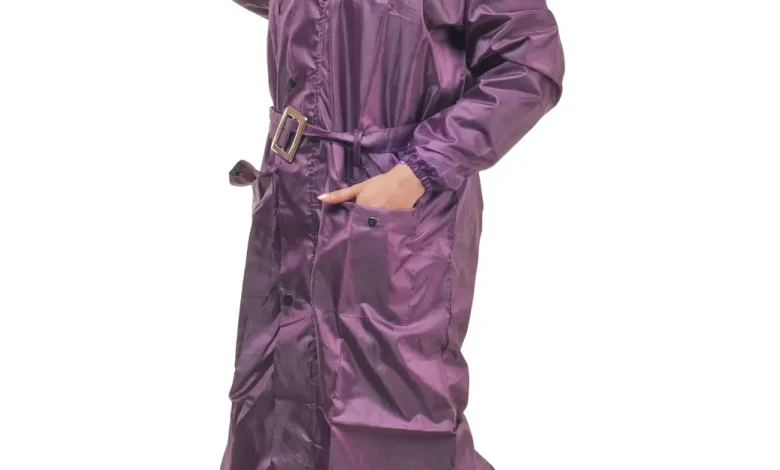
Think of what you’re wearing as three distinct layers, each with a job. The base layer whatever sits against your skin needs to move moisture away from your body. Cotton fails spectacularly here because it absorbs moisture and holds it. Merino wool or synthetic fabrics like polyester move sweat outward and dry quickly, keeping you from the cold, clammy feeling that sets in when you stop moving. The middle layer is insulation: its job is warmth, not weather protection. Fleece, down, synthetic fill whatever suits the temperature. The outer layer is your shell, your weather barrier, the thing doing the actual work of keeping rain off your body.
When all three layers are working together, something interesting happens. Sweat moves from your skin outward, insulation stays loft and warm, and rain never reaches either of them. The system breathes. You stay comfortable. The rain becomes, if not irrelevant, at least manageable.
The mistake most people make is collapsing this into one layer a single “waterproof jacket” worn over a cotton t-shirt. The jacket might keep the rain out. The cotton will trap everything else in. By the time you’ve walked fifteen minutes, you’re wet in a different and arguably worse way.
Umbrellas: The Honest Assessment
Umbrellas deserve a more complicated conversation than they usually get. They’re the default rain solution for most people, and for certain situations a walk to a restaurant, a commute with minimal wind they work fine. But they have real limitations that become obvious the moment conditions get serious.
Wind is the primary enemy. A standard umbrella inverts in a gust above about 25 mph, which in a real storm is not a hypothetical scenario. Vented canopy umbrellas handle wind better by allowing air to pass through the top rather than catching it like a sail, and they’re worth the slight premium if you live somewhere with weather that means business. Compact travel umbrellas are convenient but sacrifice both size and structural integrity they’re fine for a light shower, genuinely inadequate for anything heavier.
The deeper limitation of umbrellas is coverage. They protect your head and shoulders. Your legs, your shoes, your bag those are on their own. In driving rain, even your upper body isn’t fully protected because the rain is coming at an angle. An umbrella in a real storm is a psychological comfort as much as a practical tool. It helps. It doesn’t solve the problem.
The people who stay genuinely dry in serious rain have usually accepted this and built their approach around it. An umbrella plus a proper shell, waterproof boots, and a bag with a rain cover that’s a system. An umbrella alone is optimism.
The Footwear Problem Everyone Ignores Until It’s Too Late
Wet feet are their own category of misery. Cold, wet feet affect your mood, your focus, and in extended situations, your health. And yet footwear is almost always the last thing people think about when preparing for rain.
Waterproof shoes and boots use the same basic logic as waterproof jackets a membrane, usually Gore-Tex, that lines the interior and blocks water from entering through the fabric. They work well in light to moderate rain and for shorter exposures. The limitation is height: water that crests the top of a low shoe bypasses the waterproof lining entirely. In deep puddles or flooding, ankle-height waterproof shoes are irrelevant.
Rubber boots actual wellies solve this through a different approach entirely. They’re not waterproof in the technical sense because they’re not fabric at all. They’re impermeable. Water cannot pass through rubber. The trade-off is breathability: rubber doesn’t breathe, so your feet sweat, and moisture builds up inside. Wool socks help significantly here by absorbing that moisture and keeping your feet from feeling soaked even when they technically are. It’s not a perfect solution. It’s the best available one when the puddles are deep enough to matter.
What the Prepared Person Actually Looks Like
There’s a certain type of person you notice in a downpour. They’re not running. They’re not hunched against the rain or holding a bag over their head. They’re moving at a normal pace, apparently unbothered, and when they arrive wherever they’re going, they look essentially the same as when they left. Their jacket sheds water in sheets. Their boots are rubber or sealed leather. They have a small, compact umbrella deployed with one hand while the other holds their bag which has a rain cover clipped over it.
They didn’t get lucky with the weather. They stopped treating rain as an event and started treating it as a condition something that exists in the world and can be prepared for with the same practical thinking you’d apply to anything else. The gear they carry isn’t necessarily expensive. It’s chosen with some understanding of how it actually works.
There’s something almost philosophical about it. The rain doesn’t change. The weather does what it does, indifferent to your schedule or your mood. What changes is whether you’ve decided to take it seriously. Whether you’ve thought, even once, about what it would actually take to walk through a storm and arrive somewhere dry.
Most people haven’t. Which is why, in every downpour, you see the same scene: people running, people huddled in doorways, people looking at the sky with an expression that mixes surprise and betrayal, as if the rain had broken some kind of agreement. Meanwhile, somewhere in that same storm, a person in a properly sealed jacket with taped seams and rubber boots is just walking. Dry. Unhurried. Already thinking about something else entirely.