The Art of the ‘Shake-Down’: How to Trim Your Pack Weight by 5 Pounds

There’s a ritual that happens in parking lots and trailheads across America every weekend. Someone hoists a backpack, takes three steps, and immediately knows something is wrong. The weight hits differently than it did in the living room. The shoulders tighten. The lower back sends a quiet warning. By mile two, that warning becomes a negotiation with yourself, with the trail, with every item you packed “just in case.”
Five pounds. That’s roughly the weight of a decent hardcover book, a bag of sugar, or a newborn cat. On a day hike it’s negligible. Over three days on the trail, it’s the difference between moving through the wilderness and being moved by it carried along by momentum and stubbornness rather than genuine enjoyment. The shake-down isn’t about becoming some ultralight evangelist who eats cold food and sleeps on a foam square the size of a yoga mat. It’s about being honest with yourself, systematically, about what you actually need versus what you’re bringing because it makes you feel safer in the gear closet.
The Weight You Never Think to Weigh
Most people approach pack weight the wrong way. They look at the big items the tent, the sleeping bag, the pack itself and feel like they’ve done their due diligence. Those are already expensive. Those are already “ultralight” or “lightweight” according to some website. The real weight, the insidious kind, lives in the margins.
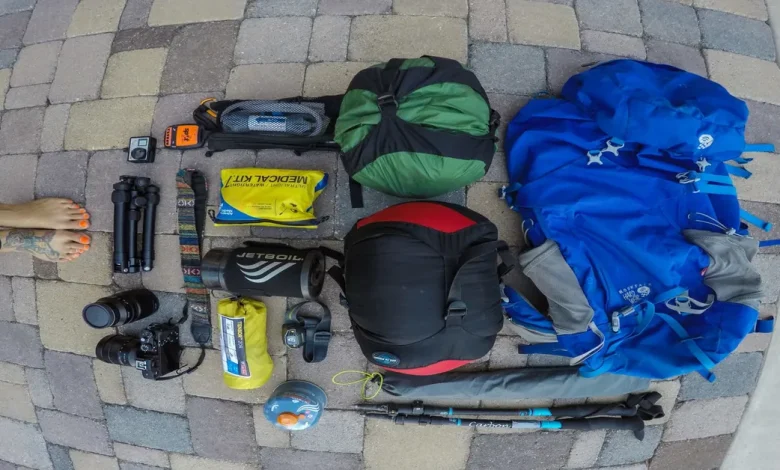
Think about the stuff sack your sleeping bag came in. It weighs four ounces. A compressor bag does the same job and weighs one. That’s three ounces saved on something you never once considered reviewing. Multiply that logic across a full kit the extra carabiner clipped to nothing, the full-size hand lotion, the paperback novel, the three lighters and you’re looking at a pound and a half of pure habit.
This is where the shake-down actually begins: not on the trail, but on the floor of your living room with a kitchen scale and a ruthless willingness to question your own assumptions. Lay everything out. Weigh it individually. Write the numbers down. The act of writing them down matters more than you’d think, because suddenly the four-ounce stuff sack isn’t abstract anymore. It’s a decision you made, and now you’re looking at it.
The Big Three and the Lies We Tell Ourselves About Them
Shelter, sleep system, and pack. The holy trinity of backpacking weight. Experienced hikers call them the Big Three because optimizing here creates the most dramatic reduction. But there’s a version of optimizing the Big Three that involves spending two thousand dollars on a quilt and a cuben fiber tarp, and there’s a version that involves actually using what you already own more intelligently.
Your tent probably weighs more than it needs to for the conditions you’re hiking in. A three-season tent on a July trip in the Sierras is carrying weather protection you statistically won’t need. A bivy and a trekking pole shelter setup might feel radical, but it also might save you two pounds and cost you nothing if you already own the poles. The question isn’t whether your gear is the lightest gear available it’s whether your gear is appropriately matched to the specific trip you’re taking.
Sleeping bags are the same conversation. A 20-degree bag on a trip where nighttime lows are 45 degrees is a security blanket, literally. A 40-degree quilt and a light puffy jacket you’d bring anyway covers the same thermal range at half the weight. The bag you own isn’t the bag you have to use every time.
The pack itself is trickier, because people get emotionally attached to their packs in ways they don’t with other gear. But a 70-liter pack on a four-day trip is an invitation to fill space. Volume creates weight through the psychological pressure of unused capacity. Bring the smaller pack and you’ll make better decisions about what goes inside it.
Water, Food, and the Mathematics of Suffering
Water is the heaviest thing most people carry, and it’s the one area where hikers consistently over-prepare. A liter of water weighs 2.2 pounds. Carrying four liters between water sources that are two miles apart isn’t safety it’s anxiety made physical. Know your route. Know your sources. Carry what you need with a reasonable buffer, not a buffer designed to survive a desert crossing on a well-watered mountain trail.
Food weight is its own discipline. Caloric density per ounce is the metric that matters, and most grocery store food fails it catastrophically. A can of soup is mostly water you’re paying to carry uphill. Tortillas, nut butter, hard cheese, olive oil, instant mashed potatoes, ramen with extra fat added these are the unglamorous building blocks of a food system that delivers enough calories without punishing your back. Freeze-dried backpacking meals are expensive and often excellent, but they’re not magic. You can hit similar caloric density with grocery store staples if you spend twenty minutes thinking about it before you shop.
The math is simple and kind of sobering: if you’re out for three days and burning 3,000 calories a day, you need roughly 9,000 calories. At 100 calories per ounce a reasonable target that’s 90 ounces, or about 5.6 pounds of food. At 75 calories per ounce, which is where most people land without thinking about it, you’re carrying 7.5 pounds. That difference is real. It shows up in your knees on the descent.
The ‘Just In Case’ Audit
Every pack has a layer of items that exist in a quantum state they’re there for emergencies that probably won’t happen, but their presence feels mandatory. The emergency layer is legitimate. The bloated emergency layer is where honesty gets uncomfortable.
A full first aid kit or a curated one? Most commercial first aid kits are padded with items you’ll never use and missing the specific things you actually need for your style of hiking. Building your own from scratch typically cuts the weight in half and doubles the usefulness. The same logic applies to repair kits, navigation tools, and hygiene supplies.
The “just in case” audit isn’t about stripping your safety margin to nothing. It’s about examining whether each item earns its weight against the realistic probability and consequence of the scenario it addresses. A blister kit earns its weight. A full suture kit for a day hike does not. Rain gear earns its weight in the Pacific Northwest in October. The same gear on a desert trip in June is a different calculation.
There’s also a category of “just in case” that has nothing to do with safety it’s comfort hedging. The camp chair. The extra camp shoes. The full-size coffee setup with the ceramic mug. These aren’t wrong. They’re just choices, and they should be made consciously rather than defaulted into.
Wearing Weight vs. Carrying It
One of the oldest tricks in the ultralight playbook is wearing your heaviest items rather than packing them. Your boots, your rain jacket, your puffy if they’re on your body, they’re not on the scale. This isn’t cheating; it’s understanding what the scale is actually measuring. Pack weight is the weight you’re carrying in addition to yourself. Anything on your body is already accounted for in your own mass.
This principle extends to packing strategy. Dense, heavy items packed close to your back and high in the frame transfer weight more efficiently to your hips. The same total weight, packed carelessly, feels dramatically heavier over distance. The geometry of how you load a pack is a free performance upgrade that most people never bother with.
The Shake-Down Trip Itself
All of this analysis means nothing until you test it under real conditions. The shake-down trip a short overnight or two-night trip close to home, specifically designed to stress-test your kit is how you convert theory into calibrated experience.
Go out with your revised kit. Pay attention. What did you use every day? What stayed at the bottom of the bag? What did you wish you had? The answers are more honest than anything you’ll arrive at in your living room, because the trail has a way of cutting through the noise. Cold fingers at 5 a.m. will tell you whether your glove choice was right faster than any forum thread.
The goal isn’t to arrive at a perfect, immutable kit. It’s to arrive at a kit that’s honest honest about the conditions, honest about the trip length, honest about who you are as a hiker on this particular trip. That honesty is worth more than any single piece of gear, and it weighs nothing at all.