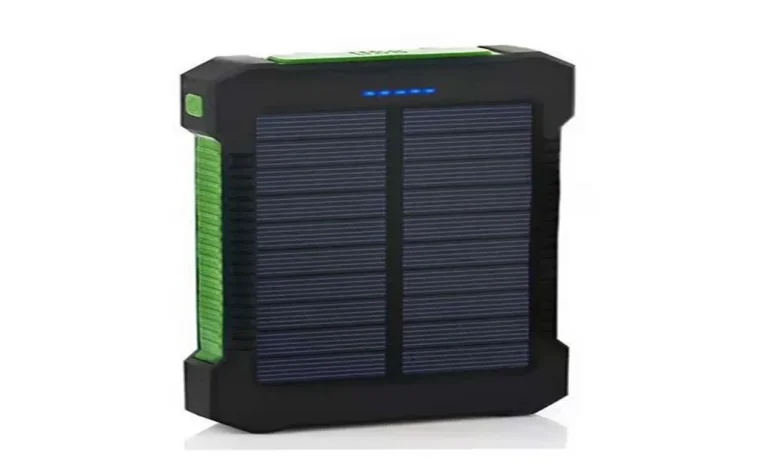
There’s a moment every traveler knows you’re somewhere genuinely remote, the view is worth every mile of suffering to get there, and your phone is at 4%. That small number carries a disproportionate weight. It’s not just about Instagram. It’s your GPS, your emergency contact, your translation app, your camera. The question of how you keep that device alive for a full week in the backcountry isn’t trivial. It’s one of the more consequential gear decisions you’ll make.
Two solutions dominate the conversation: solar chargers and power banks. Both have passionate advocates. Both have real limitations. And the honest answer to which one wins isn’t a clean victory it’s a story about context, terrain, and what kind of traveler you actually are versus the kind you imagine yourself to be.
The Promise of Solar and Why It’s More Complicated Than It Sounds
Solar chargers carry a certain romanticism. The idea that you can harvest energy from the sky indefinitely, that your power supply is theoretically infinite as long as the sun cooperates it’s compelling in a way that a heavy battery brick simply isn’t. And in the right conditions, solar panels genuinely deliver on that promise.
The operative phrase is “the right conditions.” A high-quality foldable solar panel something in the 21 to 28-watt range from a reputable brand can push meaningful current into a device or a small battery pack on a clear day at altitude. Hikers in the Colorado Rockies in July, or trekkers crossing open highland terrain in Patagonia during summer, often report genuinely useful output. The math can work.
But solar charging is deeply, fundamentally dependent on variables you cannot control. Cloud cover is the obvious one. Less obvious is angle. A panel draped over the back of a pack while you’re hiking through a dense forest corridor, or moving through terrain that keeps you in shadow for half the day, is generating a fraction of its rated output. Manufacturers test their panels under laboratory conditions direct, perpendicular sunlight at peak irradiance. Real-world output in real hiking conditions routinely falls to 30 or 40 percent of that figure.
There’s also the charging physics problem. Most solar panels output power intermittently and sometimes inconsistently, which doesn’t play well with modern smartphone charging circuits. Phones are designed to negotiate a stable charging handshake with a power source. Fluctuating input from a panel moving in and out of shadow can cause a phone to repeatedly start and stop the charging cycle, generating heat and, over time, stressing the battery. Pairing a solar panel with a small buffer battery in between largely solves this but now you’re carrying both.
The Unglamorous Reliability of a Good Power Bank
A power bank doesn’t care about the weather. It doesn’t care that you spent the last six hours hiking through old-growth timber with a dense canopy overhead. It doesn’t care that your campsite is in a valley that sees direct sun for maybe four hours a day. You plug in, electrons move, device charges. The relationship is boring and completely dependable.
For a week-long trip, the math on power banks is straightforward enough to run in your head. A modern smartphone battery sits around 4,000 to 5,000 mAh. A 20,000 mAh power bank, accounting for the conversion losses inherent in any battery-to-device transfer, realistically delivers somewhere between three and four full phone charges. For most travelers who aren’t running their GPS continuously or filming hours of video, that’s enough to get through seven days with careful management.
Push into the 26,800 mAh range the current practical ceiling for lithium-ion power banks that still comply with airline carry-on regulations and you have genuine headroom. Add a second smaller bank as a backup, and you’re looking at a system that handles a week comfortably for two people sharing the load.
The weight argument against power banks is real but often overstated. A 20,000 mAh bank runs roughly 350 to 450 grams depending on build quality. That’s meaningful in a ultralight kit. But it’s also a known, fixed weight unlike a solar setup where you might carry a panel and a buffer battery and still come up short on a cloudy stretch.
When Solar Actually Makes Sense
Strip away the marketing language and solar chargers reveal their genuine use case: trips longer than ten days in consistently sunny, open terrain where weight over time becomes a more pressing concern than reliability.
Think of a thru-hiker on the Pacific Crest Trail moving through the Sierra Nevada in late summer. Open skies, high elevation, long daylight hours, weeks of travel ahead. Here, a solar panel attached to the back of a pack accumulates meaningful charge across the miles. The weight penalty of carrying a large power bank for the entire duration starts to feel less rational when the sun is doing real work every day.
Kayaking expeditions on open water are another strong solar use case. The panel can lie flat on the deck, oriented toward the sun, charging a buffer battery while you paddle. No shade, no fluctuating angle from body movement, consistent exposure. People who do multi-week ocean or lake crossings often swear by solar precisely because the conditions are so favorable.
The pattern is consistent: solar wins when the trip is long enough, the terrain is open enough, and the weather is predictable enough. Remove any one of those three conditions and the calculation starts to shift.
The Hybrid Reality Most Experienced Travelers Land On
After enough trips, most people who’ve genuinely stress-tested both options arrive at the same quiet conclusion: the best week-long setup is a modest power bank paired with a small solar panel used opportunistically.
Not a massive panel. Not a panel you’re counting on to meet your charging needs. A lightweight 10 or 15-watt panel that you clip to your pack on sunny days, that trickle-charges a small 10,000 mAh buffer battery during the hours you’re moving through open terrain. The power bank carries the load. The solar extends it. Neither system is asked to do more than it can reliably deliver.
This hybrid approach resolves the central tension in the solar-versus-power-bank debate, which is really a tension between reliability and sustainability. Power banks are reliable but finite. Solar is sustainable but unreliable. Together, their weaknesses largely cancel out.
The weight of a combined system a small panel, a buffer battery, and a primary power bank runs higher than either alone. That’s the honest cost. But for most travelers doing a week in genuinely remote terrain, the confidence that comes from not being dependent on either the weather or a single point of failure is worth the extra grams.
What the Decision Actually Reveals
The solar-versus-power-bank question is, underneath the gear specs and watt-hours, a question about how you relate to uncertainty. Solar chargers ask you to accept some dependency on conditions outside your control in exchange for a kind of elegant self-sufficiency. Power banks ask you to carry your security with you, heavy and certain.
Neither philosophy is wrong. They just describe different travelers, or sometimes the same traveler in different moods.
What’s worth resisting is the assumption that the more technologically interesting option is automatically the better one. Solar panels photograph well hanging off a pack. They signal a certain environmental consciousness and adventurous self-reliance. Power banks are anonymous black rectangles that live at the bottom of a bag. But in the mountains, when the clouds move in on day three and don’t lift until day six, anonymous black rectangles have a way of looking very good indeed.