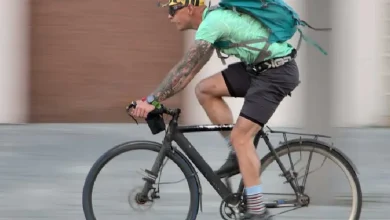
There’s a particular kind of cold that only cyclists know. It’s not the cold you feel walking from a parking lot to a building, or the brief sting of stepping outside to grab the mail. It’s the cold that builds over forty minutes at twenty miles per hour, the kind that starts at your fingertips and works inward until your knuckles stop bending properly and your brain starts negotiating with your legs about whether this ride was ever a good idea to begin with. Dressing for that cold is a skill. And like most real skills, it takes longer to master than anyone tells you upfront.
The frustrating truth is that layering for winter cycling isn’t the same as layering for any other cold-weather activity. Hiking, skiing, standing at a football game none of these generate the sustained, sweat-inducing output that a hard ride does, while simultaneously exposing you to wind chill that can make thirty-five degrees feel like fifteen. You’re producing heat and losing it at the same time, in ways that shift constantly depending on your pace, the terrain, and whether the wind is at your back or in your face. A system that keeps you warm at the start of a climb will have you soaking and miserable ten minutes later. What kept you comfortable on the flats will leave you shivering on a long descent. This is the central paradox of winter cycling clothing, and it’s why the layering conversation matters so much.
The Base Layer Is Doing More Work Than You Think
Most riders underestimate the base layer. It tends to get treated as an afterthought whatever thermal undershirt is clean, whatever merino tee was on sale. But the base layer is the foundation everything else depends on, and its primary job isn’t warmth. It’s moisture management.
When you’re working hard, you sweat. Even in January. Even when it’s cold enough to see your breath. That moisture, if it stays against your skin, becomes the enemy. Wet fabric conducts heat away from your body far more efficiently than dry fabric does, which means a soaked base layer can make you colder than wearing nothing at all. The base layer’s job is to pull that moisture away from your skin and push it outward so the layers above can deal with it.
This is why cotton is genuinely a bad choice, not just cycling-world snobbery. Cotton absorbs moisture and holds it. Merino wool and synthetic fabrics like polyester move moisture through the fabric. For winter riding specifically, merino has an edge because it manages moisture while also providing meaningful insulation even when damp, and it doesn’t develop the same odor issues that synthetics can after repeated hard efforts. A well-fitted merino base layer snug enough to make contact with your skin across your entire torso is one of the best investments a cold-weather cyclist can make.
The Middle Layer: Where Most People Get It Wrong
The insulating layer is where riders tend to overcorrect. Cold outside, wear more insulation the logic seems obvious. But the middle layer in cycling needs to breathe in ways that a ski jacket or a puffy hiking vest simply doesn’t. You need warmth, yes, but you also need that warmth to vent when your effort level climbs.
Lightweight fleece is often the right answer here. A cycling-specific fleece or a thin thermal jersey worn over the base layer traps warm air close to your body without creating a seal that prevents moisture from escaping outward. On moderately cold days call it mid-thirties to low forties Fahrenheit this combination of base layer and thermal jersey might be all you need on your upper body before reaching for a shell.
The temptation to wear a heavy insulating layer is understandable, especially when you’re standing in your garage before the ride and it genuinely feels brutal outside. But remember that within ten minutes of riding, your body temperature is going to rise significantly. The goal is to dress for the temperature you’ll be at twenty minutes in, not the temperature you feel standing still. Experienced winter riders often describe feeling slightly cool even uncomfortably so at the start of a ride. That’s usually correct. If you’re perfectly warm before you clip in, you’re going to be overheating by the time you hit the first real climb.
The Outer Shell and the Wind Chill Reality
Wind is the variable that changes everything. A calm twenty-eight-degree day is manageable. A twenty-eight-degree day with a twenty-mile-per-hour headwind is a different experience entirely, and the outer layer is your primary defense against it.
A good cycling shell doesn’t need to be heavily insulated that’s what the layers beneath are for. What it needs to do is block wind effectively, shed light rain or sleet, and breathe well enough that the moisture your base and mid layers are pushing outward can actually escape. Fully waterproof membranes like Gore-Tex are excellent at blocking wind and rain but can trap moisture during high-output efforts. Water-resistant shells with good breathability often perform better for hard riding, accepting that you might get slightly damp in heavy rain in exchange for not cooking yourself from the inside.
The front of the jacket matters more than the back. Wind hits your chest and thighs hardest when you’re in a riding position, which is why many cycling-specific shells use a heavier, more wind-resistant fabric on the front panels and a lighter, more breathable material across the back and under the arms. If you’re working with a non-cycling jacket, this asymmetry won’t exist, and you’ll feel the difference.
The Extremities: Where the Ride Actually Ends
You can have a perfect torso layering system and still abandon a ride because your hands stopped working. The extremities hands, feet, ears, and face are where winter cycling gets won or lost, and they deserve the same systematic thinking as the rest of the kit.
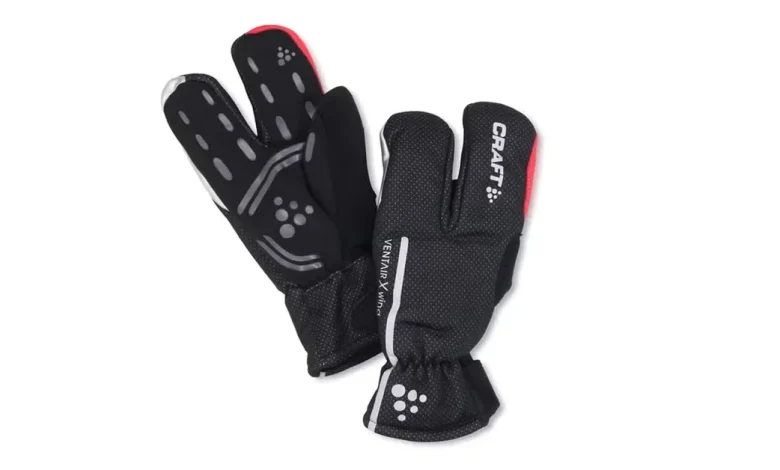
Hands are the most complicated because they need dexterity. You’re braking, shifting, and occasionally signaling, which means thick ski gloves aren’t really an option. Cycling-specific winter gloves use insulation strategically more on the backs of the hands, which face the wind, and less on the palms, where grip and feel matter. For truly brutal conditions, a thin liner glove worn inside a heavier shell mitt gives you the option to remove the outer layer when climbing and put it back on for descents.
Feet lose heat through two mechanisms: cold air and contact with the cold metal of the pedals. Thermal cycling socks help, but on genuinely cold days, neoprene overshoes are often the difference between a ride that works and one that ends early. They block wind, add insulation, and cover the vents in your cycling shoes that are designed for summer ventilation and become liabilities in winter.
Ears and the back of the neck are frequently overlooked until they aren’t. A thin cycling cap worn under your helmet covers both, adds almost no bulk, and makes a disproportionate difference in comfort. Some riders prefer a neoprene neck gaiter that can be pulled up over the chin and nose on descents. Either way, protecting the back of the neck from wind exposure is something you’ll only forget once before it becomes a non-negotiable part of your winter kit.
Learning to Read the Ride Before It Happens
The most experienced winter cyclists develop something like a weather intuition an ability to look at temperature, wind speed, humidity, and route profile together and make a layering decision that holds up for the entire ride. It takes time to build this, and it’s built through mistakes. The ride where you wore too much and spent an hour wishing you could take off your jacket. The ride where you underestimated the wind and turned around early. The descent that was fine on the way out and punishing on the way back because the temperature dropped four degrees while you were climbing.
Keeping a simple mental note or an actual note of what you wore and how it felt on different types of days accelerates this learning considerably. Over time, you develop a personal system that accounts for your own physiology, your typical effort level, and the specific conditions of the roads you ride. Someone who runs cold will layer differently than someone who runs hot, even on the same day, on the same route.
What never changes is the underlying logic: manage moisture first, then insulation, then wind protection. Build a system that can adapt as conditions shift. And accept that some discomfort at the start of a winter ride isn’t a sign that you dressed wrong it might be exactly right.
The cold is out there waiting. The question is whether your clothing system lets you meet it on your own terms.