How to Politely Decline a Ride That’s Out of Your League
The Moment You Realize You’re in Over Your Head
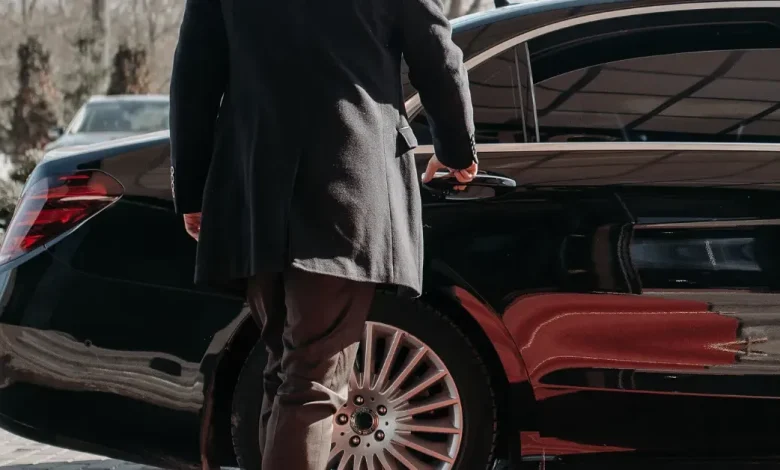
It happens faster than you’d expect. Someone offers you a ride maybe a colleague with a Tesla Model S, a date who just pulled up in a Porsche Cayenne, or a new acquaintance whose car smells like a boutique hotel lobby and something shifts in your chest. Not quite anxiety, not quite excitement. More like the quiet awareness that you are about to enter a social situation with unspoken rules you haven’t fully learned yet.
Declining that ride isn’t just about logistics. It’s about navigating the invisible architecture of social class, self-perception, and the delicate choreography of not wanting to seem ungrateful while also not wanting to feel out of place for the next forty minutes.
Most people don’t talk about this. We talk about how to accept generosity gracefully, how to be a good guest, how to receive compliments without deflecting. But the art of declining especially when the offer comes from someone operating at a different economic altitude is its own quiet skill.
Why Declining Feels So Complicated
There’s a particular kind of social pressure that comes attached to high-end generosity. When someone with obvious means offers you something a ride in their luxury car, a seat at an expensive restaurant, a weekend at their house the offer rarely feels neutral. It comes wrapped in warmth, yes, but also in an implicit expectation: you are supposed to say yes. Saying no risks being read as rude, standoffish, or worse, ungrateful.
And then there’s the internal layer. Some people genuinely feel uncomfortable accepting rides in cars that cost more than their annual salary. There’s a kind of low-grade self-consciousness that sets in do I sit correctly in this seat? Will I accidentally touch something? What do we talk about for the next half hour? that makes the whole thing feel less like a favor and more like a performance you’re not rehearsed for.
None of this is irrational. Class dynamics are real, and the discomfort they produce is legitimate. The mistake is thinking that the only polite response to an offer is acceptance.
The Language of Graceful Refusal
Declining well is mostly a matter of tone and timing. The goal is to make the other person feel that your refusal has nothing to do with them because in most cases, it genuinely doesn’t.
One of the cleanest ways to decline is to redirect the reason toward yourself, not the car or the person offering. Something like, “I actually need to make a stop on the way it’ll be easier if I just drive myself” lands softly because it’s practical, it’s specific, and it doesn’t invite debate. You’re not saying their offer wasn’t generous. You’re saying your own itinerary is the complicating factor.
Timing matters enormously here. A refusal that comes immediately, before the offer is fully extended, reads as reflexive and can feel dismissive. But a refusal that comes after a beat after you’ve let the offer land, after you’ve shown genuine appreciation carries a completely different emotional weight. “That’s so kind of you, honestly. I think I’m going to head out a bit later, but thank you” is a different social act than a flat “No thanks” delivered before the sentence is finished.
The warmth has to be real, though. People can feel when gratitude is performative. If you’re going to decline, mean the thank-you. Let it breathe.
When Honesty Is the Better Move
There are situations where a soft deflection isn’t enough where the person offering is persistent, or where you’re close enough that a vague excuse would feel dishonest. In those cases, a carefully honest response can actually strengthen the relationship rather than damage it.
This doesn’t mean announcing that their car makes you feel socially inadequate. It means finding the true part of the feeling and offering that. “I’m kind of in my head today and I think I just need the quiet of driving alone” is honest. It’s also human. Most people respond to that kind of vulnerability with understanding rather than offense.
What you’re really doing in these moments is giving the other person something they can work with a real reason, a glimpse of your actual state, rather than a polished excuse they can sense is hollow. People are more perceptive than we give them credit for. They know when they’re being managed.
Reading the Room: When to Just Say Yes
Here’s the complication: sometimes the most graceful move is to accept the ride.
If the person offering is clearly excited to share something they love their new car, a route they enjoy, the chance to talk during a commute declining can land as a small rejection even when it isn’t meant as one. Social intelligence means reading what the offer is actually about. Is it about the car? Or is it about connection?
When the offer is really about connection, refusing it to protect your own comfort can be a kind of selfishness dressed up as politeness. The discomfort of sitting in an unfamiliar seat is temporary. The signal you send by always keeping a careful distance from people who have more than you can calcify into something lonelier over time.
This is worth sitting with. The reflex to decline to avoid situations where you might feel outclassed or out of place can become its own kind of social armor that keeps people at a distance you didn’t consciously choose.
The Etiquette Nobody Writes Down
There’s an unwritten code that governs these moments, and it goes something like this: the person with more is responsible for not making the person with less feel small, and the person with less is responsible for not letting their discomfort become the other person’s problem.
That’s a harder balance than it sounds. It requires a certain amount of self-awareness from both sides the generosity to offer without performing, and the confidence to decline without apologizing excessively or accepting out of obligation.
If you do decline, don’t over-explain. One reason is enough. Two reasons start to sound like you’re building a legal case. Three reasons and you’ve accidentally made the whole thing awkward by protesting too much. Say the one true thing, say thank you, and let it close naturally.
And if the person pushes back “Are you sure? It’s really no trouble” a simple, warm repetition of your position is all you need. “I appreciate it, I really do. I’m going to drive myself today.” You don’t owe an escalating explanation. The offer was generous; the refusal is also complete.
What You’re Really Protecting
At the center of all this is something worth naming directly: your sense of ease in your own life.
There’s nothing wrong with knowing which social situations feel natural to you and which ones require more energy than you have on a given day. Declining a ride that feels out of your league isn’t a statement about the other person’s worth or your own. It’s an act of self-knowledge the quiet recognition that you’ll be better company, a better friend, a more present human being, when you’re not spending the entire car ride managing your own discomfort.
The goal isn’t to avoid all situations that stretch you. It’s to choose which ones to step into with intention, rather than obligation.
Sometimes the right call is to say yes and let the unfamiliarity teach you something. Sometimes it’s to say no, warmly and without guilt, and take your own familiar route home. The skill is in knowing which is which and having the words ready for both.