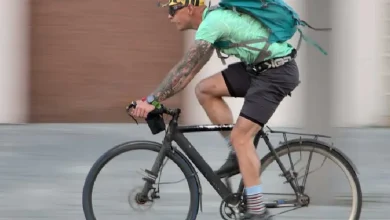
There’s a moment every cyclist knows. It comes somewhere around the two-hour mark, sometimes earlier on a brutal climb, sometimes later on a flat and deceptively manageable route. Your legs don’t exactly stop working, but they start to feel like they belong to someone else heavier, slower, uncooperative. Your thoughts get foggy. The gap between what you want your body to do and what it actually does widens with every pedal stroke. Riders call it the bonk. Scientists call it hypoglycemia. Either way, it’s the same cruel message: you waited too long to eat.
Mid-ride nutrition isn’t a footnote to training. It’s the training. What you put into your body while you’re actually moving determines not just how you finish a ride, but how you recover, how you adapt, and whether the effort you’re putting in is building fitness or simply burning through it.
The Glycogen Clock Is Always Running
Your muscles run primarily on glycogen a form of glucose stored in the liver and muscle tissue. The average well-trained cyclist carries somewhere between 1,500 and 2,000 calories worth of glycogen. That sounds like a lot until you do the math. At moderate to high intensity, a rider can burn 600 to 900 calories per hour. Do the arithmetic and you’ll see the problem: even starting fully fueled, you’ve got maybe two to three hours before the tank runs dry.
What makes this trickier is that glycogen depletion doesn’t announce itself cleanly. It creeps. Performance degrades gradually, and the brain which is itself heavily dependent on blood glucose starts making poor decisions before the rider even realizes something is wrong. You might feel vaguely irritable, or convince yourself the pace is fine when it isn’t. By the time you feel genuinely terrible, you’re already deep in a hole that no amount of mid-ride eating can quickly fix.
This is why the cardinal rule of mid-ride fueling isn’t “eat when you’re hungry.” Hunger is a lagging indicator. The rule is eat early, eat often, and eat before the deficit becomes a crisis.
What Your Body Can Actually Process
Here’s where the science gets interesting and where a lot of riders get it wrong. The gut has a ceiling on how much carbohydrate it can absorb per hour, and that ceiling is lower than most people assume. For glucose alone, the small intestine can transport roughly 60 grams per hour. Push beyond that and the excess sits in your gut, fermenting, causing bloating, cramping, and the kind of gastrointestinal distress that can end a ride faster than any mechanical failure.
But there’s a workaround, and it’s one that sports nutrition research has refined considerably over the past two decades. Different sugars use different intestinal transport proteins. Glucose uses one pathway; fructose uses another. When you combine them as most modern sports gels, chews, and drinks do you can raise your total carbohydrate absorption to around 90 grams per hour. That’s why you’ll see products listing a glucose-to-fructose ratio of roughly 2:1. It’s not marketing language. It’s intestinal biochemistry.
The practical implication is this: if you’re on a ride longer than 90 minutes and you’re pushing any real intensity, you should be targeting somewhere between 60 and 90 grams of carbohydrate per hour, depending on the effort level. For shorter or easier rides, less is fine. For a four-hour gran fondo at race pace, hitting the high end of that range isn’t optional it’s protective.
Timing, Texture, and the Psychology of Eating on the Bike
Knowing the numbers is one thing. Actually executing mid-ride nutrition while managing traffic, monitoring effort, and keeping the bike upright is another conversation entirely.
Most sports dietitians recommend starting your fueling within the first 30 to 45 minutes of a ride, even if you feel completely fine. This isn’t about need it’s about staying ahead of the curve. A small gel or a few chews early on keeps blood glucose stable and delays the point at which you’re drawing heavily on your glycogen reserves. Think of it as topping off a tank that’s still mostly full rather than scrambling to refill one that’s already empty.
The format of what you eat matters more than riders often admit. Gels are fast and convenient but can feel cloying after a few hours, especially in heat when your appetite suppresses. Real food rice cakes, banana pieces, dates, homemade energy balls tends to sit better mentally and often physically during longer efforts. There’s a reason that professional cycling teams have nutritionists who prepare musette bags with actual food rather than just stacking them with commercial products. Palatability is a performance variable. If you can’t bring yourself to eat because everything tastes like synthetic cherry, you won’t eat, and then you’ll bonk, and the best-laid nutritional plan in the world becomes irrelevant.
Hydration is inseparable from this equation. Carbohydrate absorption slows when you’re dehydrated, which means the gel you just took won’t hit your bloodstream as efficiently if you’re already running low on fluids. A rough target of 500 to 750 milliliters of fluid per hour adjusted for heat, humidity, and sweat rate keeps the digestive machinery running properly. Electrolytes, particularly sodium, help with fluid retention and can reduce cramping, especially on hot days when sweat losses are high.
Training the Gut Is Not a Metaphor
One of the less glamorous but genuinely important aspects of mid-ride nutrition is that the gut, like the legs, responds to training. Riders who consistently practice eating at intensity gradually improve their ability to absorb carbohydrates during exercise. The intestinal transporters upregulate. Gastrointestinal discomfort decreases. What felt impossible to stomach at race pace in the spring becomes routine by late summer.
This has real implications for how you approach long rides. Don’t save your nutrition practice for race day. Use your training rides to experiment with timing, with products, with amounts. Figure out what works at 70 percent of max heart rate versus 90 percent. Some riders find that solid food becomes difficult to process at very high intensities, when blood is being diverted away from the gut to working muscles, and that liquid carbohydrates or gels become the only viable option. Others can eat a rice cake on a climb without a second thought. The only way to know is to test it, repeatedly, under conditions that resemble what you’ll actually face.
There’s also the question of fat adaptation the idea, popular in certain endurance circles, that training the body to rely more heavily on fat oxidation can extend your glycogen ceiling. The evidence here is nuanced. Yes, fat-adapted athletes do spare glycogen to some degree. But fat oxidation can’t sustain the energy demands of high-intensity efforts the way carbohydrates can, and the performance cost at the top end of the effort spectrum is real. Most elite coaches now treat fat adaptation and carbohydrate fueling not as opposing philosophies but as complementary tools: build your aerobic base with fat-burning efficiency, but don’t show up to a hard ride without your carbohydrates.
The Ride After the Ride
What you eat during a ride also shapes what happens in the hours that follow. Arriving at the finish line in a state of severe glycogen depletion means a longer, harder recovery window. Muscle protein breakdown increases when carbohydrate availability is low. The immune system takes a hit. Sleep quality can suffer. The cumulative effect across a training block is the difference between an athlete who absorbs their training load and one who constantly feels like they’re running behind.
Mid-ride nutrition, at its core, is an act of respect toward the effort you’re making. The body is doing something remarkable converting fuel to motion, managing heat, sustaining coordination under fatigue and the least you can do is keep it supplied. Not as an afterthought, not when you remember, but deliberately, consistently, with some understanding of what’s actually happening beneath the skin.
The engine metaphor is everywhere in endurance sport, and it’s a little worn at this point. But it holds up. No one drives a car until the fuel light comes on and then wonders why it sputters. The question worth sitting with isn’t whether to fuel mid-ride. It’s whether you’ve been paying close enough attention to know exactly what your engine needs and when.