The Road Has No Patience for the Unprepared
There’s a particular kind of silence that falls over a cyclist when they hear that unmistakable hiss the slow, deflating exhale of a tire giving up somewhere between mile twelve and the nearest town. No cars in sight. Phone signal flickering. The sun doing exactly what it wants. That moment, more than any training plan or gear upgrade, is what separates riders who’ve thought seriously about their kit from those who haven’t.
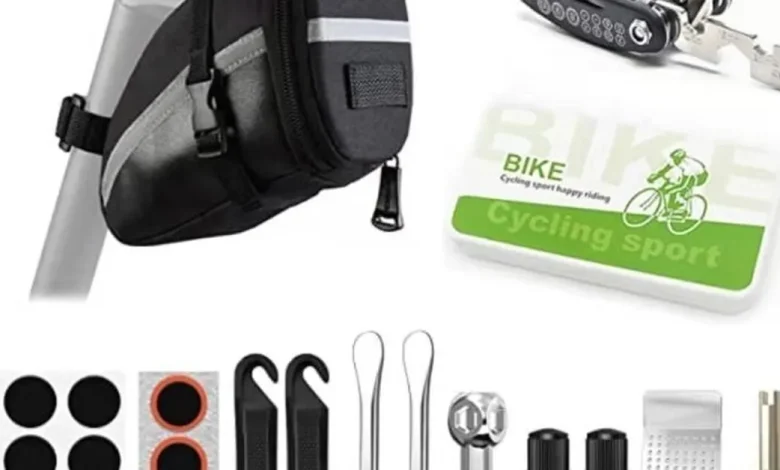
The saddle bag is small. Deliberately so. It forces a kind of discipline that most cyclists don’t practice anywhere else in their lives a ruthless prioritization of what actually matters when things go sideways. What you choose to carry in that compact pouch beneath your seat isn’t just a logistical decision. It’s a philosophy. It tells you something about how honestly you’ve reckoned with the unpredictability of the road.
These seven tools aren’t arbitrary. Each one has earned its place through the kind of hard experience that no YouTube tutorial fully prepares you for.
A Reliable Multi-Tool
The multi-tool is the Swiss Army knife of cycling, except unlike the one gathering dust in your kitchen drawer, this one actually gets used. Bolts loosen over miles. Saddles shift. Derailleur limit screws drift out of alignment on rough descents. A quality multi-tool one with 4mm, 5mm, and 6mm hex keys, a Torx T25, and a flathead handles the vast majority of mechanical adjustments you’ll encounter mid-ride.
The word “reliable” matters here more than people realize. Cheap multi-tools strip bolt heads. They snap under torque at exactly the wrong moment. Spending a little more on something from Topeak, Crankbrothers, or Lezyne isn’t brand loyalty it’s an acknowledgment that a tool that fails you is worse than no tool at all.
Two Spare Tubes
One tube feels like enough until you pinch flat the replacement while rushing a roadside repair in the rain. Carry two. Always two.
The logic is simple, but the psychology behind why riders resist it is interesting. A second tube feels like pessimism, like admitting the road is out to get you. But experienced cyclists understand that redundancy isn’t negativity it’s respect for probability. Flats cluster. The same rough stretch of chip-seal that gave you one puncture can give you another before you’ve even reached smooth pavement again.
Make sure the tubes match your tire size and valve type. Carrying a 700x23c tube when you’re running 700x32c tires is a lesson in frustration you only need once. Label them if you have to. Keep them in a small plastic bag to protect against the inevitable chain grease that migrates through every saddle bag ever made.
A Tire Lever (or Two)
Modern tires have gotten tighter. Tubeless-ready casings in particular can require genuine effort to remove from the rim, and trying to do it with bare thumbs on a cold morning is an exercise in pain and wasted time. Tire levers solve this cleanly.
Plastic levers are preferred over metal for a reason they’re less likely to damage the rim or pinch the new tube during installation. Keep two. One lever can hold the bead while the second walks around the rim. It’s a small choreography that becomes second nature once you’ve done it a handful of times, but those first few roadside repairs will feel clumsy regardless of how prepared you are.
A Mini Pump or CO2 Inflator (With a Backup Plan)
This is the one item on the list where the debate never fully settles, and that’s worth sitting with for a moment. CO2 inflators are fast and compact. A 16g cartridge can inflate a road tire to riding pressure in seconds. For a rider doing a fast century or a sportive where time genuinely matters, they’re hard to argue against.
But CO2 has a failure mode that a mini pump doesn’t: once it’s gone, it’s gone. Miss the valve, fumble the chuck, use it on a tube that turns out to also be defective and you’re standing there with nothing. Many experienced riders carry one CO2 cartridge for speed and a small hand pump as insurance. The pump is slower and more effortful, but it’s infinitely reusable and doesn’t care how nervous you are when you’re using it.
Whatever you choose, practice with it before you need it. Fumbling with an unfamiliar inflator at the side of a road, with traffic passing close, is not the moment to read the instructions for the first time.
Patch Kit
The patch kit is the tool that confident beginners skip and experienced riders never leave home without. It’s also the tool that’s most often carried in an expired, dried-out state, which is arguably worse than not carrying it at all.
A good patch kit fresh glue, sandpaper, patches that haven’t curled at the edges is your contingency when you’ve already used both spare tubes. It’s the thing that gets you home instead of calling for a pickup. Glueless patches have improved significantly in recent years and are worth considering for their simplicity, though traditional vulcanizing patches remain more reliable for a permanent fix.
Check your patch kit at the start of every season. Replace the glue if it’s been sitting for more than a year. It’s a two-dollar investment against a very real scenario.
A Small Amount of Cash and an ID
Not a tool in the mechanical sense, but something that has saved rides in ways that no wrench ever could. A folded twenty-dollar bill tucked into the corner of a saddle bag has purchased convenience store calories when a bonk came out of nowhere, covered a bus fare when a mechanical was truly unrideable, and in one memorable instance recounted by a rider in a cycling forum helped patch a tire temporarily using the bill itself as a boot behind the sidewall until a proper repair could be made.
The ID is quieter but no less important. If something happens to you on the road, the people who find you need to know who you are. Medical responders need to know. It’s an uncomfortable thing to think about, and most riders don’t. Carry it anyway.
A Nitrile Glove or Two
The last tool on this list is the one that gets the least attention in gear roundups, and it’s the one that will make you look like you’ve done this before when you’re doing a roadside repair while everyone else watches. A single nitrile glove the kind used in medical and mechanical settings keeps chain grease off your hands during a tube change or derailleur adjustment.
This sounds cosmetic. It isn’t entirely. Grease-covered hands make it harder to handle small parts, harder to operate a phone or CO2 inflator, and harder to get back on the bike feeling composed. There’s also a practical hygiene dimension if you’re mid-ride and plan to eat afterward. Two gloves weigh almost nothing. They compress to nearly nothing. They belong in every saddle bag, and almost nobody talks about them.
What the Bag Actually Teaches You
Packing a saddle bag properly is a small act of self-knowledge. It asks you to be honest about where you ride, how far, how often, and what you’re actually capable of fixing on the side of a road with your hands and whatever you’ve brought. There’s no universal answer, but there are wrong ones the rider who carries nothing and relies on luck, and the rider who carries so much that the bag swings and rattles and throws off the ride entirely.
The seven tools above represent a kind of equilibrium. They cover the most common mechanical failures without tipping into excess. But the more interesting question isn’t whether you have them it’s whether you know how to use them. Because the road will eventually find out.